A new study suggests that the work to reduce equity gaps in higher education doesn't end when students earn their diploma—rather, the transition to the workforce is just as critical for closing equity gaps between higher- and lower-income students.
Using newly released institutional data from IPEDS, this blog post details how community college revenues have changed now that pandemic-related Higher Education Emergency Relief funds have ended.
In this blog post, summer intern Deenika Oladipo writes about the rollout of the simplified FAFSA form, how it was received by students and administrators, and what students can expect this year when filing for FAFSA.
By Clive Belfield, Thomas Brock, John Fink, and Davis Jenkins For the community college sector, the COVID-19 pandemic was not like other economic shocks. Traditionally, economic downturns lead students to enroll in college at higher rates: Fiscal shocks are therefore offset by increases in tuition revenue, and college operations and institutional
By John Fink, Tatiana Velasco, and Davis Jenkins Last week, the U.S. Department of Education (ED) released—for the first time ever—public transfer community college student outcomes data for colleges and universities across the country. ED’s analysis examined federal financial aid recipients who started higher education at a community college
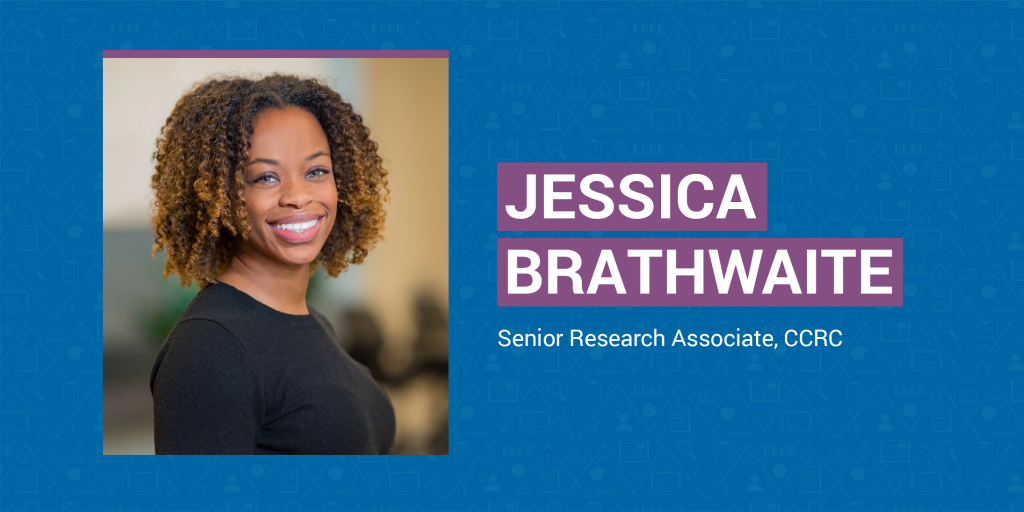
In this edition of Inside CCRC, Senior Research Associate Jessica Brathwaite describes the dynamics she observed as a student in Queens that catalyzed her passion for equity work.
In this blog post, CCRC Research Affiliate Rebecca Natow describes how the public can weigh in on changes proposed by the U.S. Department of Education and why doing so matters.
Community college presidents are crucial in fostering a campus culture that allows strong teaching to flourish. This blog post describes four ways leaders can embrace and encourage highly effective practice in the classroom.
This post introduces CCRC's new blog series on teaching in community college. This summer, we will go inside the classroom to understand more about the practices that define high-quality instruction.
Graduate students are essential to the work we do at CCRC. Congratulations to the six CCRC staff members who completed either a master's or a PhD this year.
Drawing on lessons learned from CUNY ASAP, iPass, and faculty development cycles, this blog post explores why some reforms prove successful in multiple contexts, while others do not.
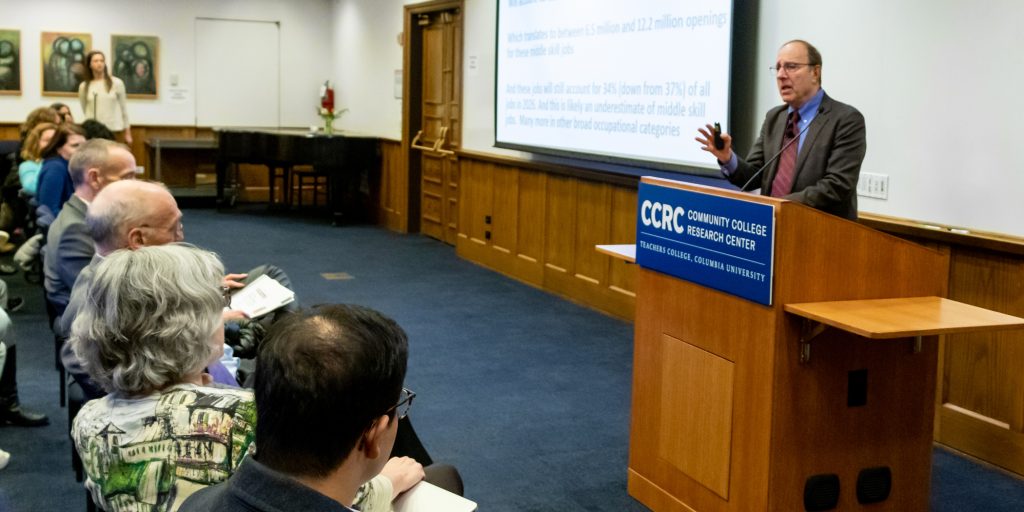
Paul Osterman, a professor at MIT's Sloan School of Management, discussed the future of work during a February 28 talk at Teachers College organized by CCRC.
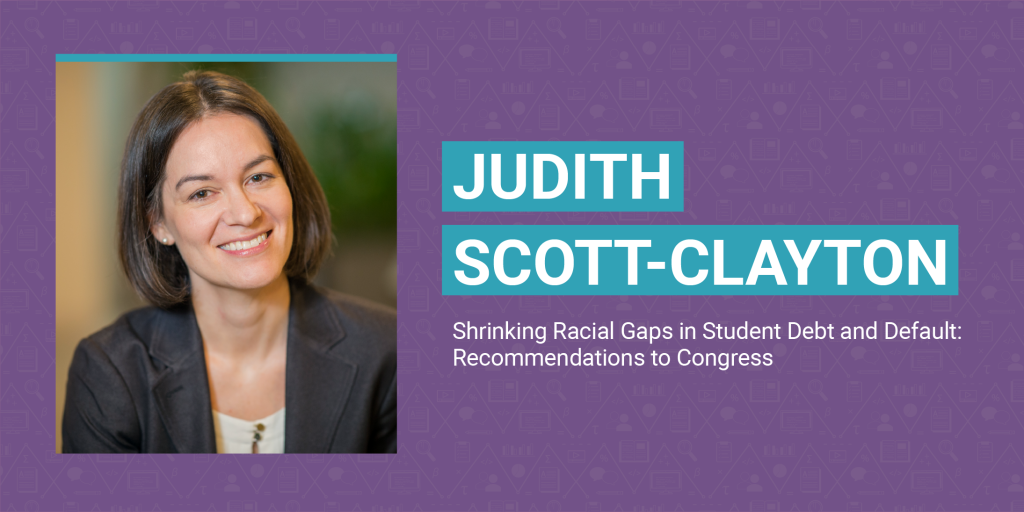
The gaps in debt levels and default rates between White and Black college students have swelled to an alarming extent, and some U.S. senators have taken notice. Judith Scott-Clayton outlines several policy recommendations for shrinking the disparities.
By framing demography as opportunity, community colleges can upend deficit orientations toward the students they enroll and make a meaningful case for additional resources, Nikki Edgecombe explains in this blog post.
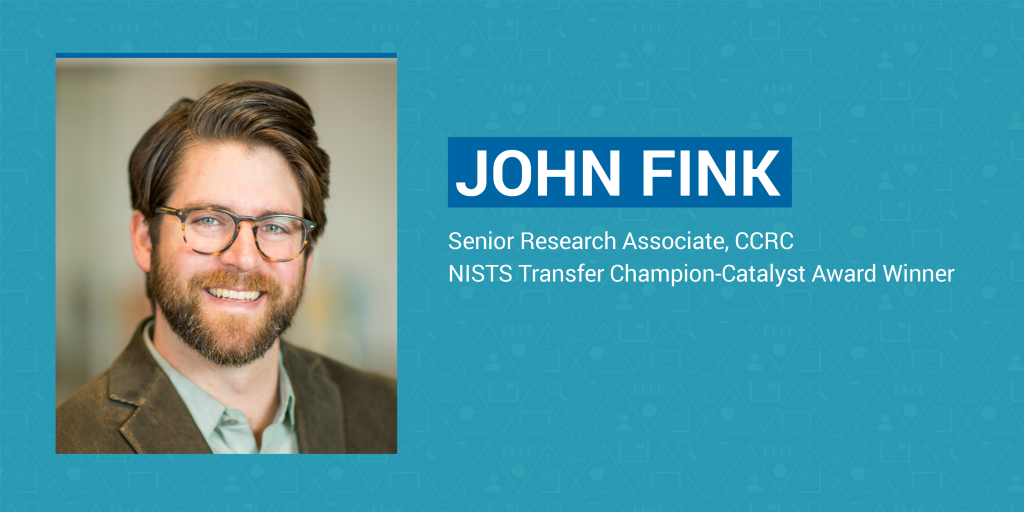
The National Institute for the Study of Transfer Students will honor CCRC Senior Research Associate John Fink with its 2019 Champion–Catalyst award, which recognizes "game-changers in the transfer field."
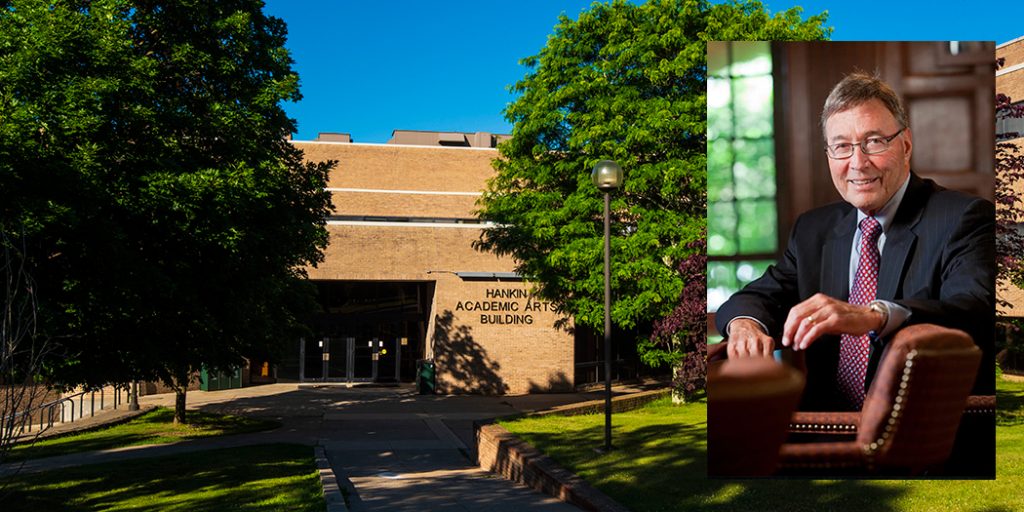
We are sad to announce that Dr. Joseph N. Hankin, who served on the CCRC advisory board for a decade and led Westchester Community College for more than 40 years, died at age 78.
CCRC Director Thomas Brock gives a broad overview of the landscape of developmental education reform. He details several strategies—including transition courses, corequisites, and math pathways—that aim to improve remediation, and describes what research has revealed thus far about the effectiveness of each approach.
Search the CCRC blog
Explore trends in community college outcomes with our interactive data visualizations.