Many community college students enter college motivated to earn a credential, transfer to a four-year institution, or secure a good job. But even students with clear goals may not have a plan. A new CCRC research brief examines why individualized career and educational plans are essential to student success.
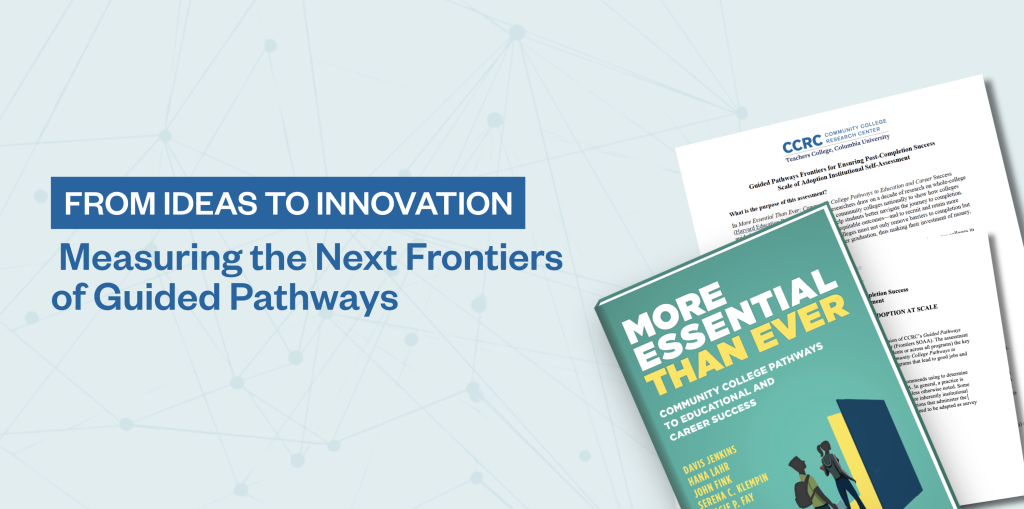
In honor of the first anniversary of "More Essential Than Ever," the authors reflect on lessons from the book and share details about the next phases of their research on guided pathways, including a new scale of adoption assessment colleges can use to measure their scaling efforts.
How can states invest in forms of dual enrollment that produce the greatest returns for students, employers, and taxpayers? A new policy brief addresses how states can help more colleges and school districts adopt and sustain purposeful dual enrollment practices.
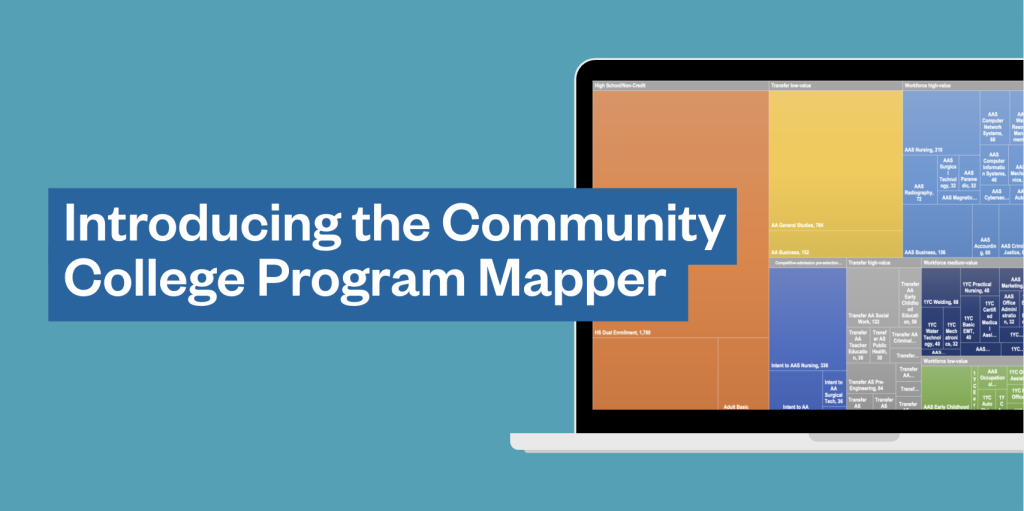
This blog post introduces an updated version of the Community College Program Mapper—a practical data tool designed to help colleges see which students are on a path to success and which are not, and to guide colleges to strengthen supports for students to explore and plan a program of study aligned with their education and career aspirations.
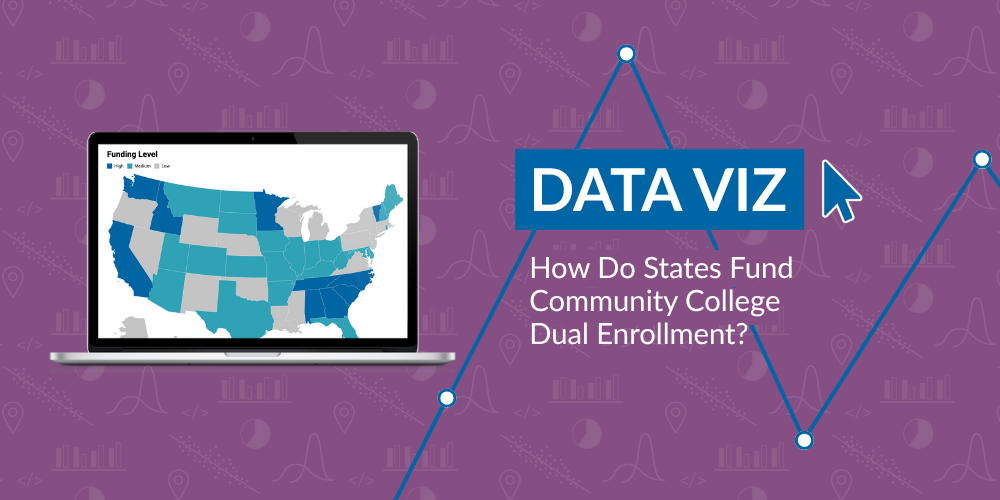
To facilitate comparisons across states, this blog post shows how community colleges fund dual enrollment by state, including how much funding is set aside for dual enrollment, whether a state uses formula funding or grants, and how funding flows through K-12 systems.