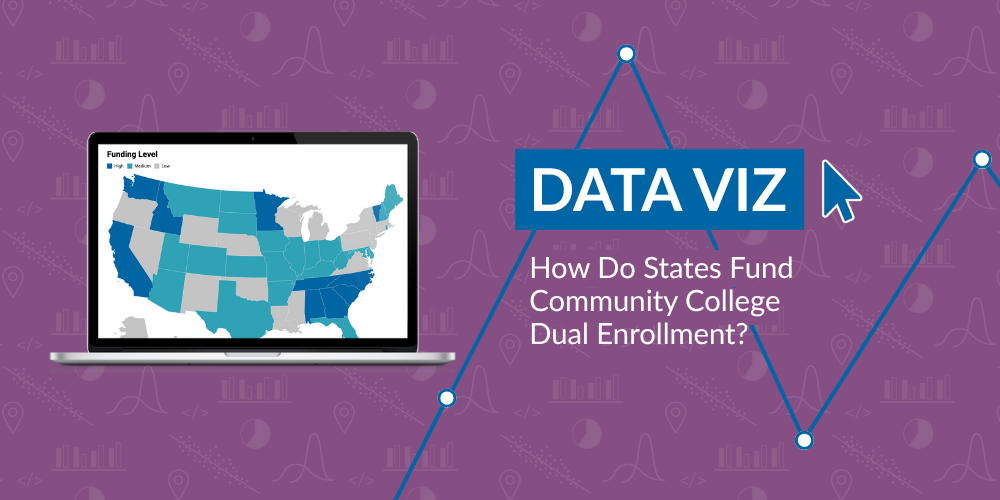
To facilitate comparisons across states, this blog post shows how community colleges fund dual enrollment by state, including how much funding is set aside for dual enrollment, whether a state uses formula funding or grants, and how funding flows through K-12 systems.
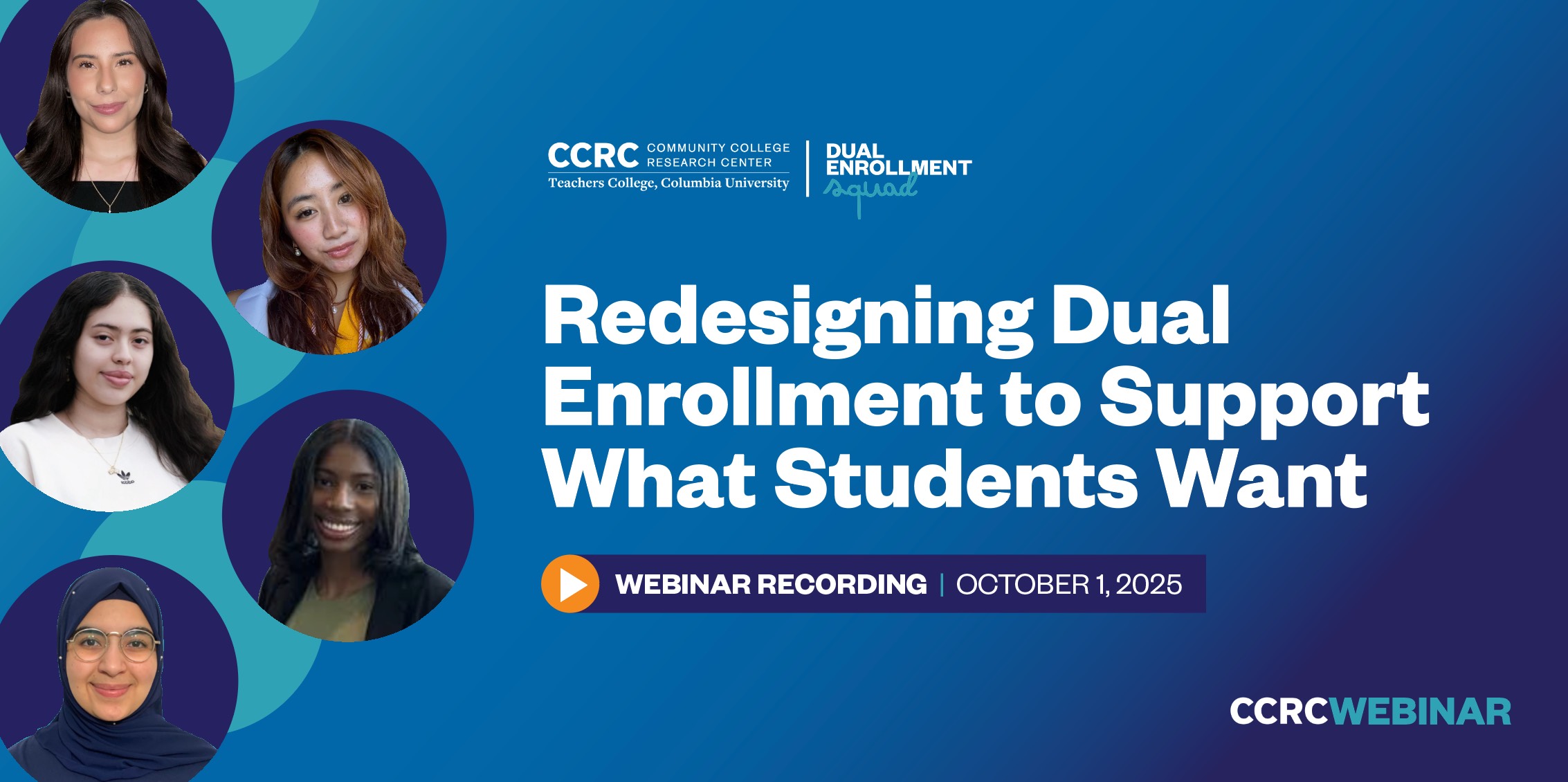
Dual enrollment is growing across the nation, yet students rarely get the chance to share their perspectives on program design. An October webinar featured former and current dual enrollment students who discussed ways colleges can support their dual enrollees.
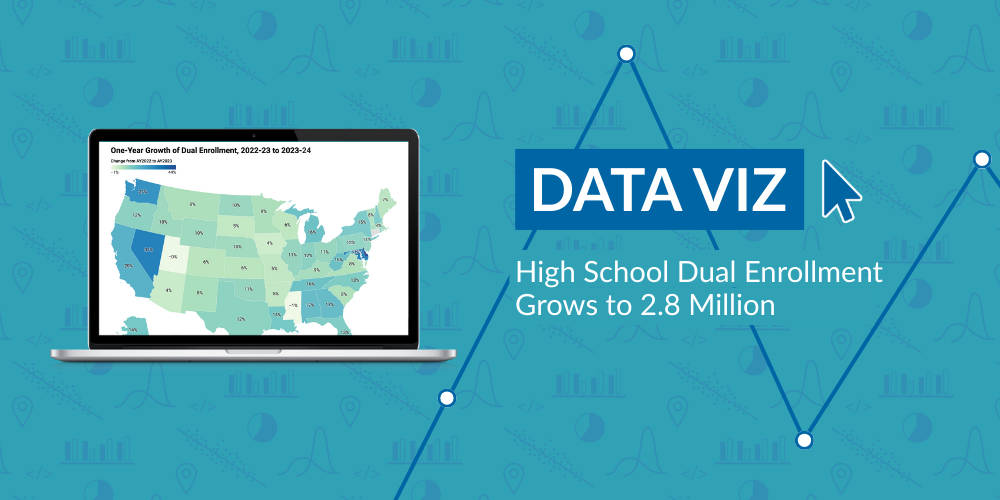
New data show dual enrollment has expanded across the country. CCRC's John Fink shares key takeaways from updated 2023-24 IPEDS data in this blog post.
By putting research into practice, The Alamo Colleges District in Texas made dual credit both accessible and meaningful for more students. Learn how college and high school leaders worked together to make it happen in this blog post.
Dual enrollment provides an opportunity to potentially reduce the time and cost of earning a bachelor’s degree. But what happens when the path after high school isn’t so clear? CCRC's Aurely Garcia Tulloch and Akilah H. Thompson share their experiences as former dual enrollment students and discuss ways to support dual enrollment students attempting to transfer their credits.
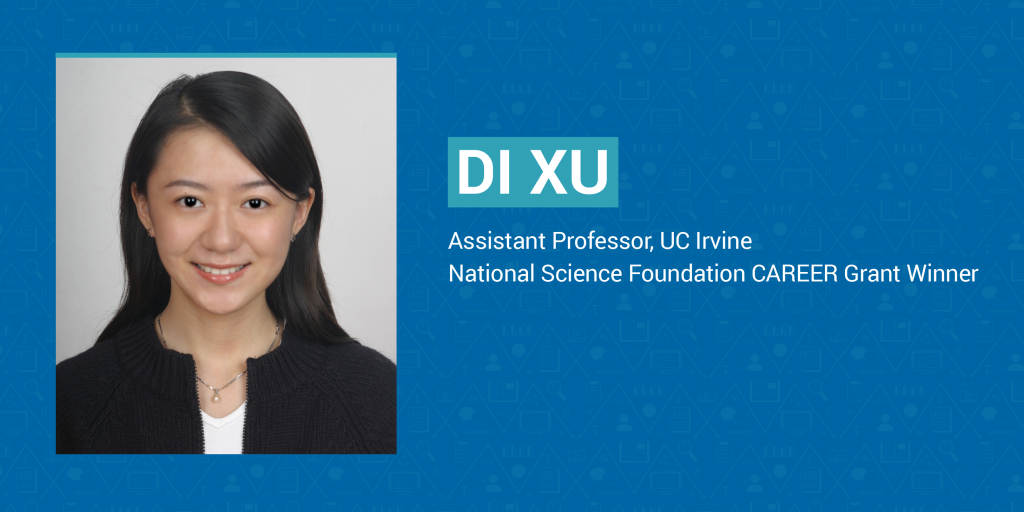
Di Xu, an assistant professor at the University of California, Irvine, has been awarded the prestigious CAREER grant from the National Science Foundation to support her research into online STEM courses.
James Jacobs discusses how strengthening the relationship between guided pathways reforms and career-technical education can improve both, as colleges refocus their programs on skills that are valued in the current job market.
CCRC offers its congratulations to Diana Cruz, Hana Lahr, Florence Xiaotao Ran, and Susha Roy, all of whom worked at CCRC during their graduate studies.
Elisabeth Barnett describes the Faculty Persistence Project at Oakton Community College in Illinois, the goal of which is to improve student persistence through the use of a faculty/student engagement protocol.
Guided pathways reforms are now far enough along in a growing number of colleges that researchers can begin to examine more deeply their effects on student outcomes, as well as the institutional practices that best support these reforms. Davis Jenkins lays out the next set of questions for researchers as they seek to build the evidence base around guided pathways.
The League’s Innovations Conference in National Harbor, MD, which ran from March 18–21, gave our researchers a chance to update community college faculty and staff on several projects CCRC has been working on, and to explain interim findings that might give some answers to the common problems colleges face.
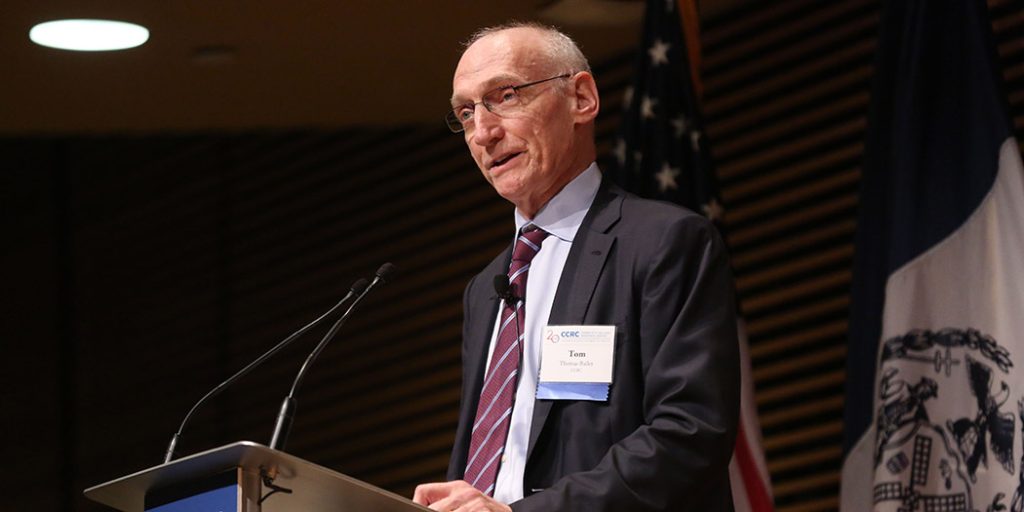
Thomas Bailey, the director of the Community College Research Center (CCRC) since its founding in 1996, has been named the next president of Teachers College, where he has been an economics of education professor since 1990.
In the director's column for CCRC's 2018 newsletter, Thomas Bailey discusses issues colleges should attend to as they implement guided pathways in order to ensure that these reforms help close equity gaps.
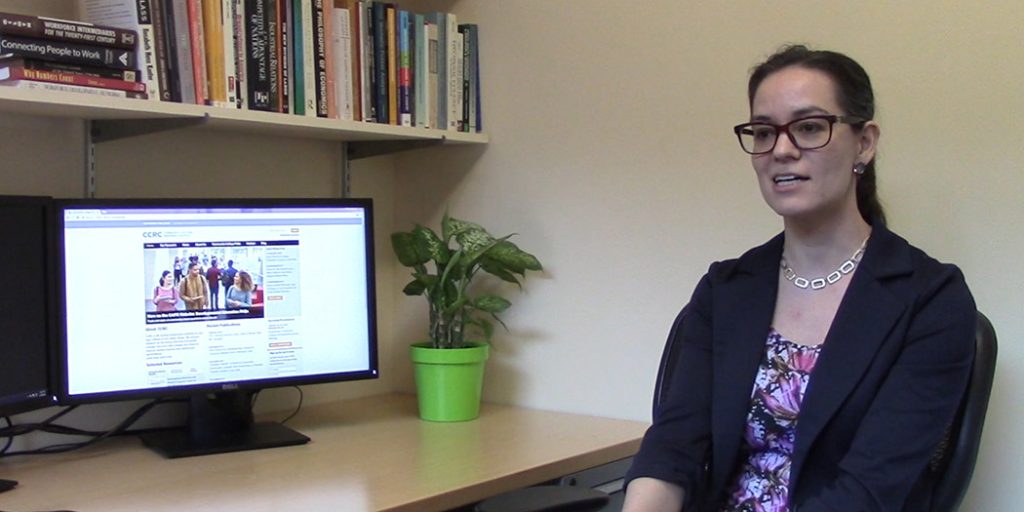
In this video, Judith Scott-Clayton discusses new data from the U.S. Department of Education showing widely different impacts of student debt on different students.
What are transition courses, and why are they growing in popularity? What do we know about their effectiveness? This blog post shares findings from a CCRC scan of transition courses.
In her keynote presentation at CCRC's 20th-anniversary event, Dr. Jill Biden emphasized the need for researchers to "document the lived experience of our students" and for colleges to offer wraparound services.
In her keynote presentation at CCRC's 20th-anniversary event, Dr. Jill Biden emphasized the need for researchers to "document the lived experience of our students" and for colleges to offer wraparound services.
Jamie Whittington-Studer and Crystal Salas of Moorpark College explore key takeaways from their college's implementation of a tutoring program that makes reaching out for support as simple as sending a text.
Search the CCRC blog
Explore trends in community college outcomes with our interactive data visualizations.