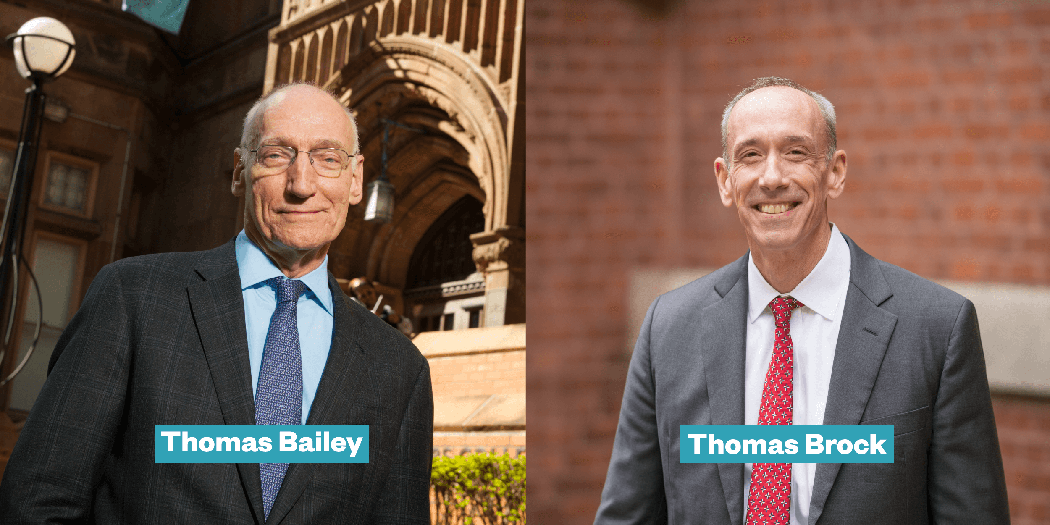
To mark our 25th anniversary, our founding director, Thomas Bailey, sat down with our current director, Thomas Brock, to reflect on CCRC's growth and consider the next phase of the center's work.
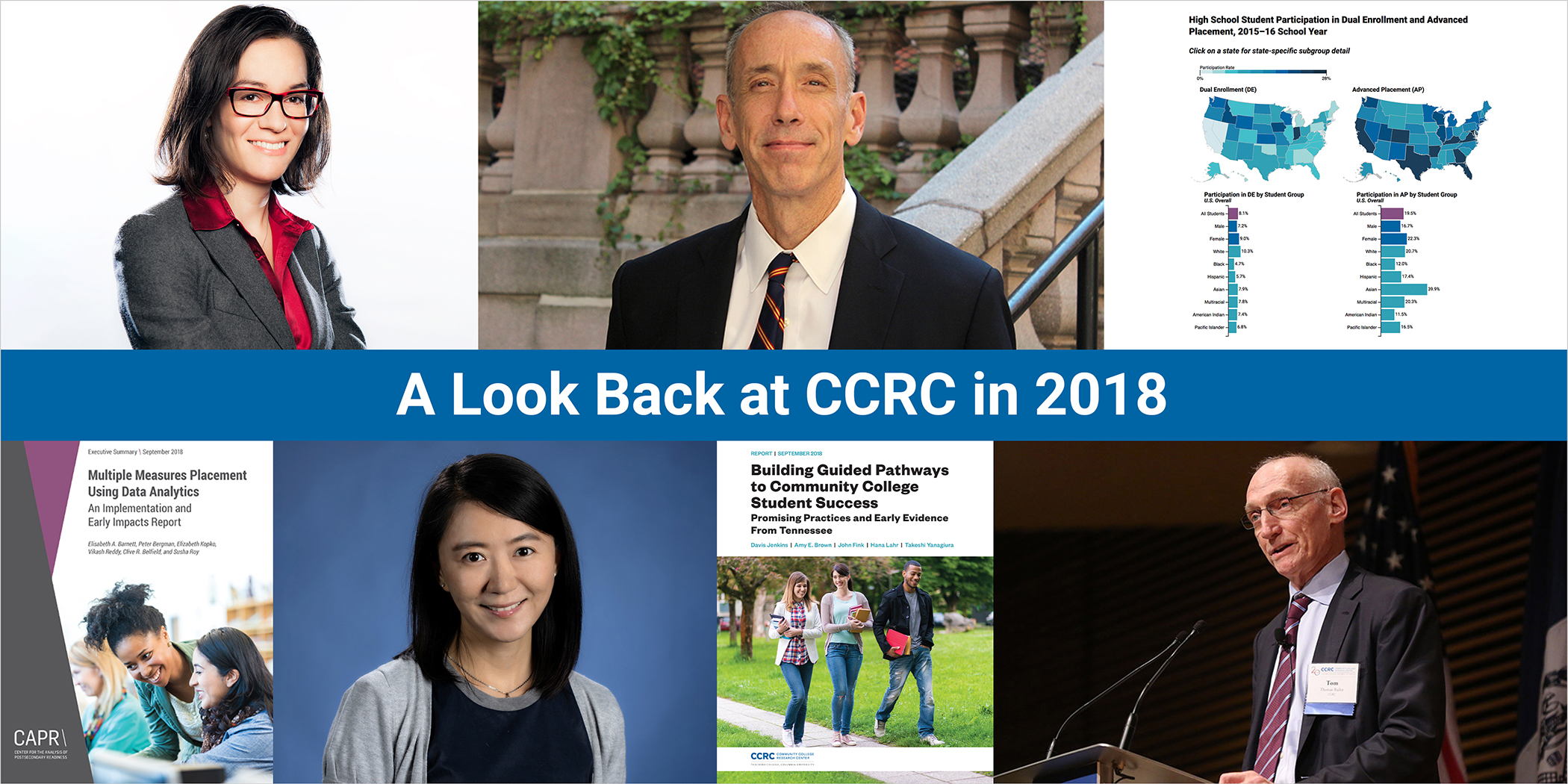
Over the past year, CCRC reached several milestones, produced important new research findings, and welcomed a new center director. Before we embark on the new year, here’s a look back at some highlights from 2018.
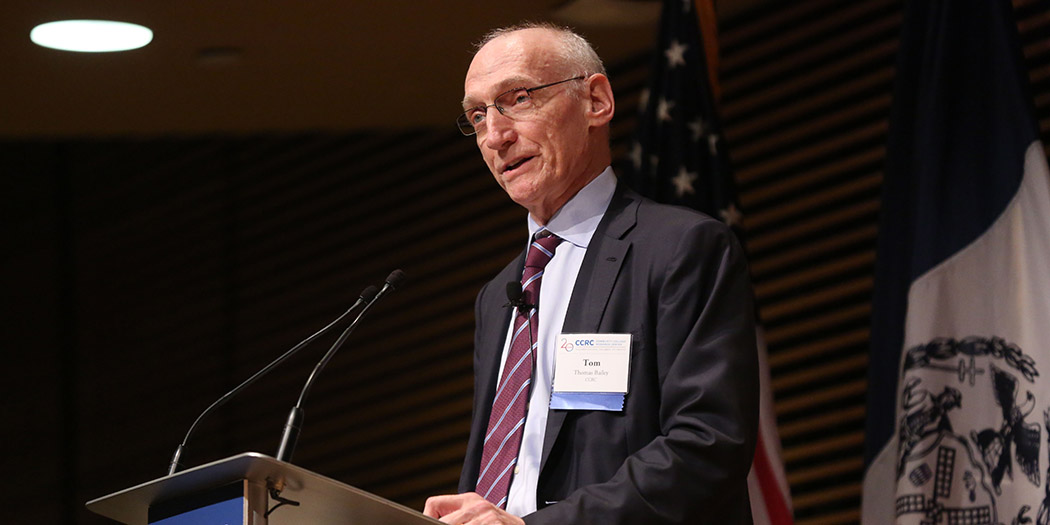
Thomas Bailey, the director of the Community College Research Center (CCRC) since its founding in 1996, has been named the next president of Teachers College, where he has been an economics of education professor since 1990.
In the director's column for CCRC's 2018 newsletter, Thomas Bailey discusses issues colleges should attend to as they implement guided pathways in order to ensure that these reforms help close equity gaps.
Jamie Whittington-Studer and Crystal Salas of Moorpark College explore key takeaways from their college's implementation of a tutoring program that makes reaching out for support as simple as sending a text.
Matsudaira, a senior research scholar at CCRC, will serve as deputy undersecretary in the office responsible for higher education, adult education, and federal student aid.
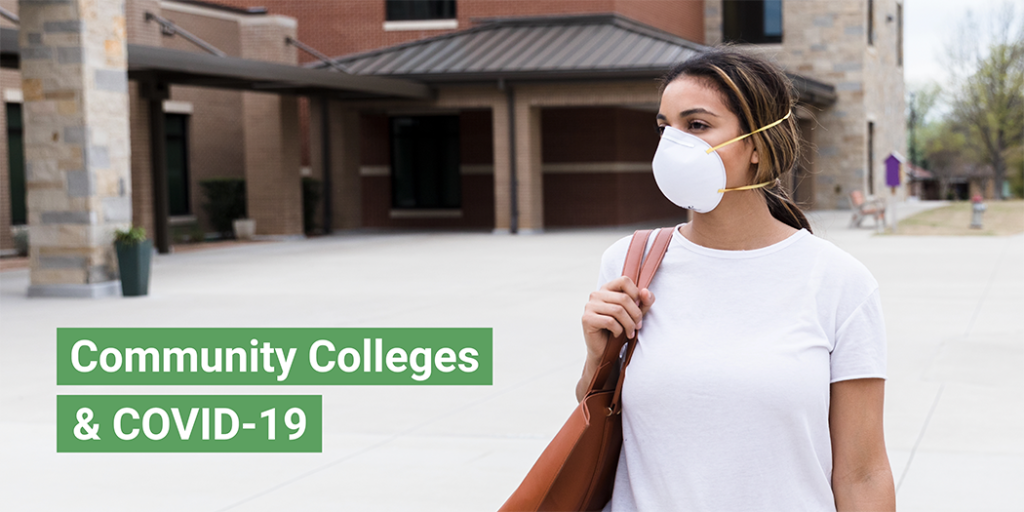
Since the pandemic began, CCRC has been thinking about COVID-19's many impacts on community colleges. Here, you'll find a roundup of our coronavirus-related blog posts and media mentions.
In this op-ed, John Fink argues that community college transfer pathways are key to improving equity in higher education and outlines four institutional roadblocks that regularly impede transfer student success.
This blog post uses Census data to examine how the pandemic has affected community college graduates in the workforce. Associate degree-holders have faced significant hurdles, but their labor market experiences have been less disrupted than those of high school graduates.
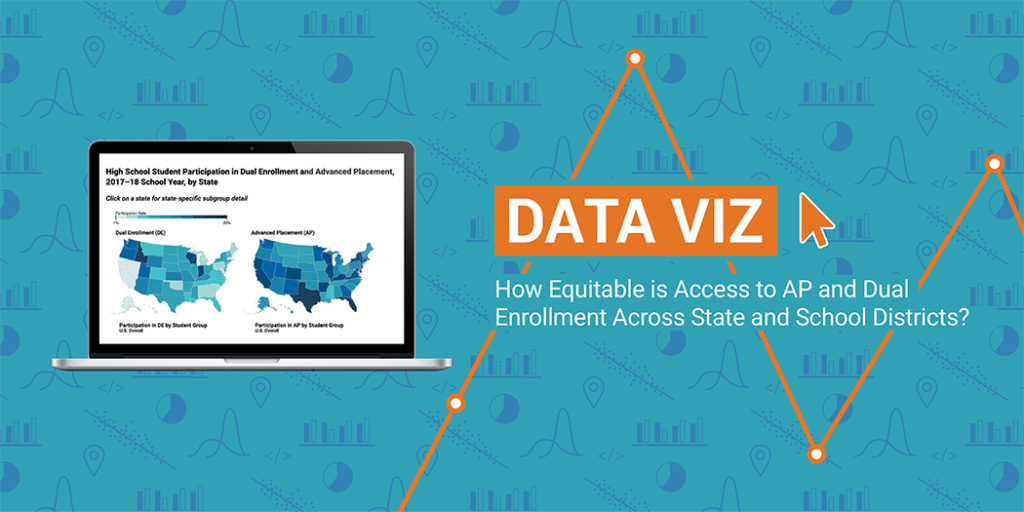
This post presents a set of interactive data tools and findings from a CCRC analysis examining racial equity gaps in access to AP and dual enrollment coursework among public high school students during the 2017–18 school year.
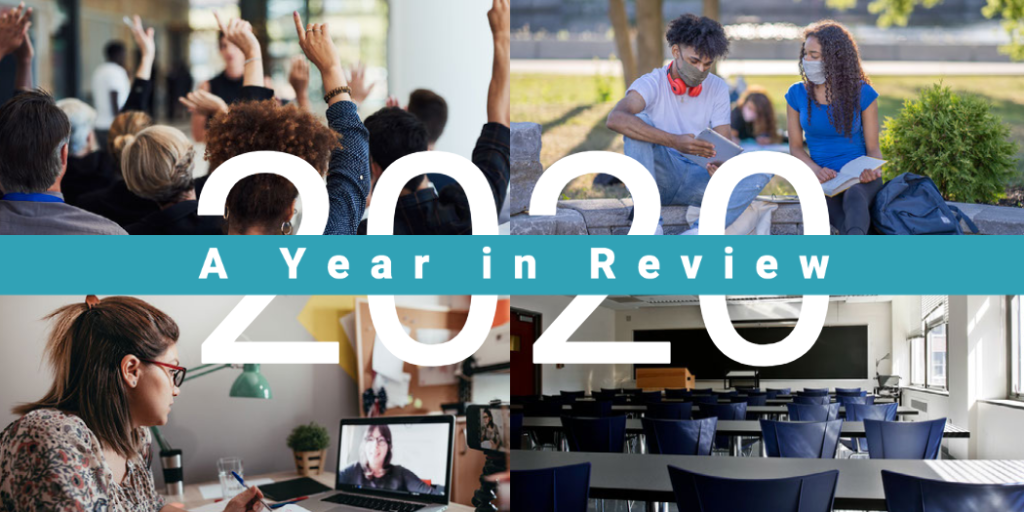
It was a year unlike any other. As 2020 comes to a close, we take a look back at the themes that animated our work, as well as some of our accomplishments.
Ohio's Lorain County Community College has been a pioneer in dual enrollment for more than two decades. In this conversation, LCCC President Marcia Ballinger describes the evolution of the program and its role in growing talent and jobs in the community.
This blog post describes how colleges can take advantage of key opportunities to address racial/ethnic equity gaps by intervening early in students’ postsecondary careers.
The pandemic prohibits CCRCers from conducting site visits and in-person data collection, but that doesn't mean they've stopped gathering information. Here are some of the challenges and opportunities presented by remote research.
Based on survey data collected by the U.S. Census Bureau, this blog post examines how the pandemic is affecting households with community college students and sheds light on why community college enrollments are down.
The economic fallout from the pandemic makes it all the more important to align credit and noncredit workforce programming. High-quality, low-cost training that leads to living-wage jobs must be accessible.
In the latest edition of our Inside CCRC blog series, Senior Research Associate Hana Lahr describes the many hats she's worn at community colleges, as well as her experience on Barack Obama's 2008 presidential campaign.
For five years, 13 community colleges have discussed conditions and offered suggestions for how best to bridge the gap between credit and noncredit programs. This blog post describes what they've found.
Search the CCRC blog
Explore trends in community college outcomes with our interactive data visualizations.