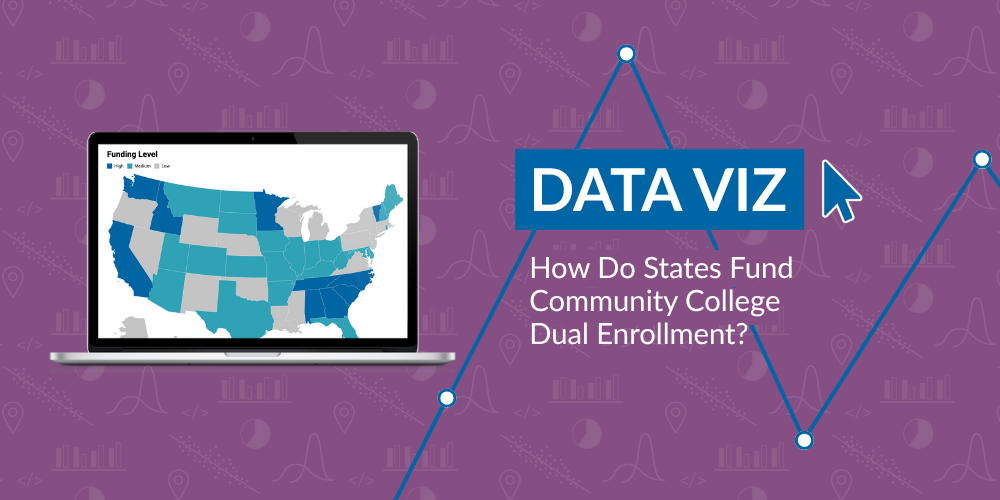
To facilitate comparisons across states, this blog post shows how community colleges fund dual enrollment by state, including how much funding is set aside for dual enrollment, whether a state uses formula funding or grants, and how funding flows through K-12 systems.
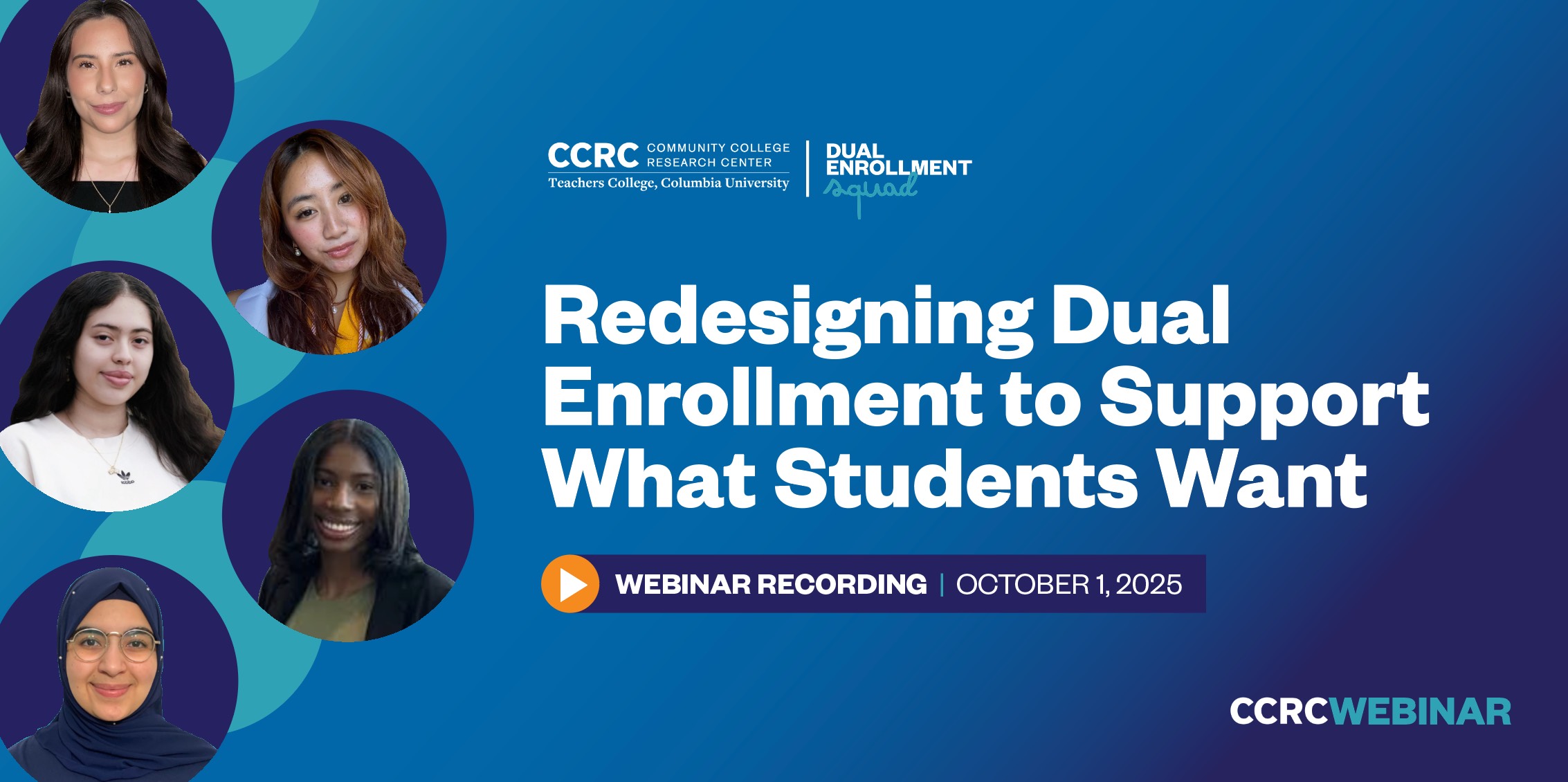
Dual enrollment is growing across the nation, yet students rarely get the chance to share their perspectives on program design. An October webinar featured former and current dual enrollment students who discussed ways colleges can support their dual enrollees.
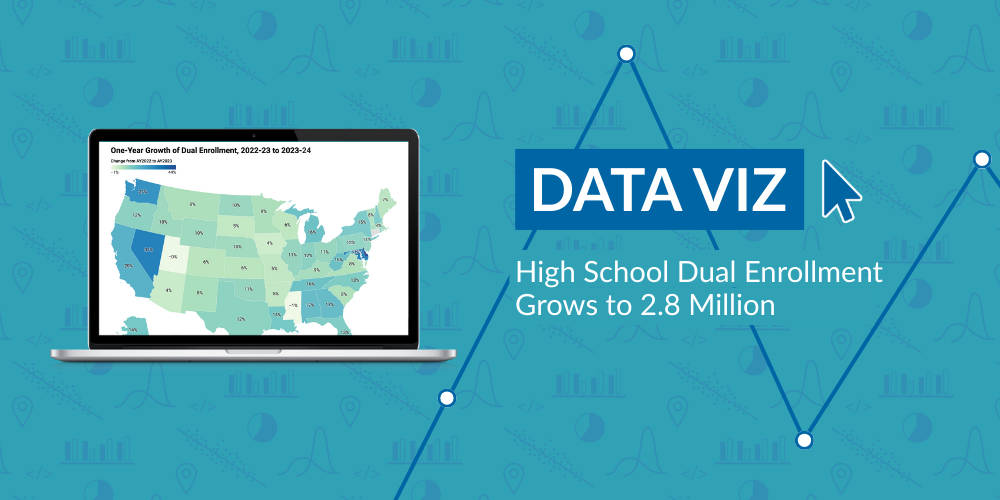
New data show dual enrollment has expanded across the country. CCRC's John Fink shares key takeaways from updated 2023-24 IPEDS data in this blog post.
By putting research into practice, The Alamo Colleges District in Texas made dual credit both accessible and meaningful for more students. Learn how college and high school leaders worked together to make it happen in this blog post.
Dual enrollment provides an opportunity to potentially reduce the time and cost of earning a bachelor’s degree. But what happens when the path after high school isn’t so clear? CCRC's Aurely Garcia Tulloch and Akilah H. Thompson share their experiences as former dual enrollment students and discuss ways to support dual enrollment students attempting to transfer their credits.
In this blog post, Shanna Smith Jaggars, one of the coauthors of Redesigning America's Community Colleges, describes a section of the book that was left on the cutting room floor: how librarians can bolster guided pathways.
In this blog post, CCRC's Maria Cormier describes a new project aimed at facilitating and improving colleges' efforts to better align their credit and noncredit offerings.
In the second installment of our practitioner blog series, the president of Community College of Philadelphia describes how thoughtfully engaging the entire campus community in guided pathways work bolstered the impact of the reform.
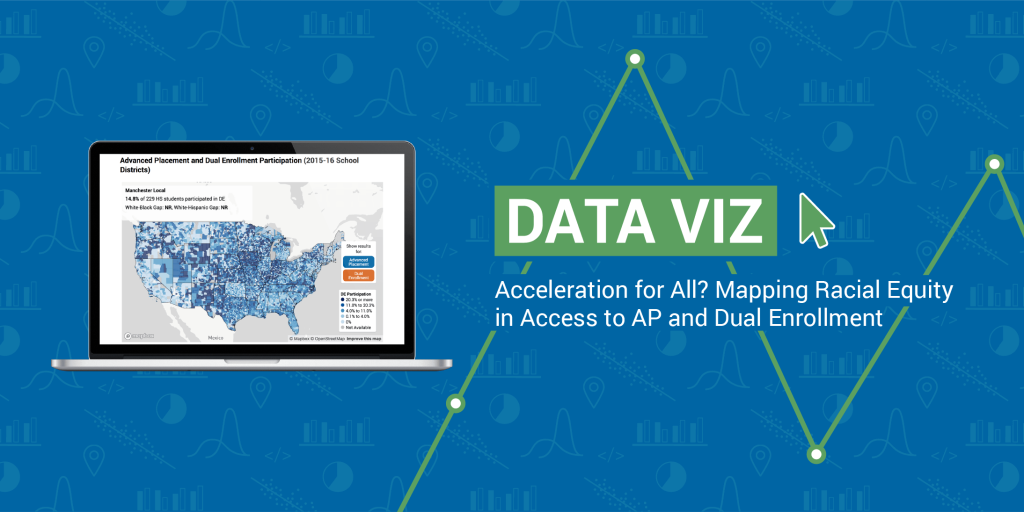
In a new CCRC working paper, Di Xu, John Fink, and Sabrina Solanki look at participation in Advanced Placement and dual enrollment courses across the country and how they differ by race and ethnicity. Here, John Fink presents two interactive tools for exploring their findings by district and metro area.
In this Q&A, Michele Marden, who teaches developmental mathematics at Portland Community College, describes her experience with Lesson Study. She enjoyed the opportunity to work with colleagues but questioned the longevity of the intervention in the wake of limited resources.
Students in developmental and gateway courses taught by adjunct faculty have negative longer-term outcomes but positive or neutral short-term outcomes. In this blog post, CCRC's Florence Ran and Susan Bickerstaff outline explanations for why.
CCRC Director Thomas Brock highlights community college reform initiatives and research projects at the core of the center's work and describes two new studies that aim to inform the development of solutions in the field moving forward.
The 2018–2020 biennial report provides an overview of CCRC’s work, outlines the necessity of continued research and support for community colleges, and offers a snapshot of the organization's past and projected future.
The Lesson Study model of professional development allows instructors to improve their practice by working together and building a supportive community, writes Carrie Kyser, who teaches at Clackamas Community College.
In the first installment of our practitioner blog series, Wallace State's Wes Rakestraw describes unexpected opportunities and lessons from his experience implementing guided pathways.
In this podcast, CCRC's Davis Jenkins and Hana Lahr discuss what they found when they visited eight colleges at the forefront of implementing guided pathways.
Barbara Yasue, chair of the ESOL department at Laney College, shares stories from some of her students and points out ways in which narratives from immigrant and refugee students can inform and inspire college instructors.
In this blog post, CCRC Senior Research Associate Hoori Santikian Kalamkarian describes what researchers have learned so far about advising redesign, as well as what the field can expect from the center's iPASS project moving forward.
English language learners compose a growing portion of the community college population, but little research thus far has been devoted to examining their experiences. This blog post explains why it's important to fill in the gap.