Ohio waived testing-based eligibility requirements for some dual enrollment students by introducing the Innovative Program (IP) policy in 2017. A new CCRC working paper examines how the state policy was implemented and whether it resulted in expanded access and improved outcomes for Black and Hispanic students.
In a new report, CCRC and CHSA provide state leaders with recommendations for improving dual enrollment programming in ways that support practitioners’ efforts. The recommendations are organized into three areas: expanding access, strengthening on-ramps to postsecondary pathways, and building and sustaining strong partnerships.
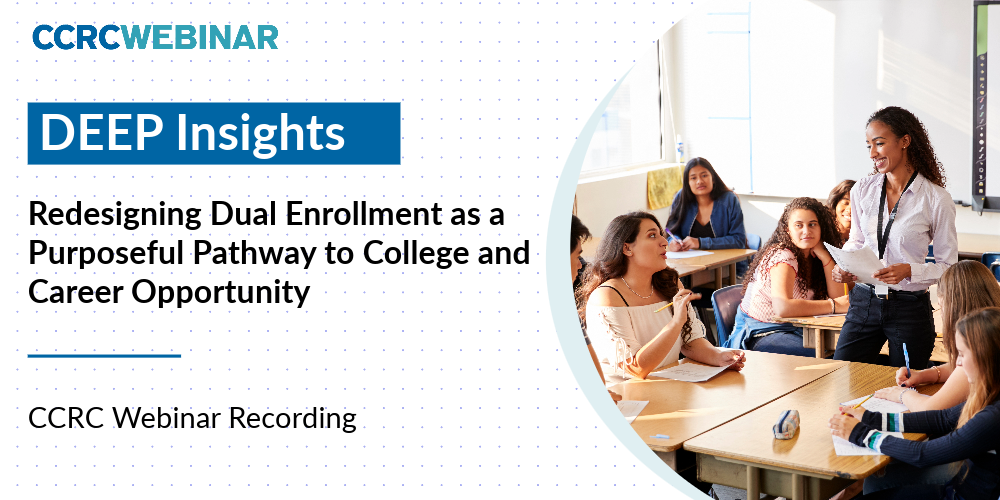
In a recent webinar, CCRC researchers explained a new approach to dual enrollment called Dual Enrollment Equity Pathways, or DEEP. Educators from college and school-district partnerships shared their insights about how it works on the ground.
In celebration of first-generation students, Hoori Kalamkarian and Melissa Herman share findings from a recent CCRC-led study on first-generation college students’ support networks and how those relationships shape their college journeys.
Search the CCRC blog
Explore trends in community college outcomes with our interactive data visualizations.