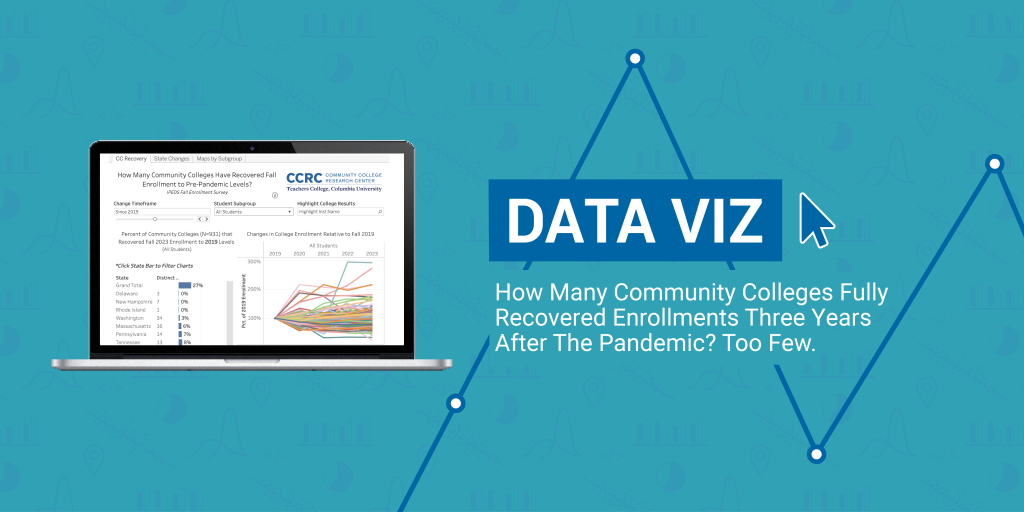
Newly released fall 2023 enrollment numbers offer the most detailed look yet at how individual community colleges and state systems have fared since the onset of the COVID-19 pandemic. Using interactive data dashboards, users can explore trends among student subgroups in particular states and institutions.
As part of an applied research agenda to build knowledge and tools to support community colleges in preparing students for high-value jobs in the green economy, CCRC is partnering with the University of Tennessee, Knoxville, to conduct a one-year landscape study of green training programs at U.S. community colleges.
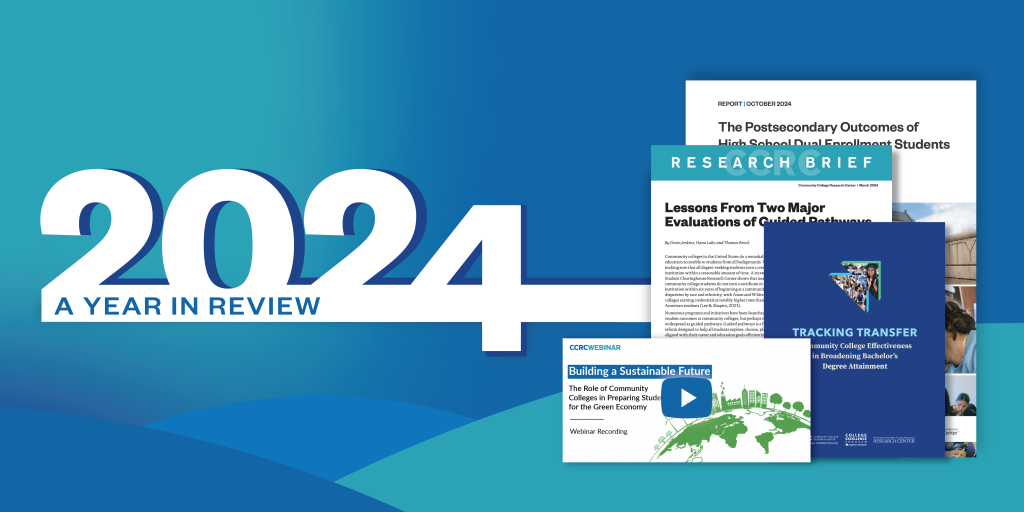
At the end of each year, we like to take time to reflect on the work we have done and consider the opportunities that lie ahead to support community colleges and their students. Before we greet the new year, here are a few CCRC milestones from 2024.
In this blog post, the Aspen Institute College Excellence Program and CCRC share strategies used by community colleges participating in the Unlocking Opportunity Network to put students on paths toward high-value careers or successful transfer opportunities.
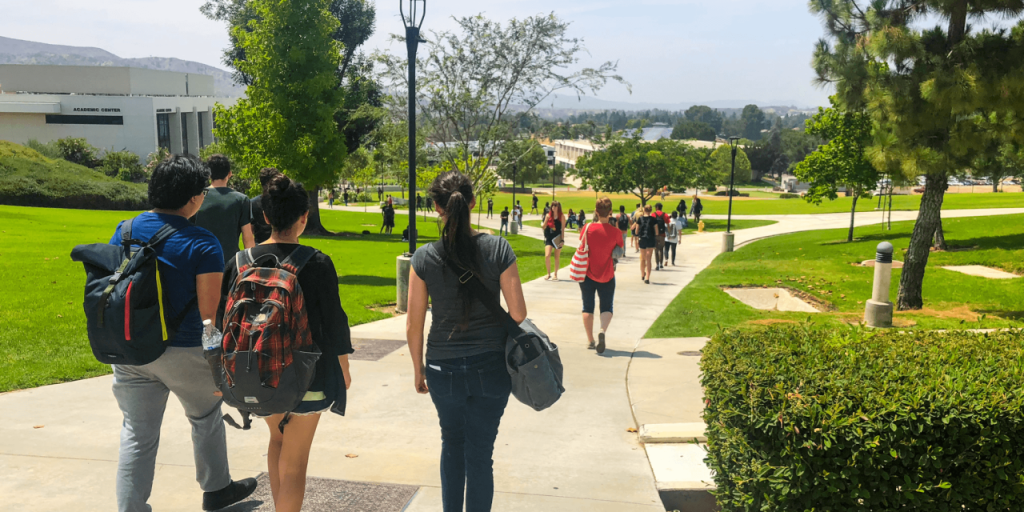
Jamie Whittington-Studer and Crystal Salas of Moorpark College explore key takeaways from their college's implementation of a tutoring program that makes reaching out for support as simple as sending a text.
Aurely Garcia Tulloch shares the stories of four former dual enrollment students, including why they chose to participate in dual enrollment and how they think their experiences could have improved.
Former CCRC associate director and advisory board member Jim Jacobs shares insights from a study that sheds light on student concerns with short-term workforce training programs and their implications for public policy.
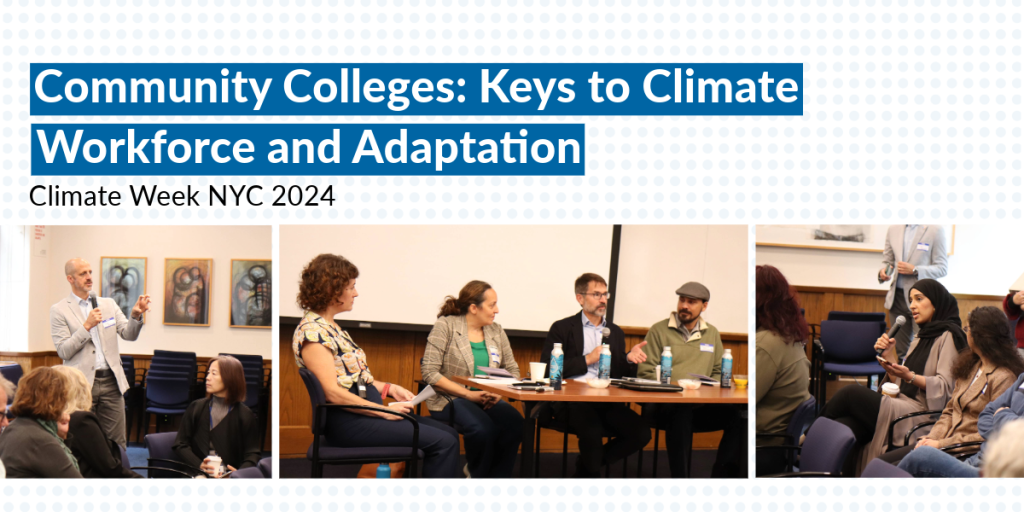
How can community and technical colleges adapt their practices to prepare the workforce for a shift toward sustainable energy? An event brought together higher education researchers and community college workforce leaders to address this question.
This blog post shares takeaways from a working paper on how institutions and students responded to free-college messaging from Virginia's Get a Skill, Get a Job, Get Ahead (G3) initiative.
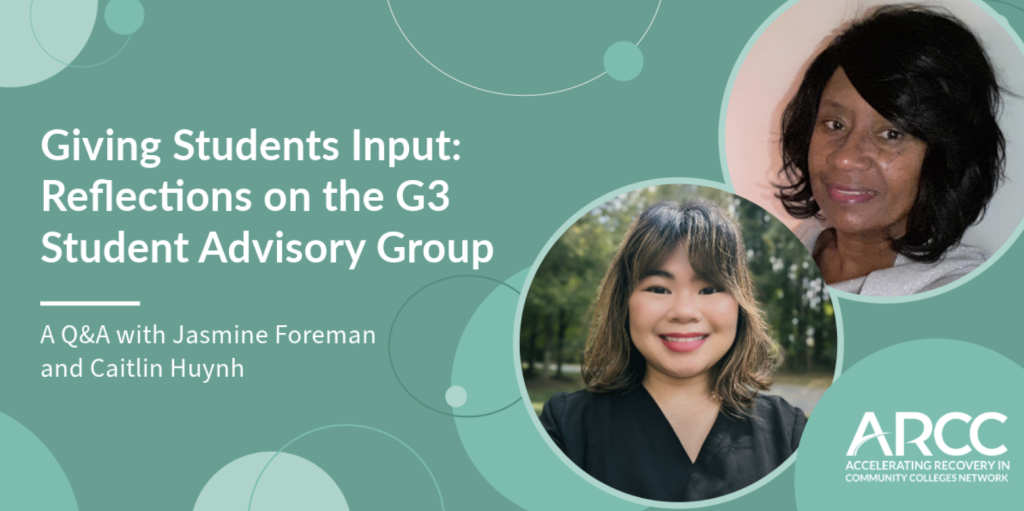
G3 Student Advisory Group members Jasmine Foreman and Caitlin Huynh sat down with Pascale Mevs from CCRC to discuss their experiences in G3 and why they joined the advisory group.
What factors might cause community college students to pause their studies? And what motivates them to return? Summer intern Lauren Lawler explores these questions and reflects on her personal experience as a community college student.
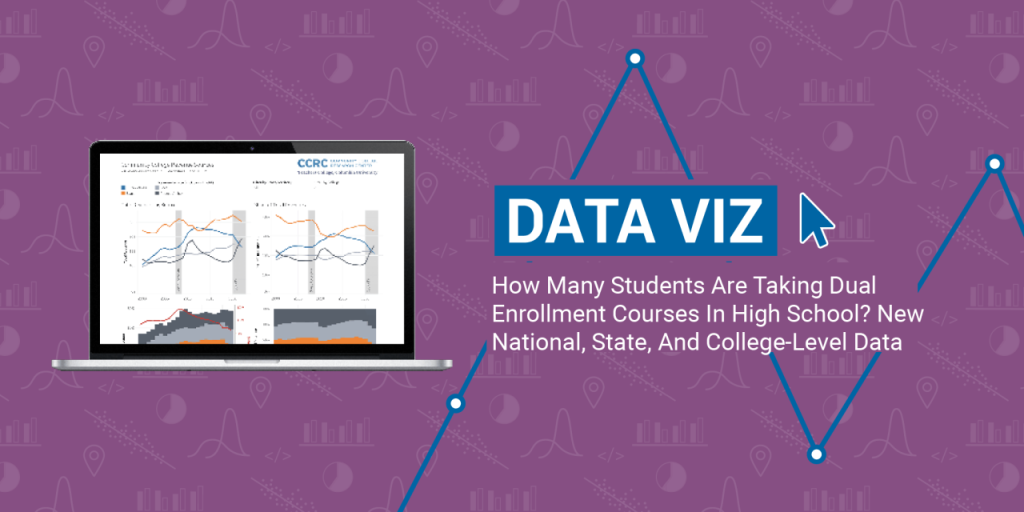
Last week, the U.S. Department of Education released new data that, for the first time ever, provide college-level counts of the number of high school dual enrollment students, disaggregated by race/ethnicity and gender. John Fink details a first look at this new information, which represents years of effort among dozens of organizations pushing for better dual enrollment data.
In this blog post, researchers from the Aspen Institute and CCRC share takeaways from their work with ten community colleges and introduce tools designed to help colleges increase the number of students on a path toward high-value programs.
In this blog post, summer intern Deenika Oladipo writes about the rollout of the simplified FAFSA form, how it was received by students and administrators, and what students can expect this year when filing for FAFSA.
CCRC Intern Basmala Zyada writes about how working on a research project on how students choose programs made her reflect on her own impulsive decision to major in English.
Search the CCRC blog
Explore trends in community college outcomes with our interactive data visualizations.