A new study suggests that the work to reduce equity gaps in higher education doesn't end when students earn their diploma—rather, the transition to the workforce is just as critical for closing equity gaps between higher- and lower-income students.
Using newly released institutional data from IPEDS, this blog post details how community college revenues have changed now that pandemic-related Higher Education Emergency Relief funds have ended.
In this blog post, summer intern Deenika Oladipo writes about the rollout of the simplified FAFSA form, how it was received by students and administrators, and what students can expect this year when filing for FAFSA.
By Clive Belfield, Thomas Brock, John Fink, and Davis Jenkins For the community college sector, the COVID-19 pandemic was not like other economic shocks. Traditionally, economic downturns lead students to enroll in college at higher rates: Fiscal shocks are therefore offset by increases in tuition revenue, and college operations and institutional
By John Fink, Tatiana Velasco, and Davis Jenkins Last week, the U.S. Department of Education (ED) released—for the first time ever—public transfer community college student outcomes data for colleges and universities across the country. ED’s analysis examined federal financial aid recipients who started higher education at a community college
The Department of Education is considering adjustments to IPEDS to better clarify and capture data on dual enrollment. Comment on the proposal—which would yield data disaggregated by student race/ethnicity and gender—by August 6.
A new CCRC series highlights research evidence that could be useful to advocates and legislators as they craft policies around issues including debt support, investments in student success, and workforce development.
A $10 million award from the U.S. Department of Education's Institute of Education Sciences will fund a partnership between broad-access colleges and researchers at CCRC and SRI International.
To help more students gain early momentum, community colleges need to update onboarding to focus on helping students enter a program of study aligned with their interests, strengths, and aspirations.
In this essay, Jim Jacobs argues that community colleges need to consider whether their workforce development programs are helping or hurting their equity missions.
Low-income adults should have access to Pell Grants. Here, we suggest several guardrails to increase the likelihood of successful educational and employment outcomes for participants.
This blog post describes how faculty engagement and a spirit of collaboration have supported Michigan's guided pathways work, including a project with CCRC focused on humanities programs.
Officially launching in fall 2021, the initiative will develop a practitioner-defined national community college research agenda and disseminate research findings throughout the country.
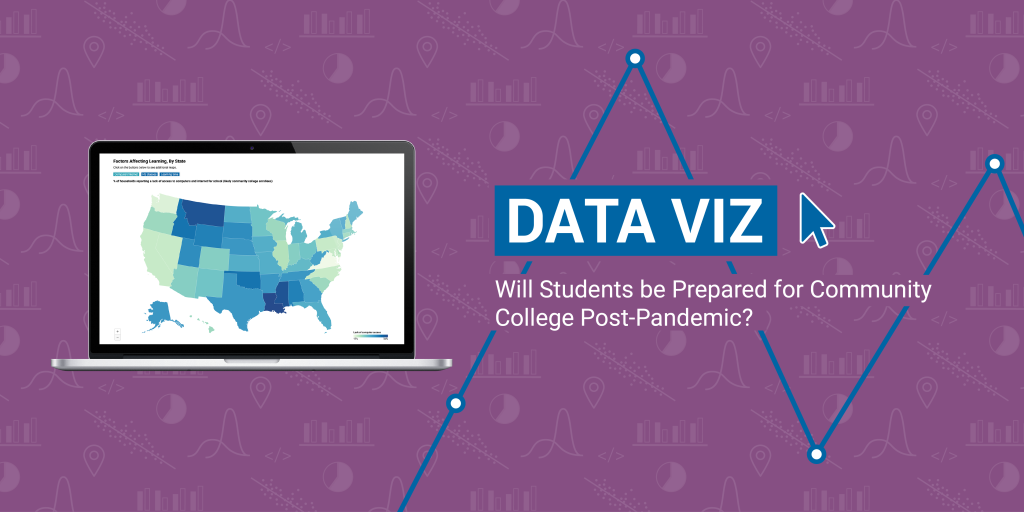
This is blog post analyzes U.S. Census data to gauge how school has changed during the pandemic for students who said they planned to attend community college. Findings suggest future students may not be as well-prepared as prior community college cohorts.
Following a competitive application and interview process, CCRC is pleased to announce the colleges that will join us for our virtual summer institute, Guided Pathways at Rural Colleges: Using Data to Launch Large-Scale Reform.
In this op-ed, John Fink and Davis Jenkins argue that dual enrollment programs—which are mired by inequities—should be reconceived to expand college access and offer underserved students an on-ramp to postsecondary education.
This blog post describes the professional development strategy lesson study, as well as three new resources that aim to support faculty as they enhance and refine their instructional practice.
Search the CCRC blog
Explore trends in community college outcomes with our interactive data visualizations.