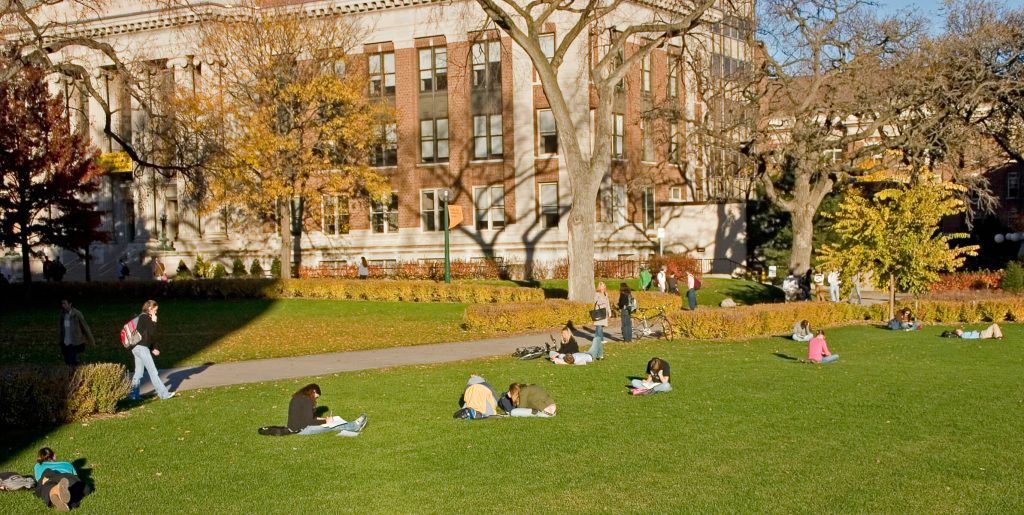
Introductory science courses too often function as bottlenecks rather than gateways to high-demand STEM and health careers. Ohio Strong Start in Science seeks to transform introductory science courses to help more students succeed on their first attempt.
A December webinar shared findings from three projects on developmental education reform in Arkansas, Louisiana, and the City University of New York system. A panel of representatives from each system shared their perspectives on scaling corequisite implementation in their colleges.
As CCRC's research on corequisites continues, researchers find that students are voicing similar experiences across colleges. In this blog post, CCRC researchers share common student perspectives and suggestions on how to better support corequisite students.
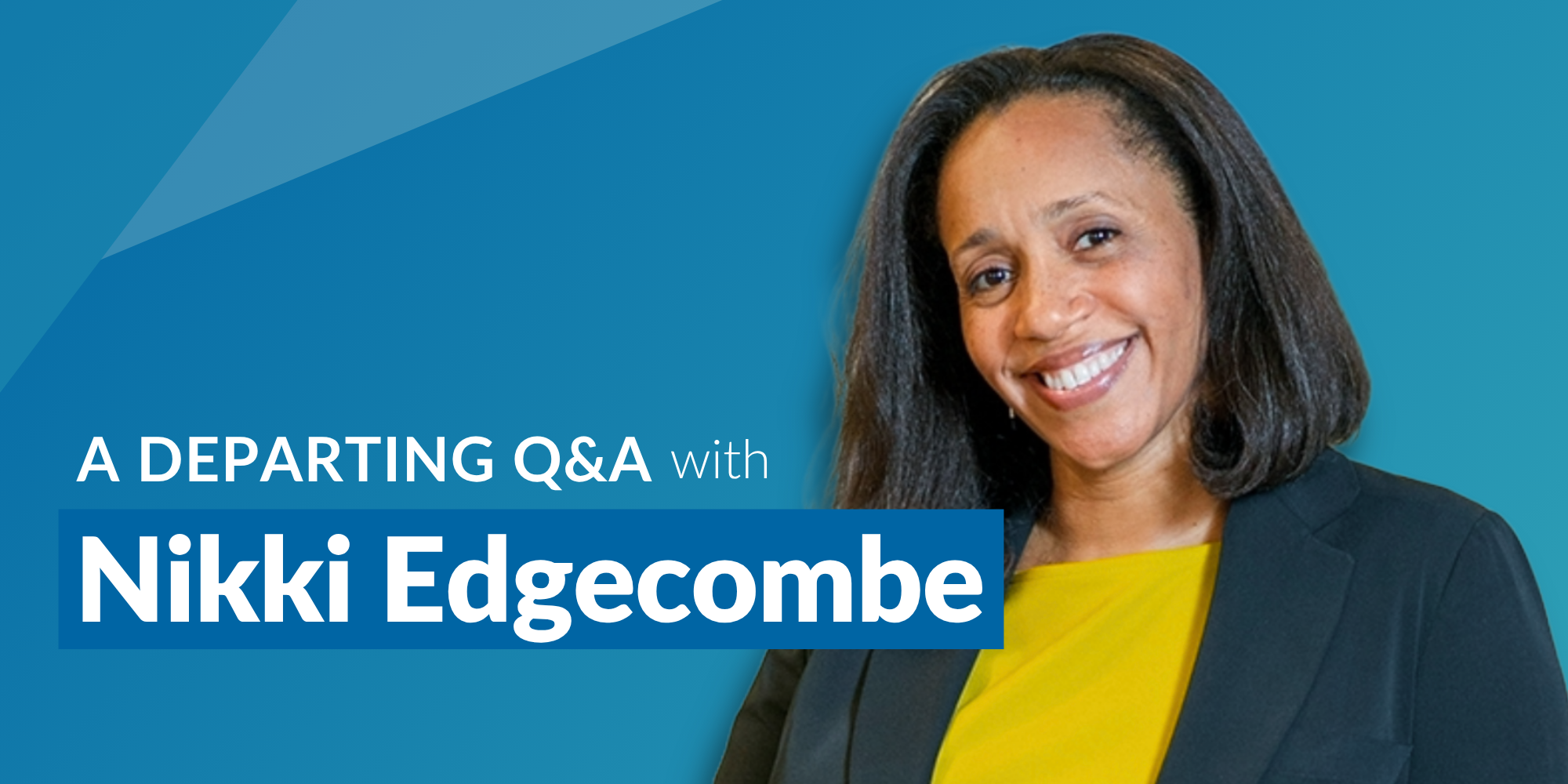
After more than fifteen years at CCRC, Nikki Edgecombe will be joining ECMC Foundation. Elizabeth Ganga had the opportunity to talk with her about her time at CCRC and where she’s headed next.
In order to close equity gaps in developmental math, colleges must address the specific challenges that less privileged students face, including stereotype threat and instructor bias.
Aurely Garcia Tulloch shares the stories of four former dual enrollment students, including why they chose to participate in dual enrollment and how they think their experiences could have improved.
Former CCRC associate director and advisory board member Jim Jacobs shares insights from a study that sheds light on student concerns with short-term workforce training programs and their implications for public policy.
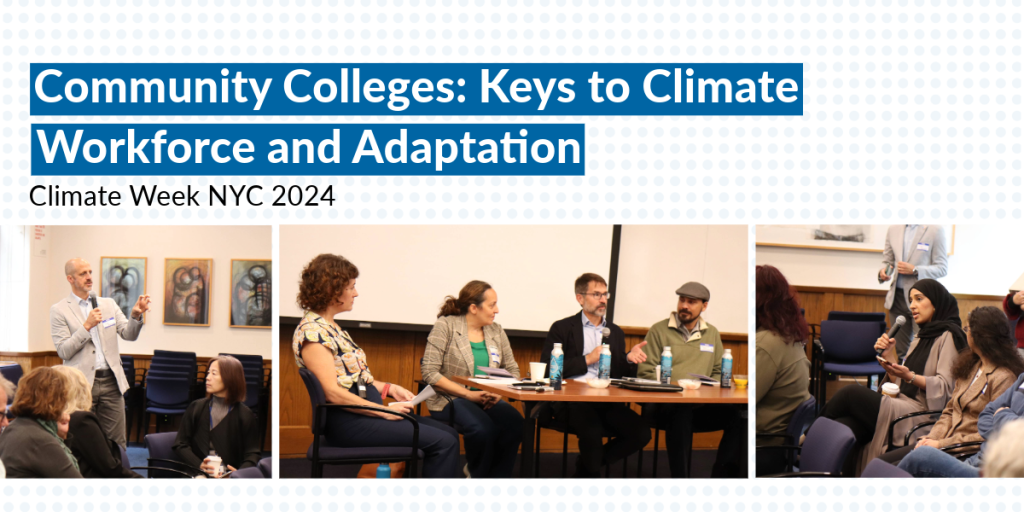
How can community and technical colleges adapt their practices to prepare the workforce for a shift toward sustainable energy? An event brought together higher education researchers and community college workforce leaders to address this question.
What factors might cause community college students to pause their studies? And what motivates them to return? Summer intern Lauren Lawler explores these questions and reflects on her personal experience as a community college student.
Last week, the U.S. Department of Education released new data that, for the first time ever, provide college-level counts of the number of high school dual enrollment students, disaggregated by race/ethnicity and gender. John Fink details a first look at this new information, which represents years of effort among dozens of organizations pushing for better dual enrollment data.
In this blog post, researchers from the Aspen Institute and CCRC share takeaways from their work with ten community colleges and introduce tools designed to help colleges increase the number of students on a path toward high-value programs.
In this blog post, summer intern Deenika Oladipo writes about the rollout of the simplified FAFSA form, how it was received by students and administrators, and what students can expect this year when filing for FAFSA.
CCRC Intern Basmala Zyada writes about how working on a research project on how students choose programs made her reflect on her own impulsive decision to major in English.
This blog discusses the constraints some students have on their time and energy resources and how colleges can rethink their culture, policies, and practices to take time and energy resource inequities into account.
An August webinar focused on the role community colleges can play in preparing for the significant workforce transitions that are occurring as colleges, governments, and industries work to limit, adapt to, and mitigate the effects of climate change. A recording of the webinar is available within this blog post.
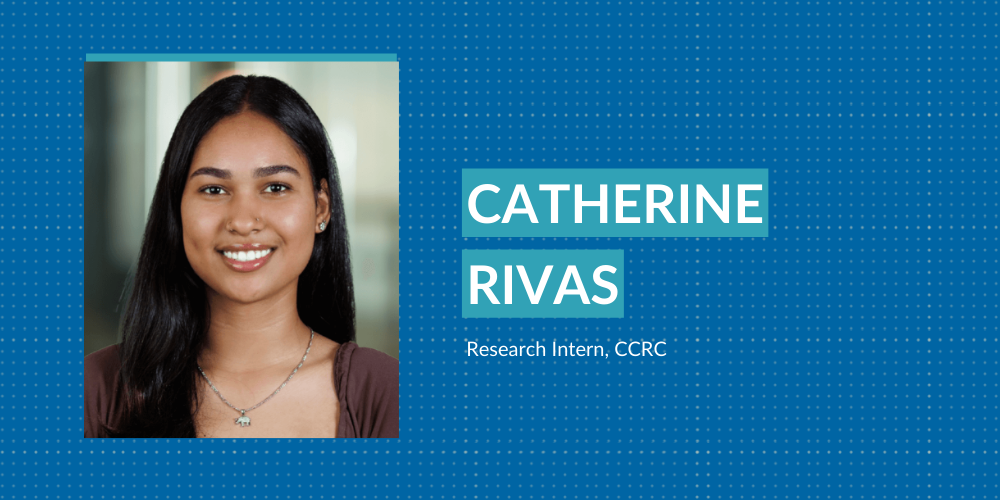
Catherine Rivas is joining CCRC this summer as a research intern. In this Q&A, Rivas delves deeper into her own college experience and her motivations for research.
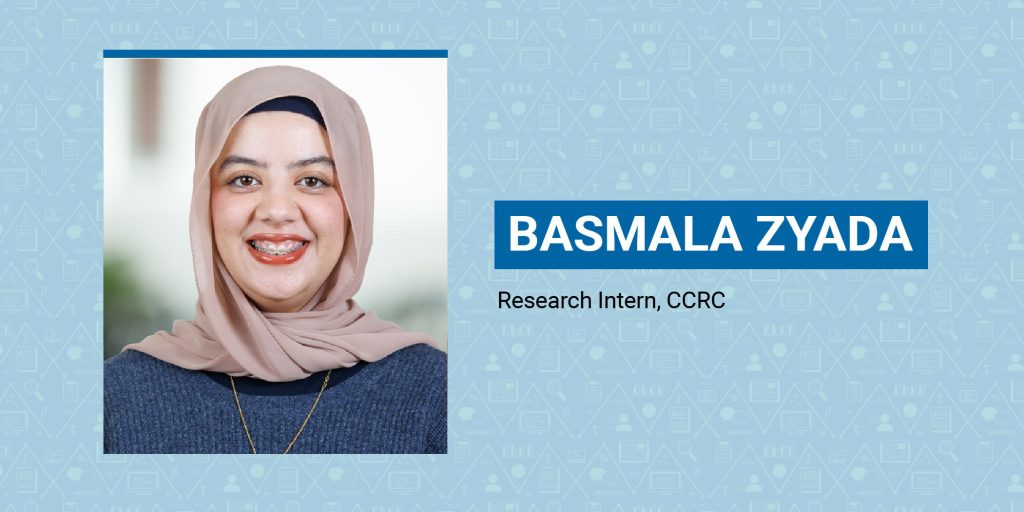
Basmala Zyada is joining CCRC this summer as a research intern. In this Q&A, Zyada shares her journey in the humanities, her creative writing endeavors, and her experiences navigating the world of educational research.
Studies have shown that seeking help from counselors and advisors and informal sources such as family and friends leads to improved student learning and increased self-efficacy, but too few students actually reach out. Amanda Zerbib explores what research tells us about students' help-seeking habits.
The summer season for CCRC is now underway, and six undergraduate interns are bringing new ideas to the center as they support research and communications teams. Learn more about the interns in this blog post.
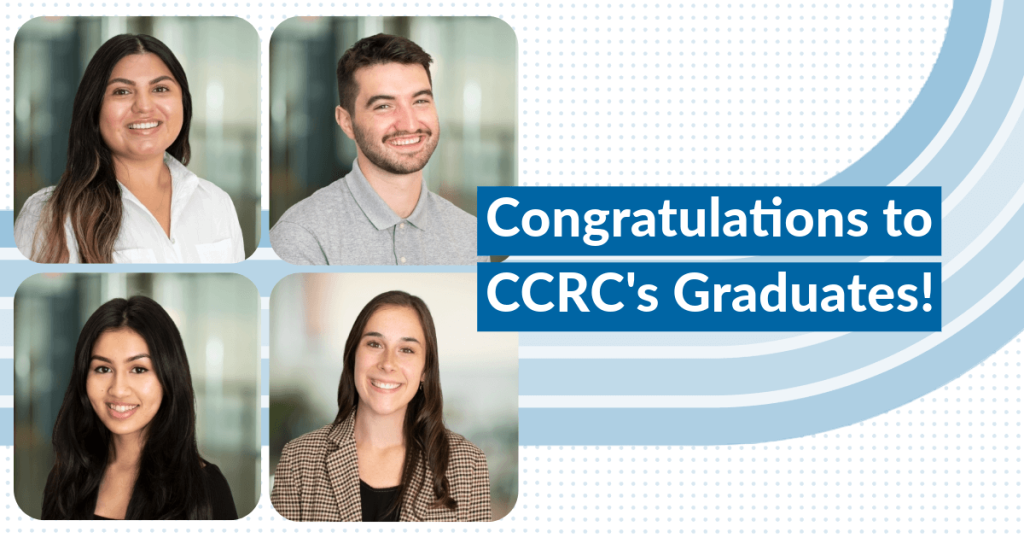
Each commencement season gives us at CCRC a chance to recognize the accomplishments of graduating staff members. This year, we are pleased to celebrate four researchers who have earned their advanced degrees: Jenivee Gastelum, Joe Hille, Farzana Matin, and Hanna Nichols.
Search the CCRC blog
Explore trends in community college outcomes with our interactive data visualizations.