A new study suggests that the work to reduce equity gaps in higher education doesn't end when students earn their diploma—rather, the transition to the workforce is just as critical for closing equity gaps between higher- and lower-income students.
Using newly released institutional data from IPEDS, this blog post details how community college revenues have changed now that pandemic-related Higher Education Emergency Relief funds have ended.
In this blog post, summer intern Deenika Oladipo writes about the rollout of the simplified FAFSA form, how it was received by students and administrators, and what students can expect this year when filing for FAFSA.
By Clive Belfield, Thomas Brock, John Fink, and Davis Jenkins For the community college sector, the COVID-19 pandemic was not like other economic shocks. Traditionally, economic downturns lead students to enroll in college at higher rates: Fiscal shocks are therefore offset by increases in tuition revenue, and college operations and institutional
By John Fink, Tatiana Velasco, and Davis Jenkins Last week, the U.S. Department of Education (ED) released—for the first time ever—public transfer community college student outcomes data for colleges and universities across the country. ED’s analysis examined federal financial aid recipients who started higher education at a community college
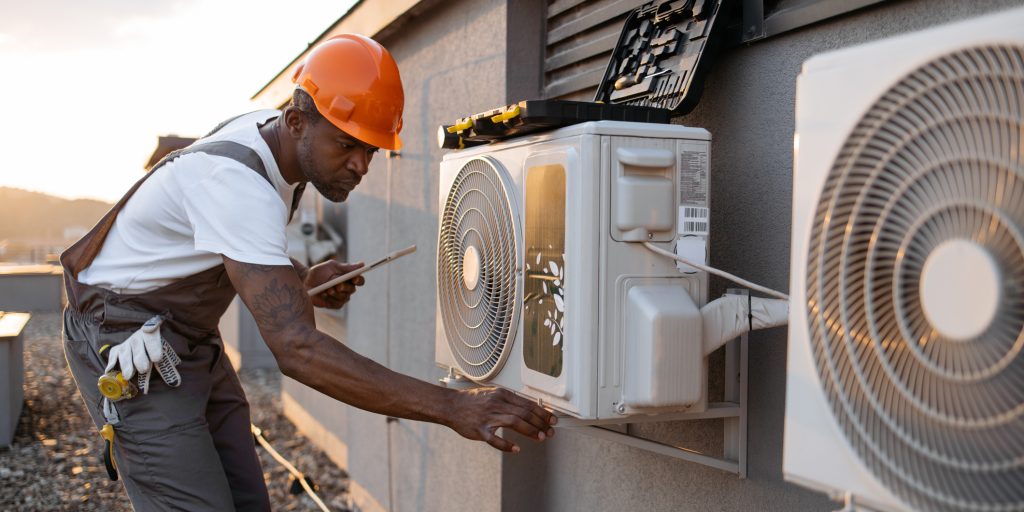
Learn about a new data tool that shows the demand for workers in high-opportunity occupations that are being impacted by efforts to improve sustainability and efficiency, and the role community colleges play in preparing students for these jobs in this blog post.
By putting research into practice, The Alamo Colleges District in Texas made dual credit both accessible and meaningful for more students. Learn how college and high school leaders worked together to make it happen in this blog post.
Dual enrollment provides an opportunity to potentially reduce the time and cost of earning a bachelor’s degree. But what happens when the path after high school isn’t so clear? CCRC's Aurely Garcia Tulloch and Akilah H. Thompson share their experiences as former dual enrollment students and discuss ways to support dual enrollment students attempting to transfer their credits.
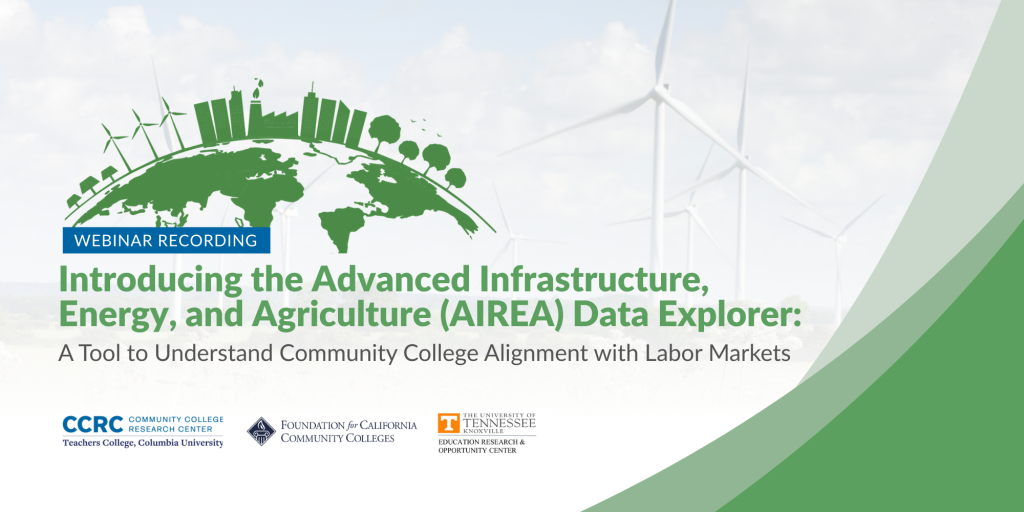
A recent CCRC webinar explored how community colleges can meet the growing workforce demands of evolving advanced infrastructure, energy, and agriculture industries. A recording of the webinar is available in this blog post.
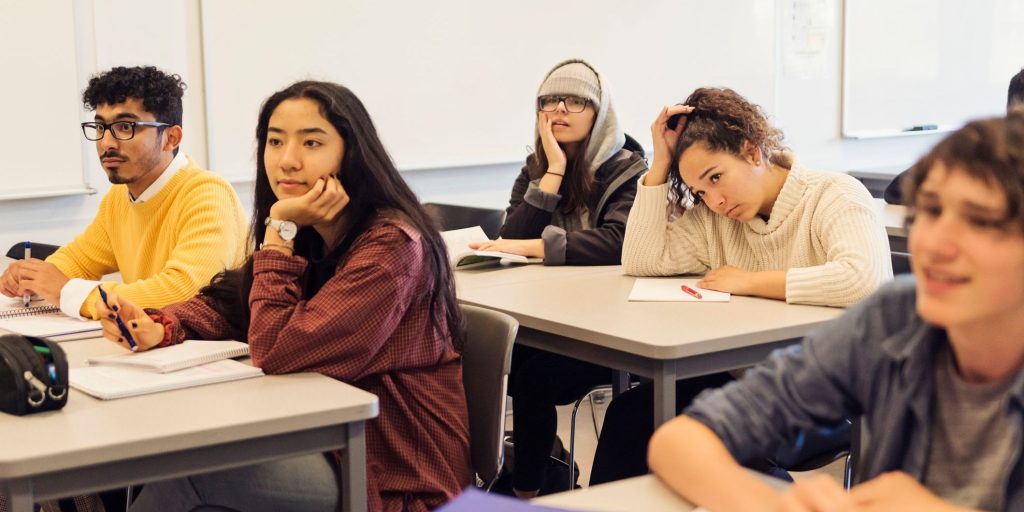
Community colleges are often more accessible than four-year universities in terms of costs and schedule flexibility, but accessibility alone isn’t enough. Summer intern Helen Kim writes about her community college experience and how colleges can design courses that work with students' busy lives.
More community colleges are incorporating themes of sustainability into their general education courses. Learn how an environmental biology course at Mesa Community College in Arizona is incorporating themes of climate action to encourage students to engage with complex, real-world issues in this blog post.
Researchers explore new students’ decision-making process around programs and careers through a study conducted in partnership with four community colleges in California, Maryland, Ohio, and Texas.
CCRC intern Melissa Cruz Duque examines two CUNY pathways for English learners: the intensive English Language Immersion Program (CLIP) and traditional academic ESL courses.
How does dance education function in the community college setting? Dance instructor Heather Dougherty shares what she learned from surveying dance instructors at community colleges across the country.
Community college faculty are finding creative ways to infuse climate literacy into students' required courses. In this blog post, Achieving the Dream's Bret Eynon explores how instructors are addressing climate topics in their classrooms.
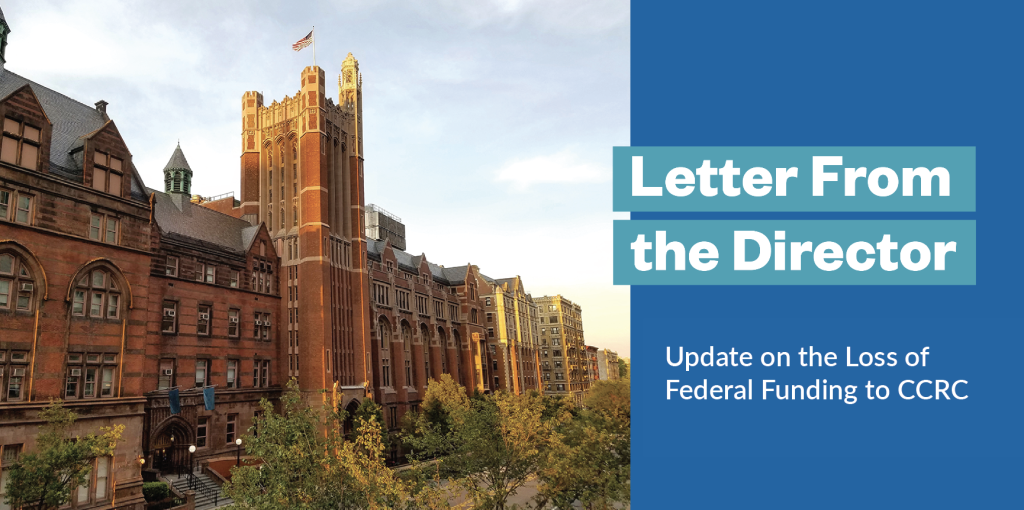
In July, Columbia University and the Trump administration reached an agreement to reinstate federal research funding. Unfortunately, the settlement did not include grants from IES. In this director's letter, Thomas Brock provides an update on how these developments affect research at CCRC.
Meet Helen Kim, CCRC's summer communications intern! In this Q&A, Kim shares a bit about the challenges she's faced as an international student and how she’s thinking about her next steps in higher education.
Melissa Cruz Duque is a summer intern at CCRC. Learn more about how her college journey has shaped her role as a communications intern at CCRC in this Q&A.
CCRC's dual enrollment team has put together a student advisory group to keep their research grounded in students' perspectives. Meet the students on the panel, dubbed the dual enrollment squad!
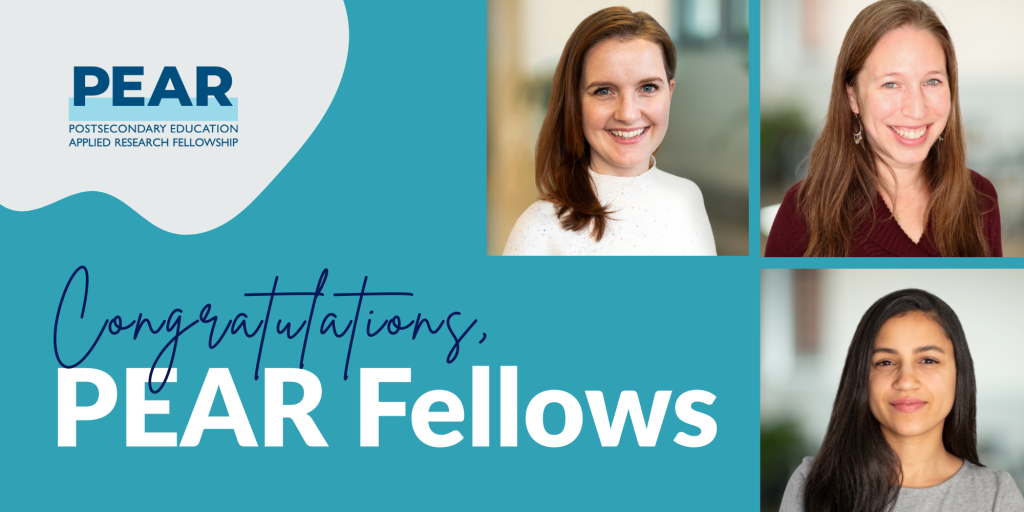
The first group of PhD students being trained for careers in higher education research through the Postsecondary Education Applied Research (PEAR) Fellowship at Teachers College has been awarded Education Sciences Certificates, marking a major milestone along their path to a doctoral degree.
Search the CCRC blog
Explore trends in community college outcomes with our interactive data visualizations.