CCRC's latest data tool shows community college awards by field alongside associated earnings and awardee demographics at national, state, and institutional levels. This dashboard can help community colleges and state systems consider which of their programs put students on paths to post-completion success.
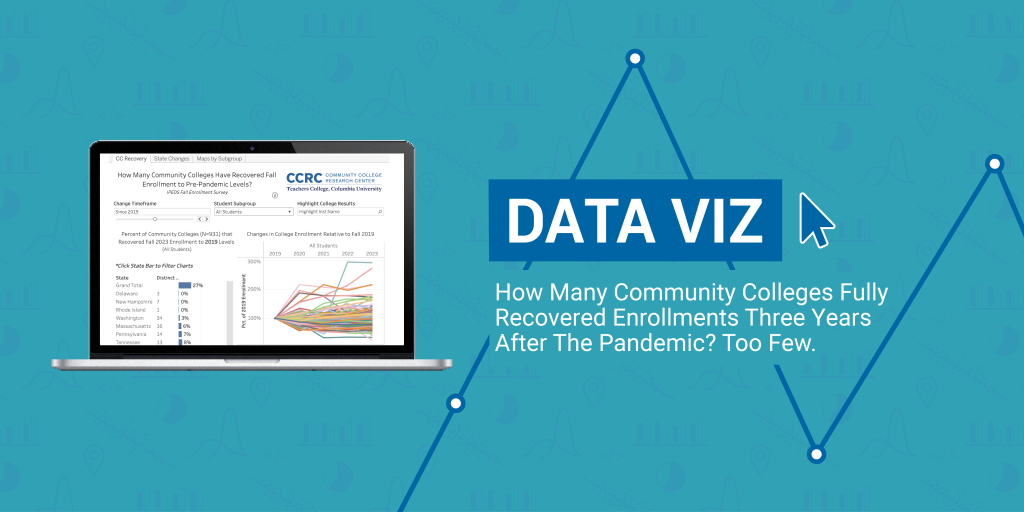
Newly released fall 2023 enrollment numbers offer the most detailed look yet at how individual community colleges and state systems have fared since the onset of the COVID-19 pandemic. Using interactive data dashboards, users can explore trends among student subgroups in particular states and institutions.
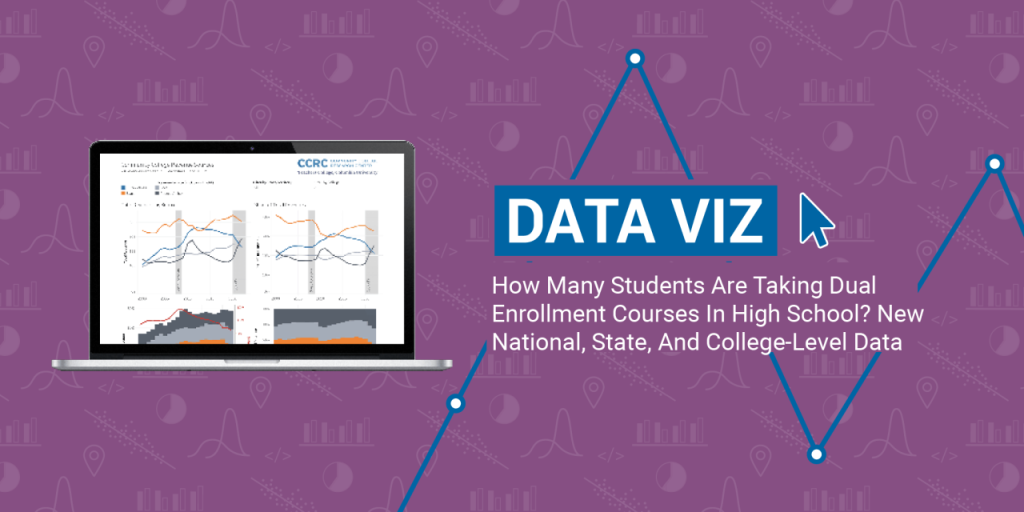
Last week, the U.S. Department of Education released new data that, for the first time ever, provide college-level counts of the number of high school dual enrollment students, disaggregated by race/ethnicity and gender. John Fink details a first look at this new information, which represents years of effort among dozens of organizations pushing for better dual enrollment data.
Ohio waived testing-based eligibility requirements for some dual enrollment students by introducing the Innovative Program (IP) policy in 2017. A new CCRC working paper examines how the state policy was implemented and whether it resulted in expanded access and improved outcomes for Black and Hispanic students.
In a recent webinar, CCRC researchers explained a new approach to dual enrollment called Dual Enrollment Equity Pathways, or DEEP. Educators from college and school-district partnerships shared their insights about how it works on the ground.
Search the CCRC blog
Explore trends in community college outcomes with our interactive data visualizations.