This blog post introduces the dual enrollment pathways scale of adoption assessment, a self-assessment tool for colleges and college–K-12 partnerships to compare their current dual enrollment practices against the DEEP framework.
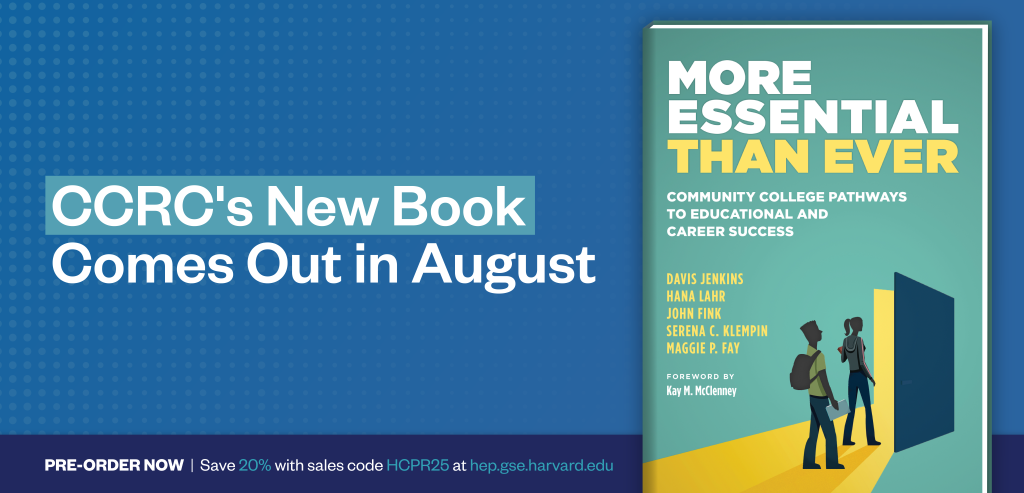
A forthcoming book to be published in August 2025 takes stock of what we have learned over nearly a decade of research on the guided pathways model for whole-college transformation. This blog post, the first in a series, features insights from the book, including practical guidance for community colleges on meeting the challenges they face today.
A new CCRC report examines data on what degrees and certificates community colleges nationally are awarding and which of those programs are more likely to enable students to secure good jobs directly or transfer efficiently to a bachelor’s degree program in students’ major fields of interest.
A new approach to dual enrollment encourages community colleges to partner with middle and high schools to motivate and prepare underserved students to pursue a postsecondary degree in a field of interest directly after high school.
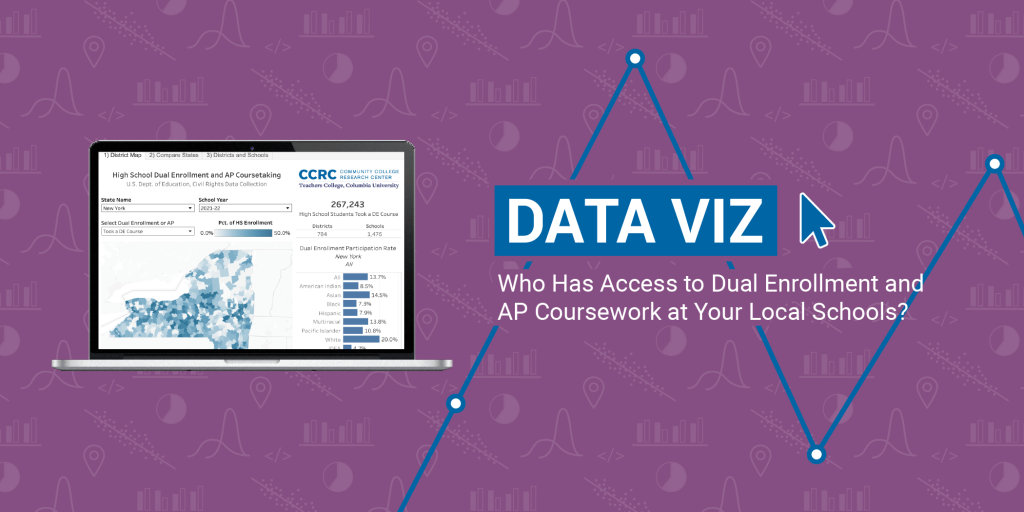
An interactive dashboard draws on multiple years of CRDC data to provide a school- and district-level view of dual enrollment and Advanced Placement access, disaggregated by students’ race/ethnicity, English language learner status, and disability status. The dashboard is meant to help college and K-12 educators as they strengthen and expand dual enrollment programs.
Search the CCRC blog
Explore trends in community college outcomes with our interactive data visualizations.