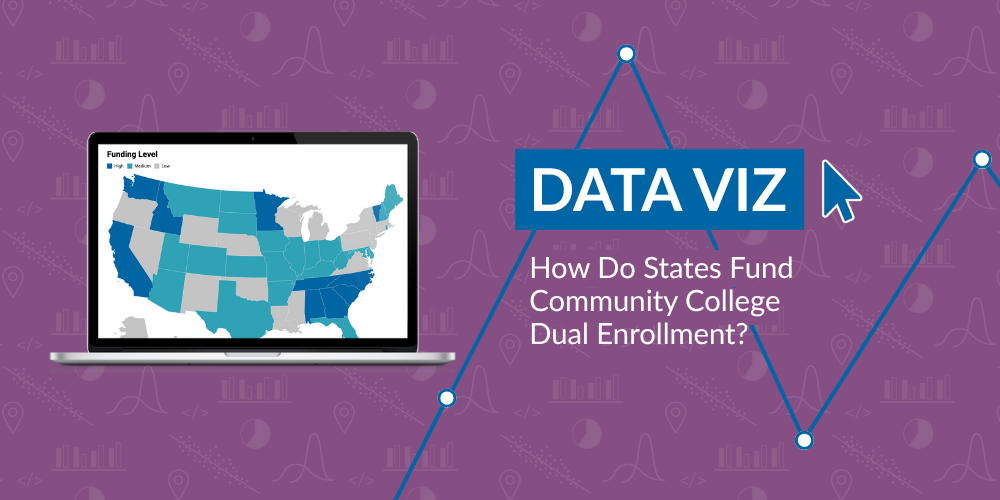
To facilitate comparisons across states, this blog post shows how community colleges fund dual enrollment by state, including how much funding is set aside for dual enrollment, whether a state uses formula funding or grants, and how funding flows through K-12 systems.
In a new report, CCRC and CHSA provide state leaders with recommendations for improving dual enrollment programming in ways that support practitioners’ efforts. The recommendations are organized into three areas: expanding access, strengthening on-ramps to postsecondary pathways, and building and sustaining strong partnerships.
Students are told that enrolling in a community college is an affordable onramp to a bachelor’s degree. But in reality, only a small percentage of students transfer and graduate. To fix the problem, experts first have to know what’s causing it. Alex Anacki and Jessica Steiger address the current lack of available transfer data.
Earning college credit in high school enables more students—especially those historically underrepresented in higher education—to pursue college after high school. However, many students who stand to benefit the most from these opportunities often have limited access to them. Jessica Steiger breaks down a new CCRC brief that examines the potential of five different models to help underrepresented students enter college degree programs in high-opportunity fields.
Jessie Steiger has always understood the power of transitions. From her own turbulent transition into high school to the challenges she faced as a transfer student at Penn State, the CCRC senior research assistant and PEAR fellow says the times she spent in flux tuned her in to the ways the education system is stacked against some students.
Search the CCRC blog
Explore trends in community college outcomes with our interactive data visualizations.