A new CCRC report examines data on what degrees and certificates community colleges nationally are awarding and which of those programs are more likely to enable students to secure good jobs directly or transfer efficiently to a bachelor’s degree program in students’ major fields of interest.
A new approach to dual enrollment encourages community colleges to partner with middle and high schools to motivate and prepare underserved students to pursue a postsecondary degree in a field of interest directly after high school.
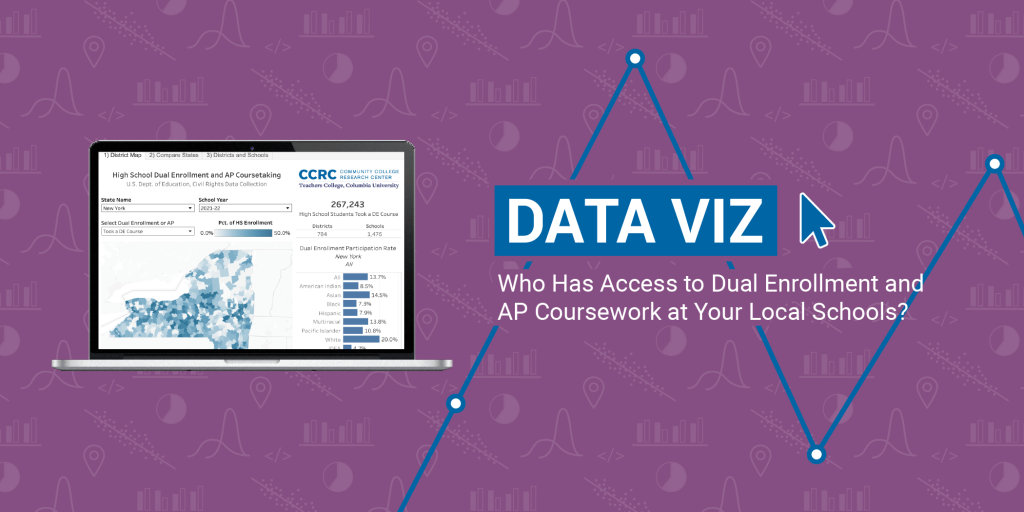
An interactive dashboard draws on multiple years of CRDC data to provide a school- and district-level view of dual enrollment and Advanced Placement access, disaggregated by students’ race/ethnicity, English language learner status, and disability status. The dashboard is meant to help college and K-12 educators as they strengthen and expand dual enrollment programs.
CCRC's latest data tool shows community college awards by field alongside associated earnings and awardee demographics at national, state, and institutional levels. This dashboard can help community colleges and state systems consider which of their programs put students on paths to post-completion success.
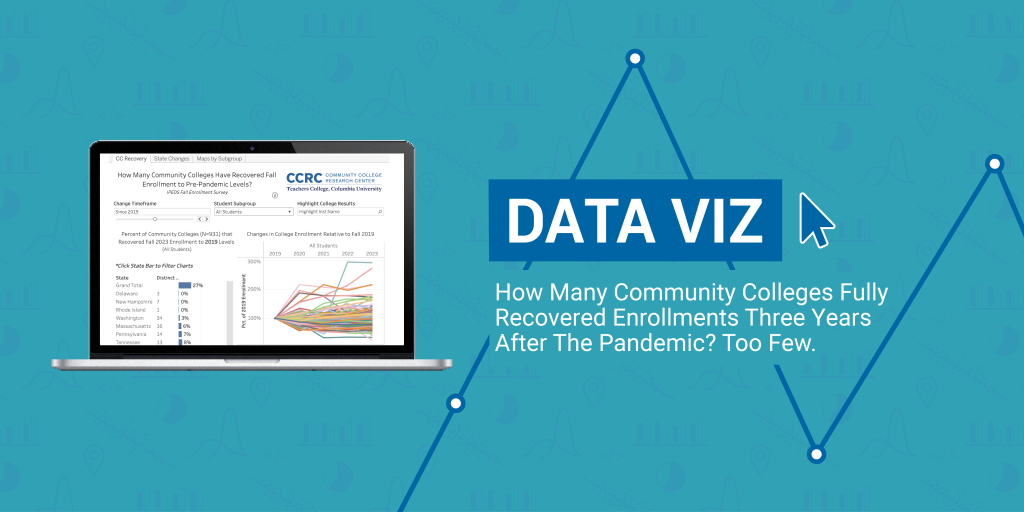
Newly released fall 2023 enrollment numbers offer the most detailed look yet at how individual community colleges and state systems have fared since the onset of the COVID-19 pandemic. Using interactive data dashboards, users can explore trends among student subgroups in particular states and institutions.
Search the CCRC blog
Explore trends in community college outcomes with our interactive data visualizations.