
By Davis Jenkins, John Fink, and Hana Lahr
Community college students are more likely to complete a credential when they have an educational plan aligned with their educational and career goals. They can also complete in less time and at lower cost when colleges use those plans to schedule courses and monitor students’ progress toward completion.
Yet at most community colleges we’ve studied, the majority of students are not on a clear path to a credential that leads to a good job or successful transfer, with a plan that is customized to their timeline and goals. In other words, we are asking students to navigate complex institutions without a map.
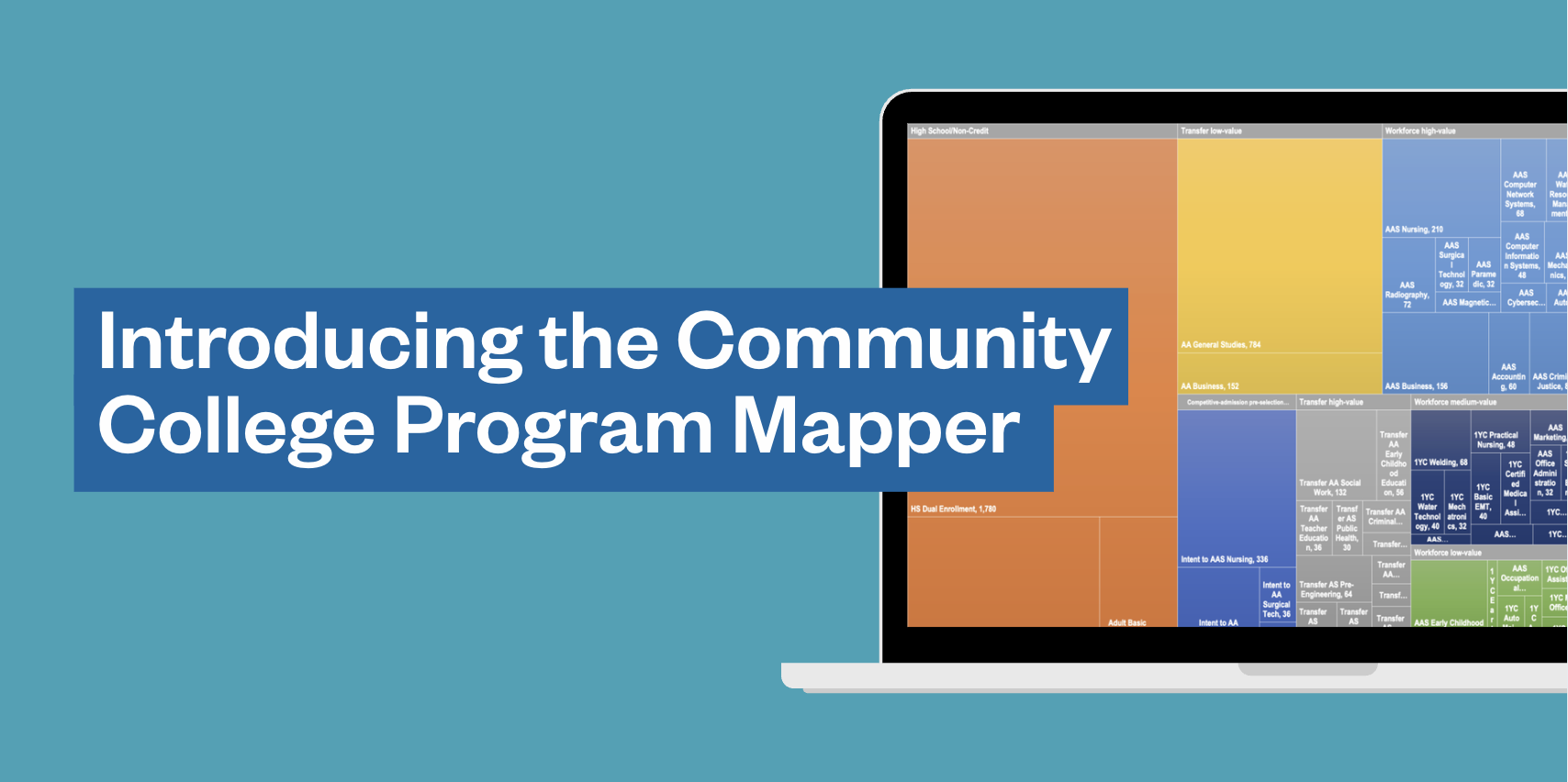
In our new CCRC Analytics brief, Planning Student Paths to Post-Completion Success: A Guide for Using the Community College Program Mapper, we introduce an updated version of the Community College Program Mapper—a practical data tool designed to help colleges see, clearly and concretely, which students are on a path to success and which are not, and to guide colleges to strengthen supports for students to explore, choose, and plan a program of study aligned with their career and further education interests and aspirations. The tool can also be used to track progress on efforts to increase the number of students who are helped to develop a full-program plan.
Why Educational Plans Matter
As we argue in our new book, More Essential Than Ever: Community College Pathways to Educational and Career Success, educational plans are foundational to student success.
They help students clarify their goals and understand the specific steps required to reach them. Without a plan, students often take courses that don’t advance their objectives, or they lose motivation because they cannot see how today’s coursework connects to tomorrow’s opportunities. As our colleagues at the Center for Community College Student Engagement (CCCSE) have found, students without a plan often do not know what classes they are taking next term or when they are supposed to complete their credential. But when students have a plan, it can be reassuring and motivating.
Plans also create a shared roadmap. Advisors, faculty, and students can monitor progress and adjust when goals change. And when colleges know what courses students intend to take and when, they can align scheduling to reduce bottlenecks, excess credits, and delays.
Despite this, most colleges cannot easily answer basic questions:
- How many students are enrolled in programs that clearly lead to living-wage employment or major-specific transfer?
- How many students in each program have an individualized educational plan?
- Where are we enrolling large numbers of students who lack both a clear pathway and a plan?
The Program Mapper is designed to answer those questions—and help colleges act on the answers.
What the Updated Program Mapper Does
Colleges load de-identified student-level enrollment data into a prebuilt Excel workbook. The tool automatically generates visualizations and tables that show:
- Enrollment by program track classified by post-completion value for employment and further education.
- The share of students in each program who have an individualized plan.
- Enrollment and planning patterns by age.
Below is a screenshot of a treemap showing enrollment classified by post-completion value categories—including high-, medium-, and low-value workforce programs, high- and low-value transfer programs, high school/noncredit programs, and competitive-admission pre-selection programs. The rectangle sizes in the treemap reflect the relative number of students enrolled.
Program Mapper Tab 2: Program Enrollment by Post-Completion Value
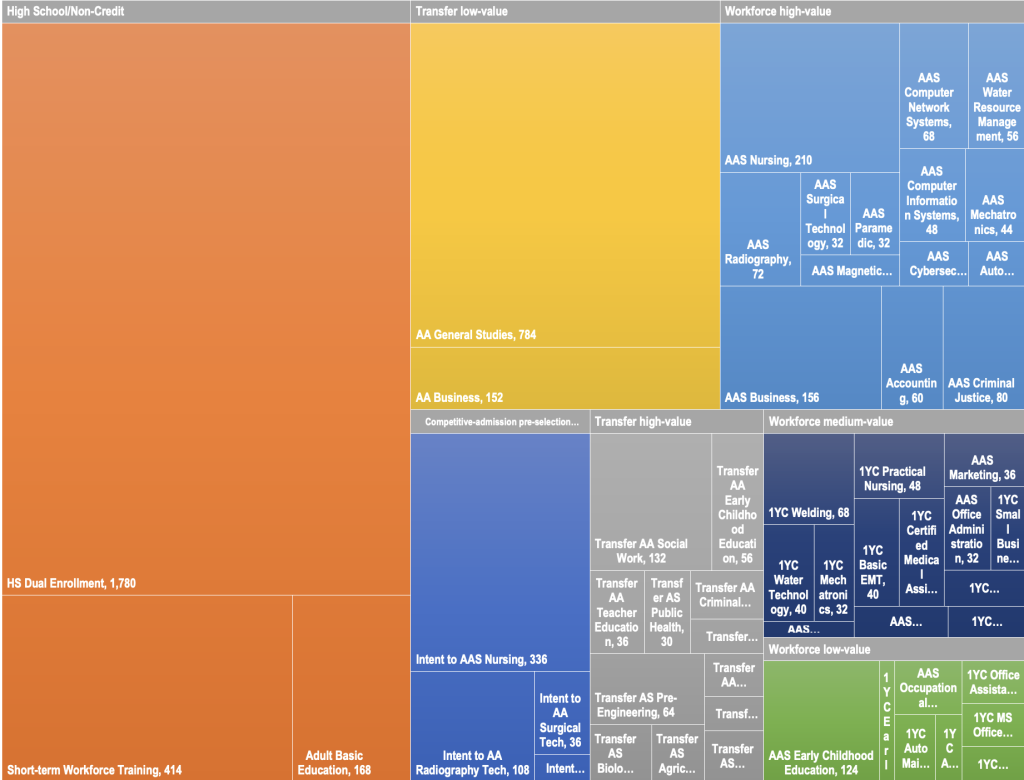
For many colleges, these treemaps reveal a striking pattern: large concentrations of students in general-studies transfer, pre-nursing, short-term workforce, and high school dual enrollment programs—areas that often lack structured pathways or major-specific plans.
This is both a problem and an opportunity. These students are already connected to the college. With clearer pathways and stronger planning processes, many could complete credentials that lead to strong employment or transfer outcomes.
The tool also shows the share of new and returning students in each program who have an individualized educational plan.
Program Mapper Tab 3: Enrollment Distribution by Educational Plan Status
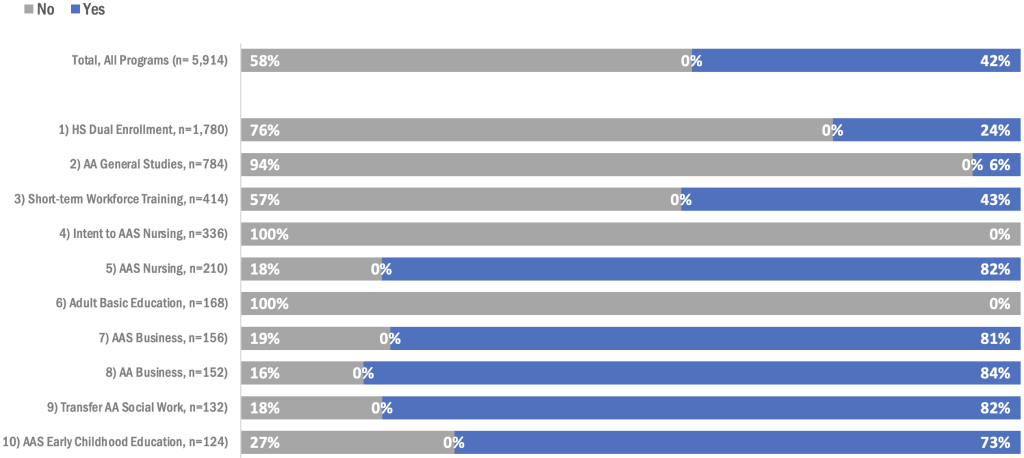
These patterns are often difficult to see in standard enrollment reports. The Program Mapper makes them visible—and actionable.
Five High-Leverage Areas for Action
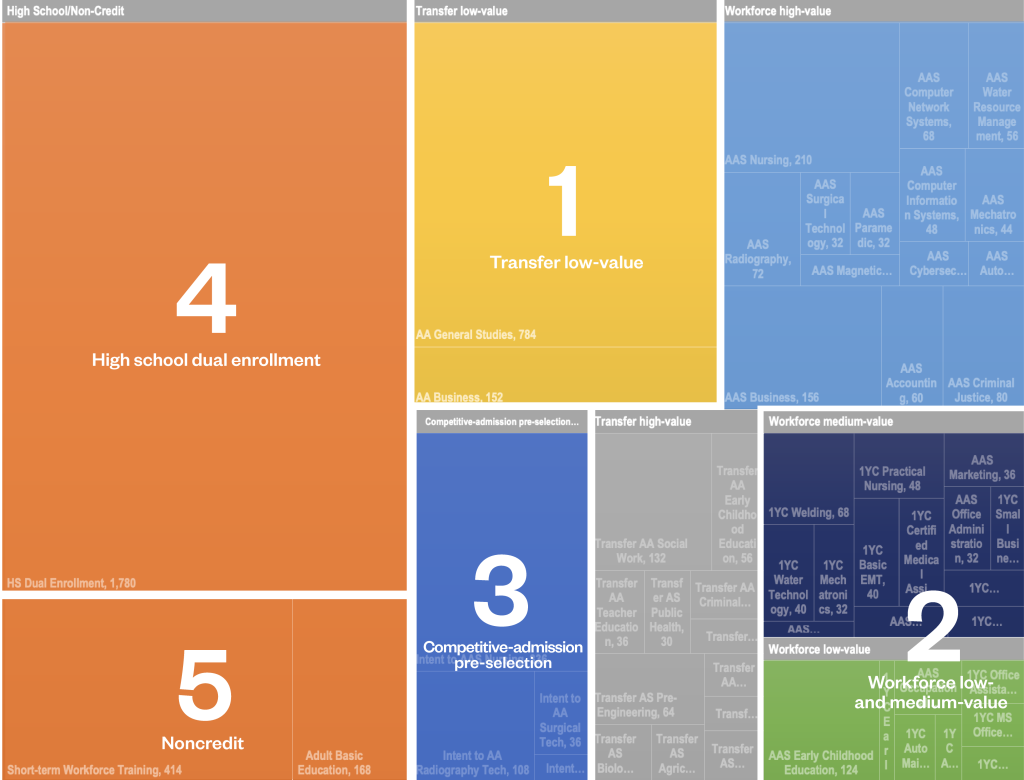
Across the dozens of colleges we’ve helped to conduct similar analyses, we consistently observed five program value areas where large numbers of students lack a clear, goal-aligned plan. Focusing on strategies for these particular areas can yield significant gains in persistence, completion, and post-completion success.
The relevant program areas are shown in the following figure and described below.
Five High-Leverage Program Areas for Student Planning Support
1. In low-value transfer programs, help transfer-intending students develop a major-specific plan.
Many students who intend to earn a bachelor’s degree are placed into general studies or liberal arts tracks without identifying a likely major. Broad transfer degrees often fail to align with lower-division requirements in specific fields. Helping students explore programs early and develop a major-specific transfer plan reduces unnecessary credits and delays. This matters because without a major-specific educational plan, students accumulate excess credits and delay graduation.
2. In low- and medium-value workforce programs, help students build advancement plans—instead of just earning entry-level credentials.
Short-term workforce programs can provide quick entry into employment, but many lead to jobs with limited wage growth. Even longer certificate programs often require further education for advancement into living-wage careers.
Career-ladder maps and structured advancement planning can help students pursue additional credentials while working. “Stackable” credentials only work if students actually stack them. Without a clear advancement plan, most don’t.
3. In competitive-admission pre-selection tracks, help students develop a structured Plan B.
Programs like nursing and radiologic technology offer strong returns but have limited capacity. Many students aspire to enter these programs, yet only a fraction are admitted. Early identification of and planning for an alternative pathway in fields such as health IT, medical billing, public health, and healthcare management can prevent students from accumulating credits without earning a strong credential.
Without a Plan B, capable students can drift for years, reapply to competitive programs, and never complete a viable pathway to a college credential or career in healthcare.
4. In dual enrollment programs, move students from “random acts” of coursetaking to intentional on-ramps.
Dual enrollment is now the only major area of sustained enrollment growth in community colleges. Yet many dual enrollment students take courses that are not aligned to a postsecondary program.
Aligning course offerings to high-opportunity pathways and embedding planning support can transform dual enrollment into a structured bridge to college programs. Dual enrollment should launch students onto a clear pathway—not just give them credits.
5. In noncredit and adult basic skills programs, build bridges into credit-bearing, high-opportunity pathways.
Many colleges enroll substantial numbers of students in noncredit workforce and adult basic skills programs. These students often aspire to better jobs but lack structured guidance into credit-bearing programs. Without a plan for transition, noncredit programs can become dead ends rather than stepping stones.
Clear transition pathways, proactive advising, and bridge programming can turn these entry points into gateways.
For each area, the guide connects analysis from the tool to practical strategies described in more depth in More Essential Than Ever.
A Retention Strategy Hiding in Plain Sight
Helping more students develop individualized, goal-aligned plans may be the most underused retention strategy in community colleges today.
Students are more likely to persist when they can see where they are going. Colleges are more effective at graduating students on time and at lower cost when they know where their students are headed.
The guide outlines how colleges can use the Program Mapper as part of a cross-functional improvement cycle by:
- Validating and classifying programs using local data.
- Convening leaders from academic affairs, advising, workforce, IR, and enrollment management.
- Identifying and prioritizing high-leverage strategies like the five outlined above and strengthening planning processes and program maps in priority areas.
- Tracking progress each term in the share of students with goal-aligned plans.
Used this way, the tool becomes more than a diagnostic report. It becomes a framework for aligning programs and guidance to increase completion and post-completion success.
We encourage colleges to dive right in by downloading the brief and Excel tool. Then load your data and convene your student success leadership team. Within a few hours, you will likely see patterns that align with one or more of the five high-leverage strategies which can help point the way toward stronger outcomes.
Funding for this work was provided by Ascendium Education Group.