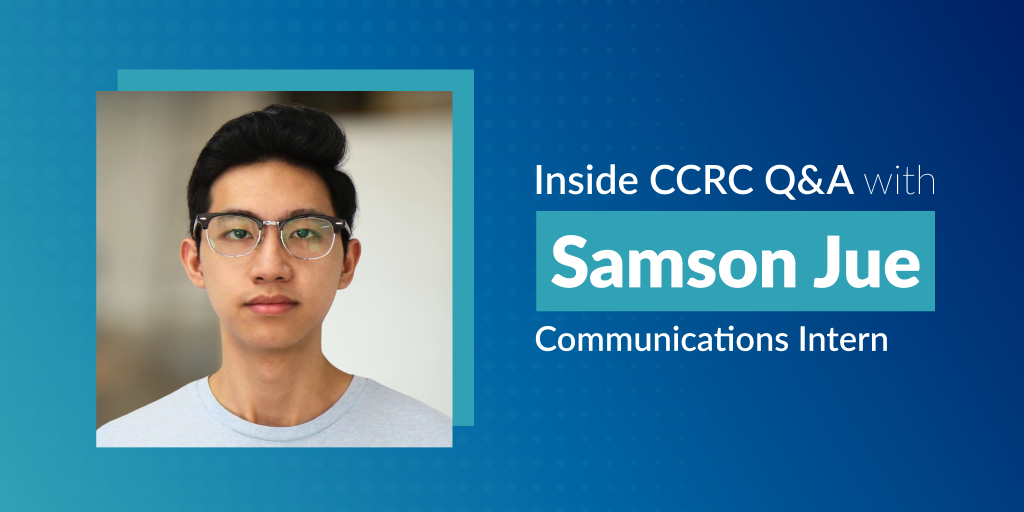
In this Q&A, communications intern Samson Jue discusses his academic interests and the challenges he faced navigating higher education during the aftermath of the COVID-19 pandemic.
A recent CCRC paper outlines how high schools and colleges define and navigate their roles and responsibilities within dual enrollment partnerships. In this blog post, the authors share four takeaways for supporting successful dual enrollment partnerships.
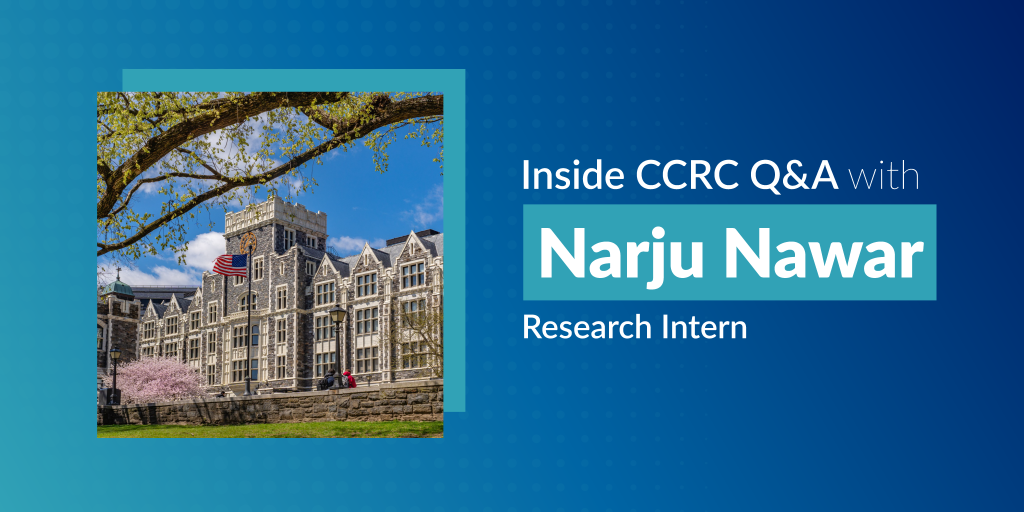
In this Q&A, Research Intern Narju Nawar discusses her summer work at CCRC, the experiences that led to her interest in higher education, and her career goals.
In this Q&A, Research Intern Naomi Long discusses her summer work at CCRC and how her experiences as a transfer student inform her interest in higher education policy and research.
At Volunteer State Community College in Tennessee, a professional development program designed to help faculty understand the needs and strengths of students taking corequisite courses is central to the college's approach to developmental education reform.
Search the CCRC blog
Explore trends in community college outcomes with our interactive data visualizations.