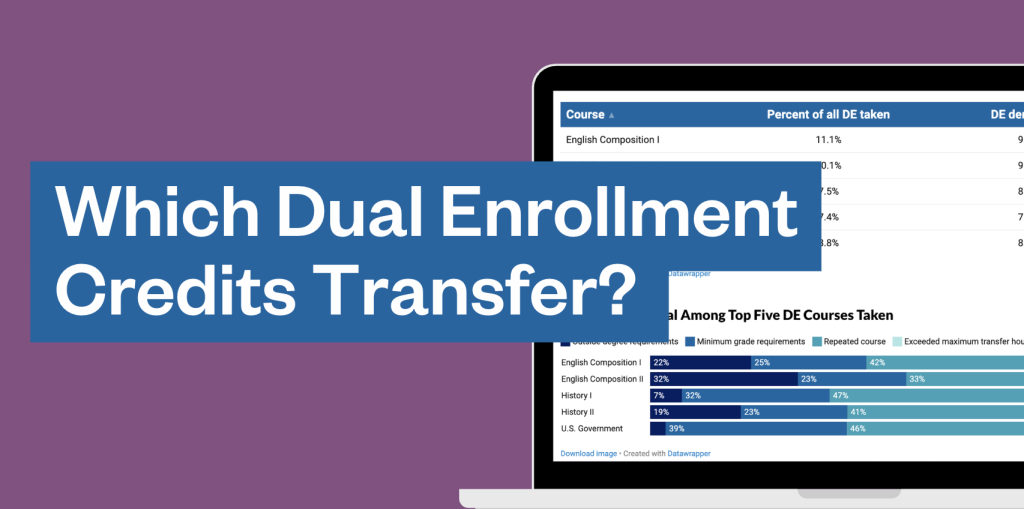
Using new data from the Texas Higher Education Coordinating Board, this blog post offers insights on which dual enrollment courses apply to degree programs when former dual enrollment students transfer from community colleges to public universities.
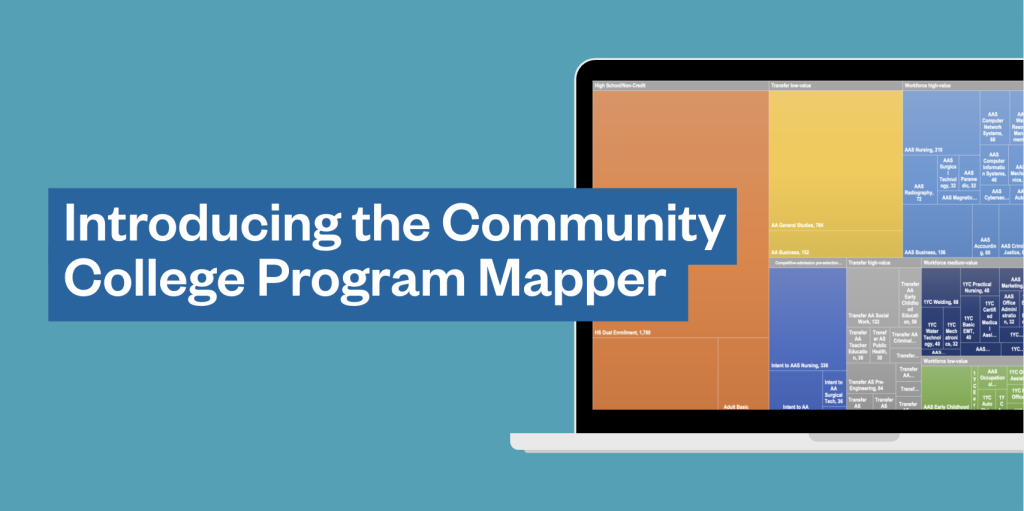
This blog post introduces an updated version of the Community College Program Mapper—a practical data tool designed to help colleges see which students are on a path to success and which are not, and to guide colleges to strengthen supports for students to explore and plan a program of study aligned with their education and career aspirations.
Is noncredit developmental education really helping students? English professor Malkiel Choseed explores what happened when Onondaga Community College did away with developmental English courses and implemented corequisite courses, which allowed all incoming students to earn college credit for their first-year composition courses.
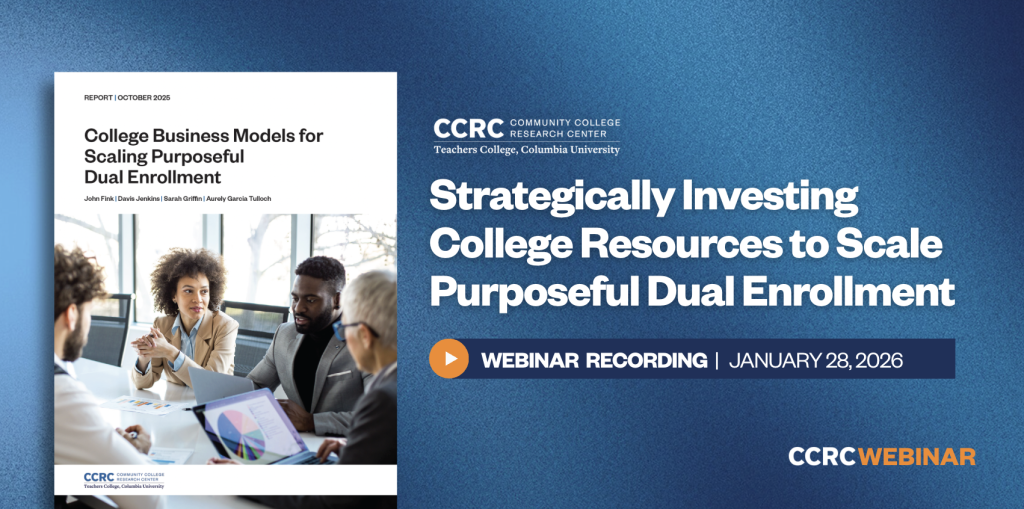
A January webinar focused on how states fund community college dual enrollment and featured a panel of college leaders who shared strategies for financially sustainable investments in advising and student supports, high-quality instruction and support, and expanded outreach and access.
In this blog post, the first in a series written by dual enrollment students, Sebastian Sarmiento of Texas A&M International University discusses how his dual enrollment experience influenced his decision to attend college locally rather than away from home.
Introductory science courses too often function as bottlenecks rather than gateways to high-demand STEM and health careers. Ohio Strong Start in Science seeks to transform introductory science courses to help more students succeed on their first attempt.
Before we dive into the new year—which will mark 30 years since the founding of CCRC—we’re taking time to celebrate our colleagues’ accomplishments and the ways they’ve furthered our mission to improve community colleges in 2025.
Tom Brock reflects on the sudden cancellation of federal research grants to CCRC earlier this year and the challenges it created. While the situation remains unchanged, CCRC closes out 2025 with gratitude for the foundations that recognize the value of CCRC’s work and have stepped in with vital support.
A December webinar shared findings from three projects on developmental education reform in Arkansas, Louisiana, and the City University of New York system. A panel of representatives from each system shared their perspectives on scaling corequisite implementation in their colleges.
Postsecondary learners will soon be able to apply for workforce Pell, an expansion of the federal Pell Grant. But very few occupational training programs meet the proposed criteria for eligibility. Maria Cormier explains how Virginia's G3 scholarship program provides some key lessons for other states designing Pell-eligible workforce programs
How certain are students about their program of study and potential career path when they start college? What factors influence their choices, and how do their decisions change over time? A November 19 webinar explored these questions and shared findings from a longitudinal study on students' program and career choices.
Three students enrolled in courses that piloted the Postsecondary Teaching with Technology Collaborative's Instructional Model share their experiences using evidence-backed strategies to foster and reinforce learning skills.
Studies show that first-generation college students are even more likely to stop out of college than students generally. What motivates first-generation students to stop out before completing a credential? New findings from a CCRC study examining the support networks of first generation students shed light on the question.
The Community College Climate Summit, cohosted by the Chancellor's office and the Foundation for California Community Colleges, convened community college and climate leaders to discuss workforce development, curriculum integration, community engagement, and campus sustainability. Read about key takeaways in this blog post.
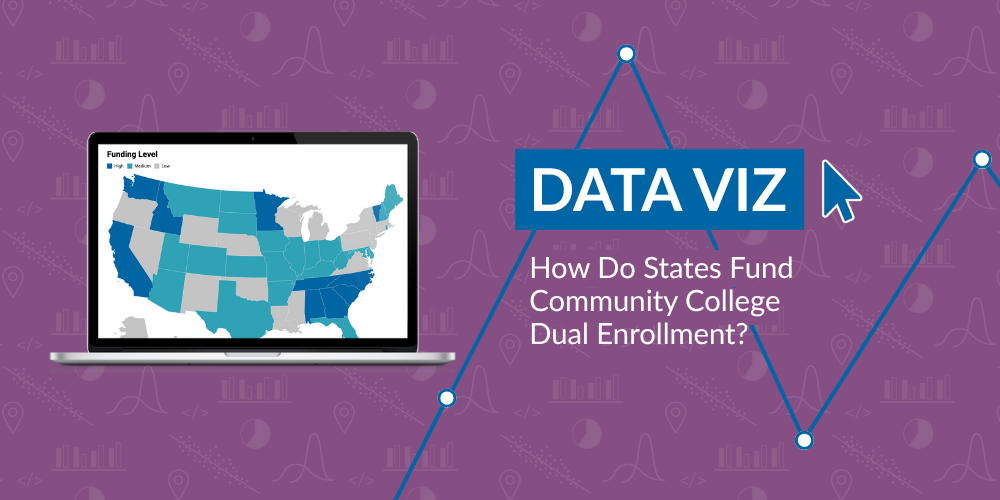
To facilitate comparisons across states, this blog post shows how community colleges fund dual enrollment by state, including how much funding is set aside for dual enrollment, whether a state uses formula funding or grants, and how funding flows through K-12 systems.
Search the CCRC blog
Explore trends in community college outcomes with our interactive data visualizations.