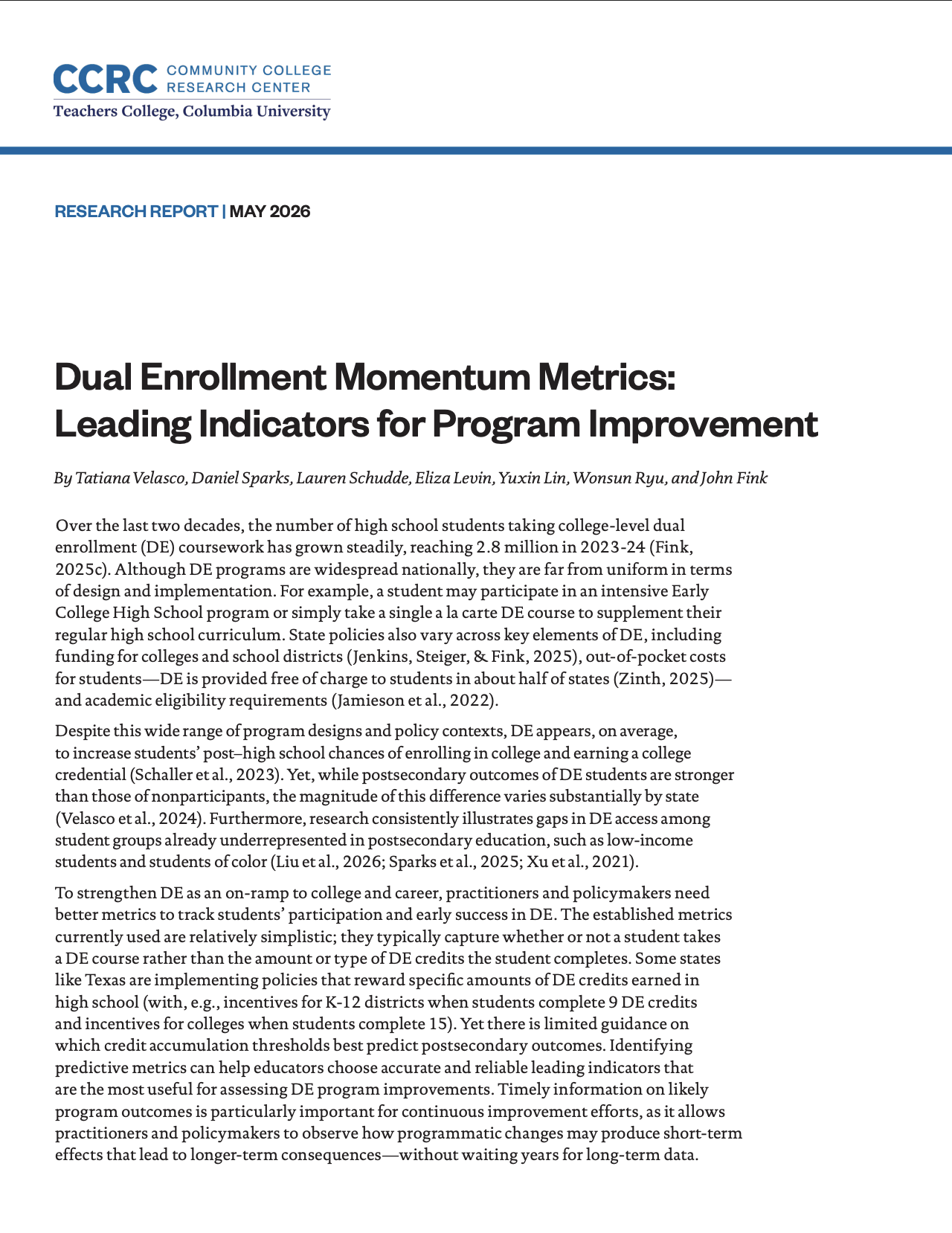
This brief provides an overview of dual enrollment and includes recommendations for college leaders and policymakers to scale dual enrollment programs as pathways to opportunity.
Veronica MinayaAdela SolizJudith Scott-ClaytonAmy E. Brown
Using information and cost data from several CUNY campuses, this brief describes the FWS program’s core administrative components, estimates the campus costs of its implementation, and shows how program scale, staffing, and technology shape these costs.
This report details promising early effects of reform at ten colleges participating in the Unlocking Opportunity network and provides recommendations for how community colleges can strengthen program value and help more students access good jobs and bachelor's degrees.
Drawing on faculty and student survey data and interviews, this brief reports on a pilot study of the SDL Instructional Model and finds that faculty and students perceived the model as valuable and distinct from typical practice in online courses.
This model offers a set of research-based strategies designed to help students more effectively manage their learning in online and hybrid courses, includes guidance for instructors, and provides recommendations for adopting and scaling the strategies across institutions.
Drawing on student surveys, staff interviews, and administrative data, this brief describes the pandemic-era evolution of the FWS program across multiple undergraduate CUNY colleges, highlighting institutional management challenges, student access issues, and common academic benefits of work-study jobs.
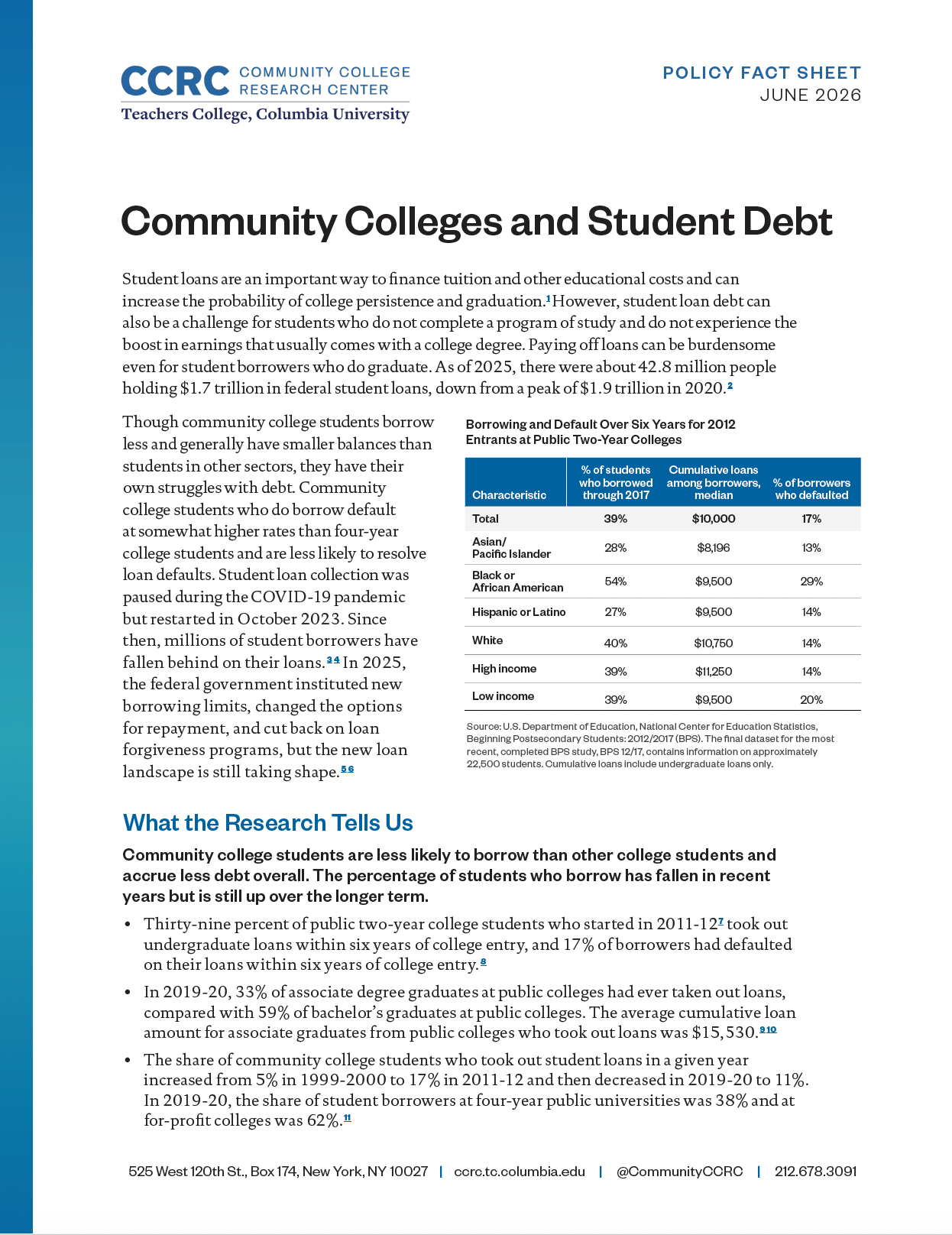
This new fact sheet explores student debt among community college students and provides policy considerations for supporting students in making informed borrowing decisions and successfully repaying their loans.
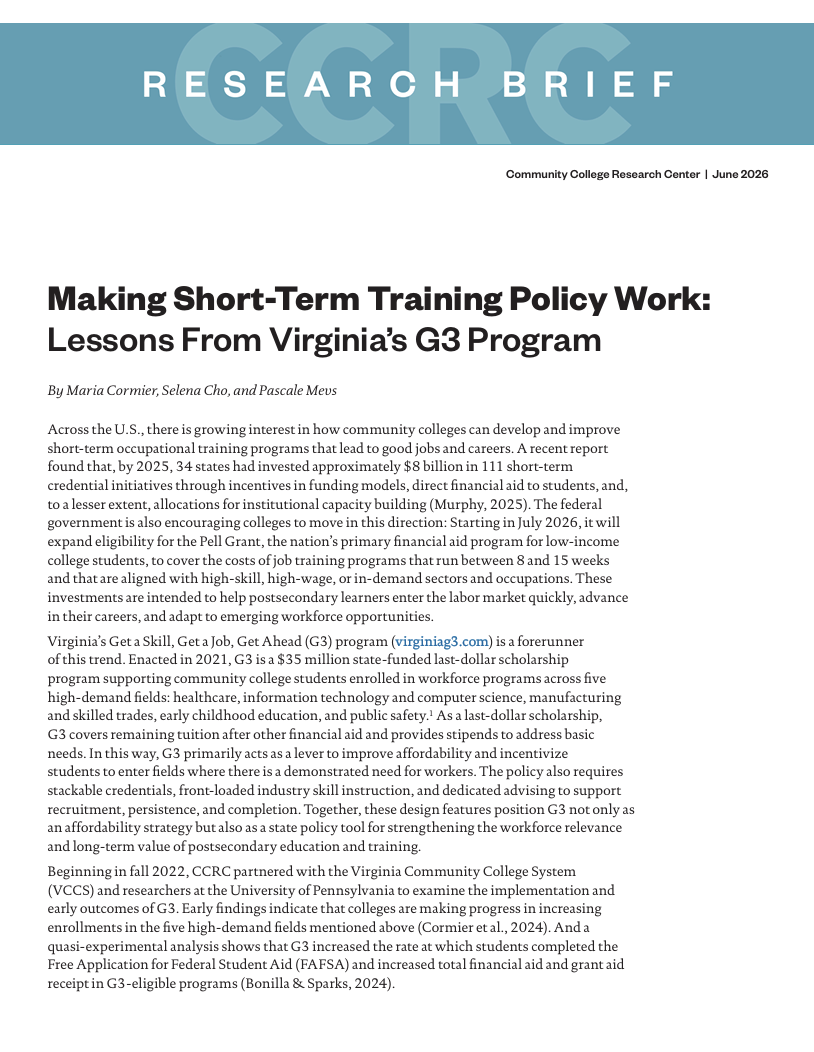
Drawing on three rounds of site visits to eight institutions, this brief examines how Virginia community colleges implemented G3 policy and offers lessons for developing, strengthening, and expanding access to short-term training programs for high-demand jobs.
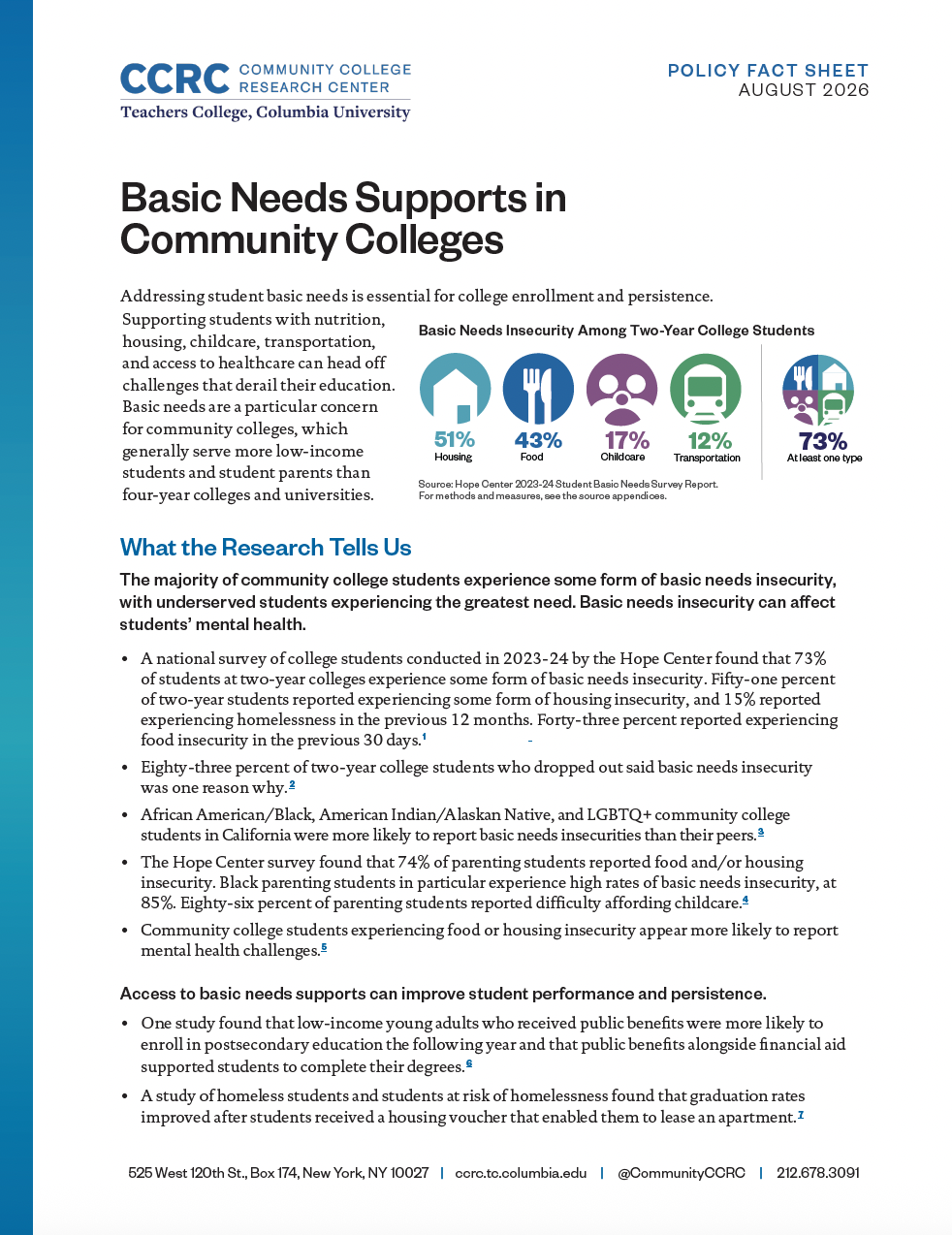
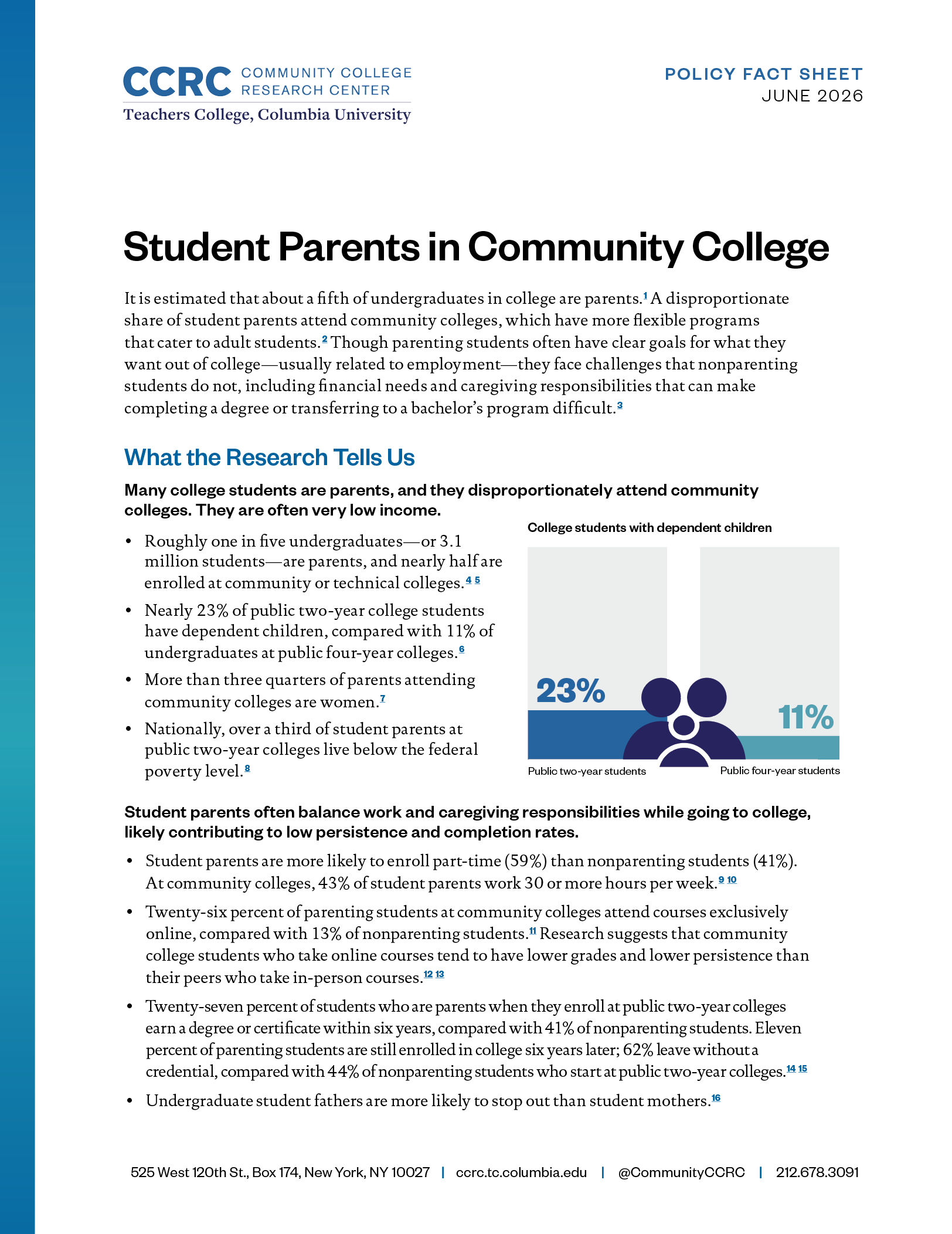
This new fact sheet provides an overview of student parents and the challenges they face, and provides policy considerations for supporting student parents and improving their experiences.
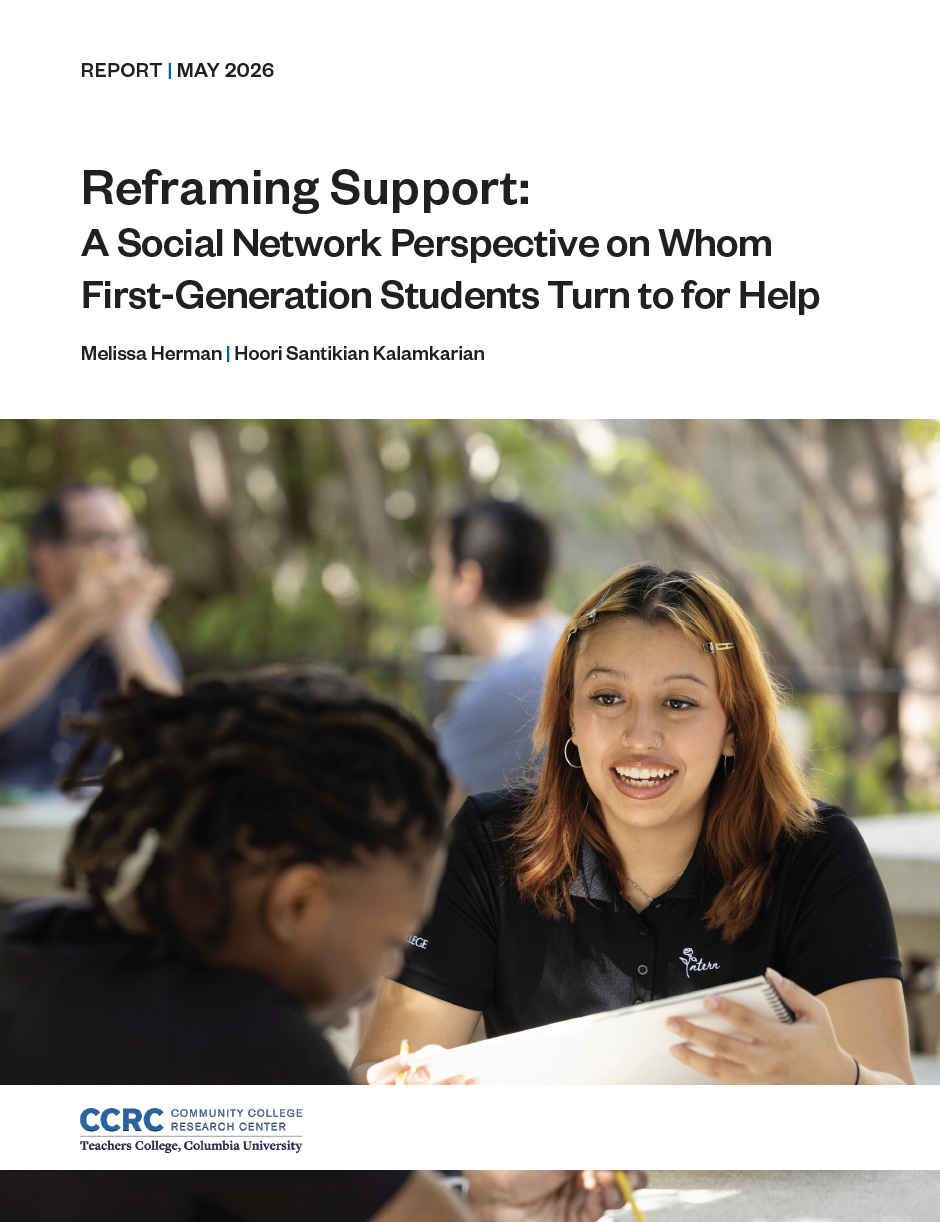
This report uses student survey and interview data from four California colleges to examine how first-generation college students build relationships and use support networks on- and off-campus to address academic and nonacademic challenges in the first year of college.
Through an analysis of longitudinal student data from four states, this brief introduces a set of metrics predictive of subsequent postsecondary progress that educators can use as momentum indicators for dual enrollment program improvement.
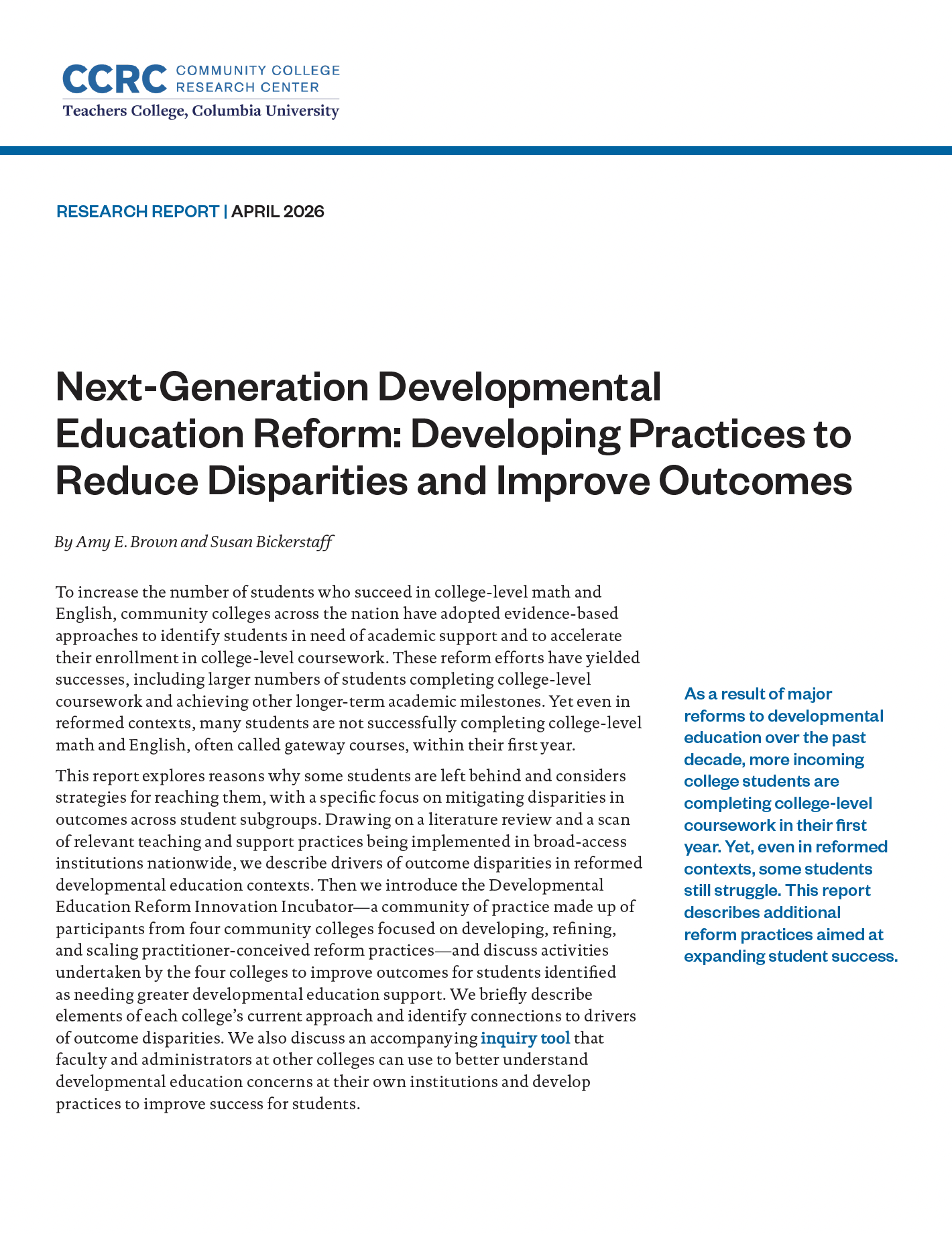
This report examines why some students still struggle in reformed developmental education contexts, considers strategies for improving their experiences and outcomes, and reports on innovations under development at four community colleges participating in a Community of Practice.
This journal article examines how community colleges distributed and utilized Higher Education Emergency Relief (HEER) funding through analysis of nationwide expenditure data from 976 colleges and survey responses from 170 colleges across six states.
Based on a review of relevant literature and interviews with experts and administrators, this report discusses how federal policy aims are addressed by AE ESL providers and the distinct role that community colleges play in delivering AE ESL programming.
Using administrative data tracking Federal Work Study (FWS) offers, enrollment, and participation from the date of application, this working paper studies the causal impacts of receiving an FWS offer at a large public college system, including both two- and four-year campuses.
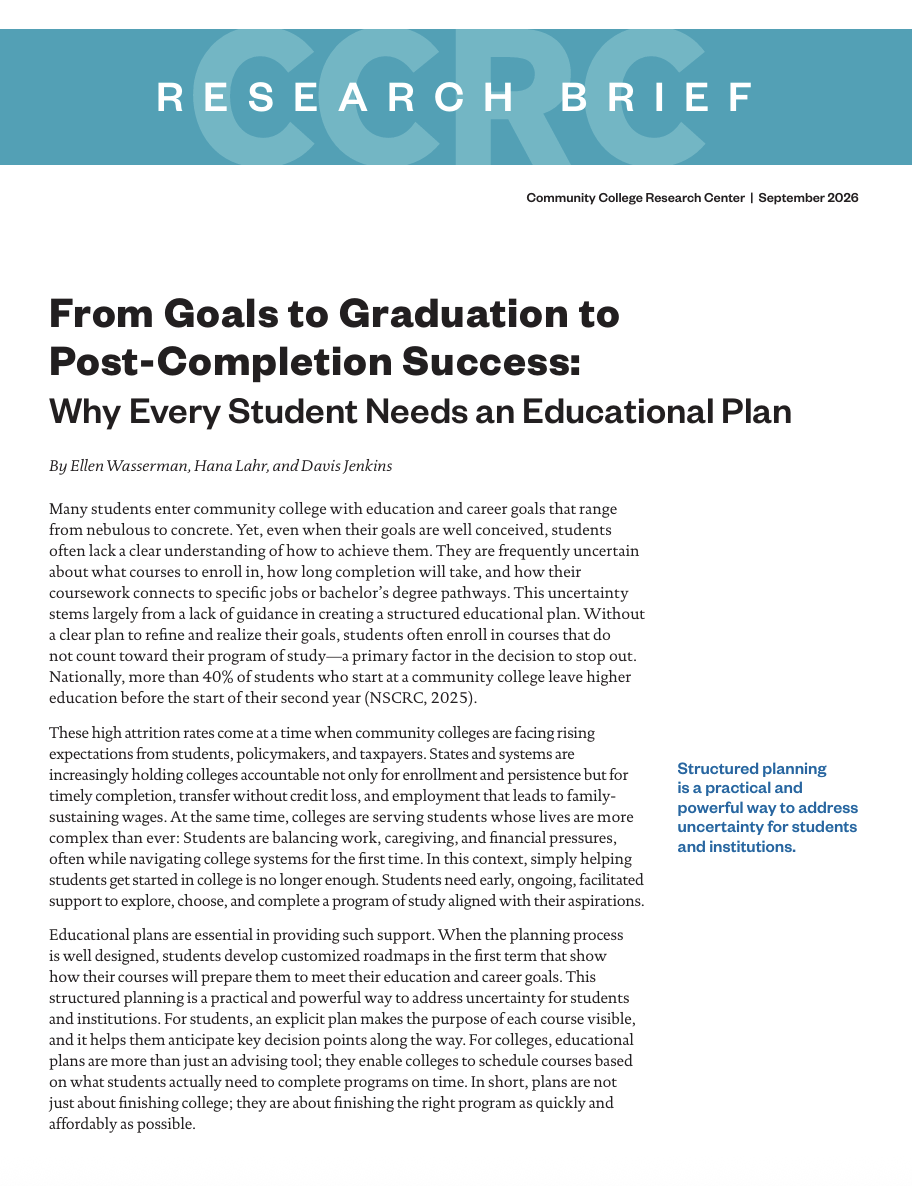
This guide introduces the Community College Program Mapper—an Excel-based data tool that helps colleges identify where students lack clear, goal-aligned plans and take action to strengthen pathways to post-completion success.
Andrea Lopez SalazarNicole MoraCatherine RivasHoori Santikian Kalamkarian
Based on survey and interview data from first-generation students who stopped out of four colleges in California, this brief examines students’ reasons for leaving, the role their social networks played in informing or supporting their decision, and how they thought about their futures—including the possibility of reenrollment.
This brief introduces an inventory of advanced infrastructure, energy, and agriculture (AIREA) jobs and identifies regions with well-aligned job demand and credential production to help policymakers support community and technical colleges in developing and expanding programs where trained workers are needed most.
Benjamin M. JamesKylie A. KennerGeorge C. BunchJulia RaufmanXittlali Trejo
Drawing on 107 sources, this paper discusses the backgrounds and experiences of students and instructors in adult education ESL programs as well as institutional practices, curriculum and pedagogy, and policy contexts relevant to the programs.
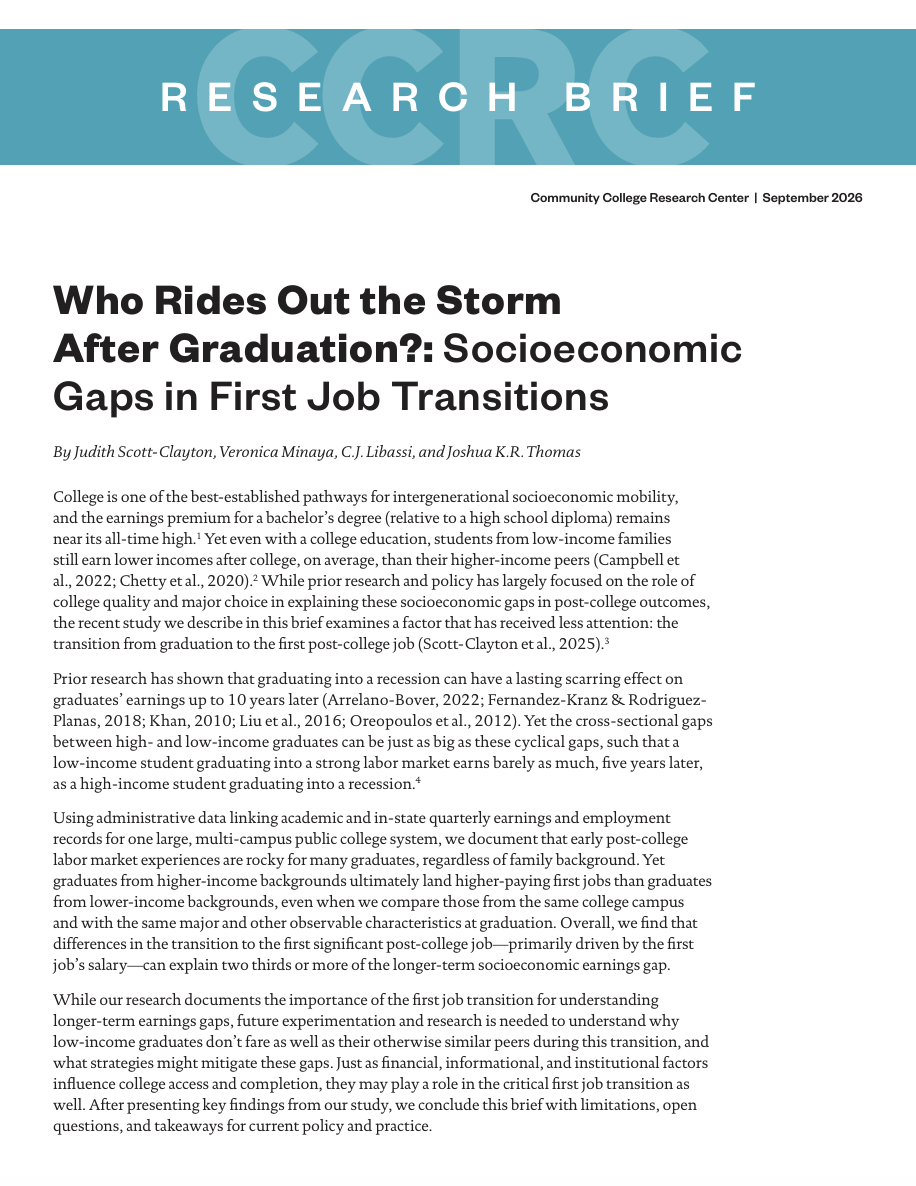
Veronica MinayaJudith Scott-ClaytonJoshua K.R. Thomas
Drawing on more than a decade of data, this report examines earnings returns for CUNY community college associate degree program entrants, showing substantial long-run gains from degree completion and distinguishing between terminal associate degree completion and pathways involving bachelor’s attainment.