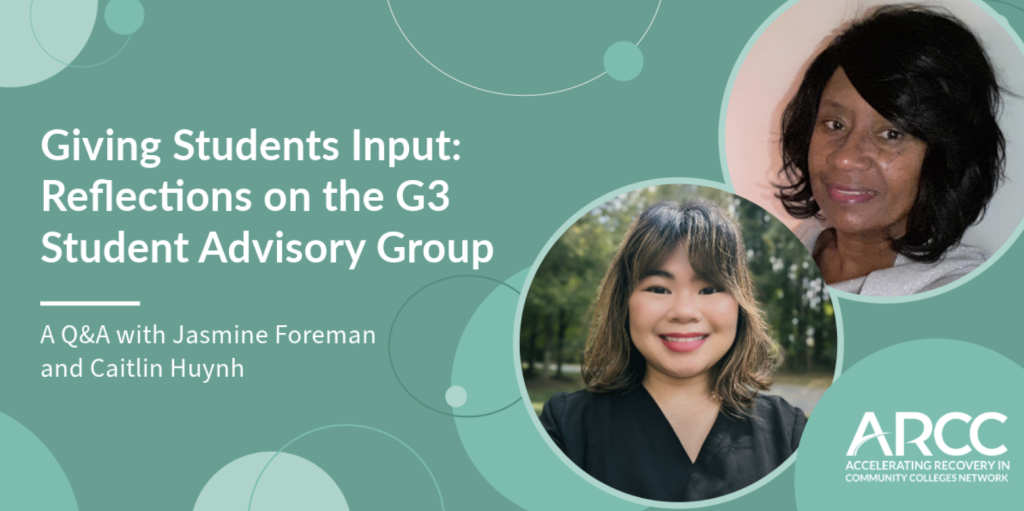
G3 Student Advisory Group members Jasmine Foreman and Caitlin Huynh sat down with Pascale Mevs from CCRC to discuss their experiences in G3 and why they joined the advisory group.
In this blog post, researchers from the Aspen Institute and CCRC share takeaways from their work with ten community colleges and introduce tools designed to help colleges increase the number of students on a path toward high-value programs.
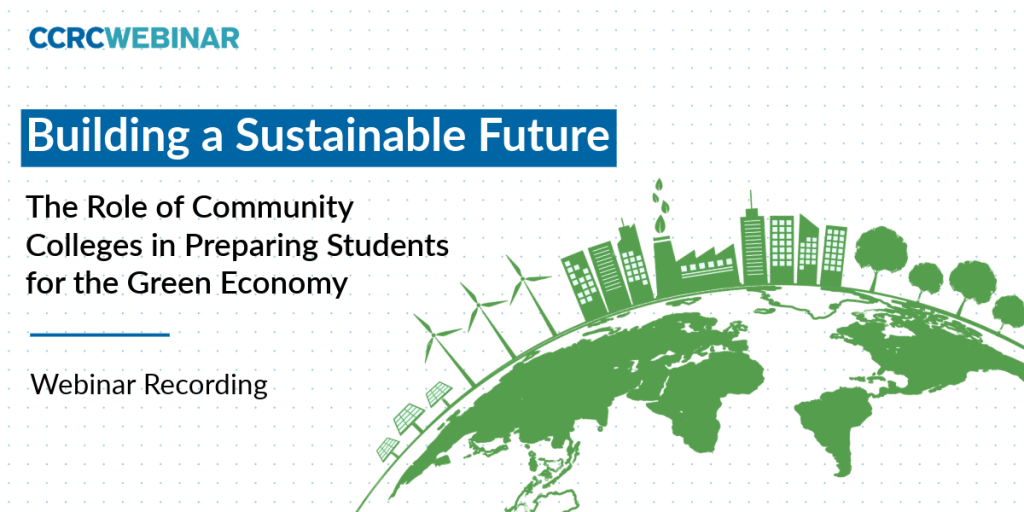
An August webinar focused on the role community colleges can play in preparing for the significant workforce transitions that are occurring as colleges, governments, and industries work to limit, adapt to, and mitigate the effects of climate change. A recording of the webinar is available within this blog post.
In this podcast, WestEd's Jenna Terrell and CCRC's Maria Cormier discuss how the community colleges they are studying as part of the ARCC Network are developing programs and supports to serve their workforce students as they emerge from the COVID pandemic.
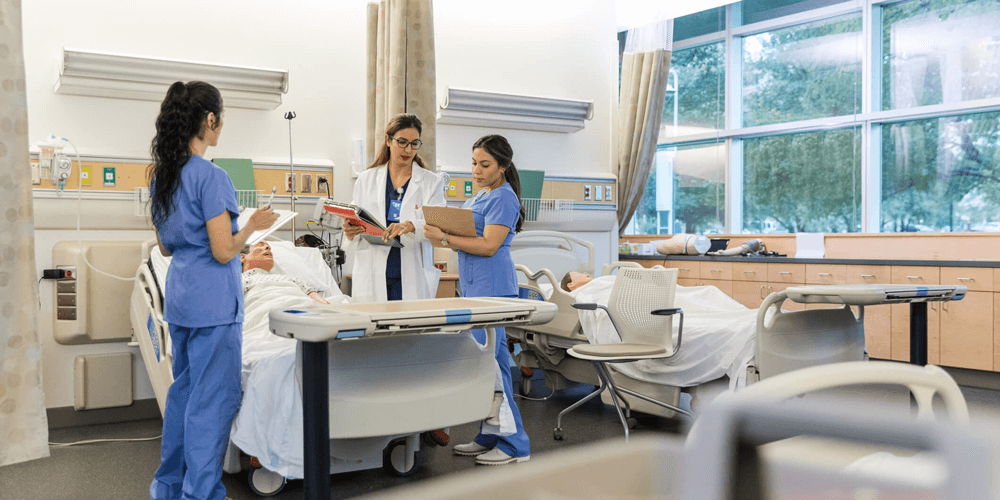
Researchers at CCRC are examining two workforce programs in Virginia to better understand how well these state-funded economic development investments leverage each other and how they can generate more equitable college attainment and labor market outcomes for individuals and communities.
Search the CCRC blog
Explore trends in community college outcomes with our interactive data visualizations.