

Community colleges and their K-12 partners across the country are working to ensure dual enrollment is not only an acceleration strategy for college-bound students, but also an accessible on-ramp to college and career opportunity for those who might not otherwise pursue postsecondary education. However, doing so brings up several questions: What does strategic investment in dual enrollment in the face of scarce resources look like? How are colleges shifting from the conventional low-cost business model to one that requires higher upfront costs but generates more future revenue? And how are colleges doing so without shifting costs to students?
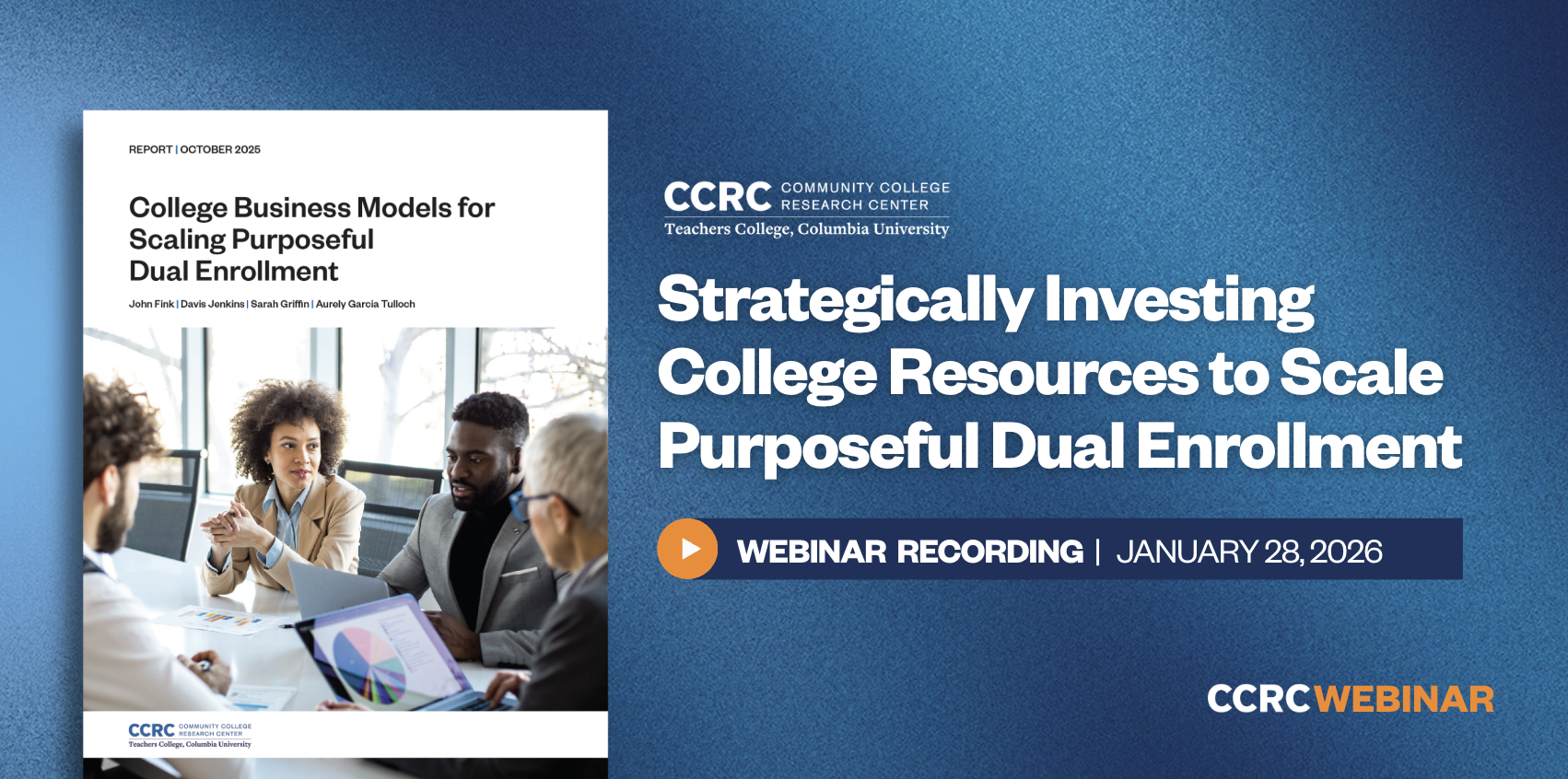
In a January 28, 2026 webinar, CCRC researcher John Fink shared the latest data on how states fund community college dual enrollment and key findings from a research report on how colleges and their K-12 partners are allocating, aligning, and sustaining the resources needed to scale dual enrollment equity pathways (DEEP). In a panel discussion, Kristy Black, executive dean of K-12 partnerships at Kirkwood Community College, and Chris Conzen, executive director of the Secaucus Center and early college programs at Hudson County Community College, shared strategies for financially sustainable investments in advising and student supports, high-quality instruction, and expanded outreach and access.
The presentation slides are available for download, and you can view a recording of the webinar below.