

This blog is the first in a series on students’ experiences in dual enrollment.
Dual enrollment is often celebrated as a smart way for high school students to earn college credit early, save money, and ease into higher education. But it can also have a quieter influence that can shape not just how students go to college, but where. Dual enrollment can subtly steer students toward staying local, sometimes limiting their sense of possibility. Early exposure to one college can make the familiar feel like the only option, which matters when students are making one of the biggest decisions of their lives.
For many dual enrollment students, the college transition doesn’t feel like a leap, it feels like a continuation. When I started taking dual enrollment courses at my local community college, I quickly became familiar with the environment and routine. I learned how to navigate the college’s online systems, which professors were flexible, and how to get around campus with ease. That familiarity made the idea of staying feel natural, even comforting. I didn’t realize it at the time, but I was becoming part of a college community that I hadn’t planned to join long-term. By the time I graduated high school, the thought of starting somewhere new felt overwhelming. On top of that, staying local was significantly more affordable, and most of my friends were planning on doing the same. It didn’t just feel like an option, it felt like the expected path.
Facing the Financial Reality of College
For me, the decision to stay local wasn’t just about comfort, it was also about practicality. My local four-year college offered a generous scholarship and would allow me to apply all of the credits I had already earned through dual enrollment. Staying meant I could save thousands on tuition, housing, and transportation. Transferring those credits elsewhere would have meant losing some of them or having them count as electives, meaning I would have to pay again for classes I had already taken. My situation isn’t just anecdotal, as national data shows that dual enrollment often roots students in the colleges where they first take classes. One study found that more than one third of community college dual enrollment students returned to the same community college after high school, demonstrating a clear pattern of staying local or in-state when continuing their education. I remember sitting in an advising meeting, hopeful about applying to out-of-state schools, only to be told that not all of my credits would transfer cleanly. It made the idea of leaving feel not just risky but wasteful and impractical. I didn’t fully realize how much it had shaped my thinking until I found myself comparing options and ruling out schools, not because I didn’t qualify but because my current path felt too convenient to leave. At the same time, many dual enrollment students report feeling unsure about the financial side of continuing their education. Research shows that historically underserved dual enrollment students often want more guidance on how to pay for college after their dual enrollment coursework ends, including clearer information about costs, financial aid, and how their credits will affect future expenses. In the end, dual enrollment made me feel like staying was the only option. Like many educational opportunities, dual enrollment comes with trade-offs, and understanding both its benefits and limitations is key to making informed decisions.
What Schools and Students Can Do
To ensure that dual enrollment expands rather than narrows students’ options, schools and educators can take proactive steps. Stronger advising is essential, as students need early guidance on how their credits transfer not just locally but also at other in-state and out-of-state institutions. Tools that clearly map credit transfer can reduce uncertainty and help students make more informed decisions. Advisors should also encourage students to explore a range of postsecondary options, even if they begin their journey locally. For students, it’s important to approach dual enrollment with curiosity and consider their long-term plans. Asking questions early, researching transfer policies, and considering a variety of college paths can help keep doors open. If students are choosing colleges based solely on where their credits transfer most easily, they may miss out on those that better align with their goals, interests, or learning styles. Institutions, too, can play a role by building partnerships with a wider range of universities to ensure credits are more portable and students aren’t limited by geography. Ultimately, dual enrollment should be a launchpad, not a boundary. With the right support, students can use it to build momentum while still exploring the full range of possibilities ahead.
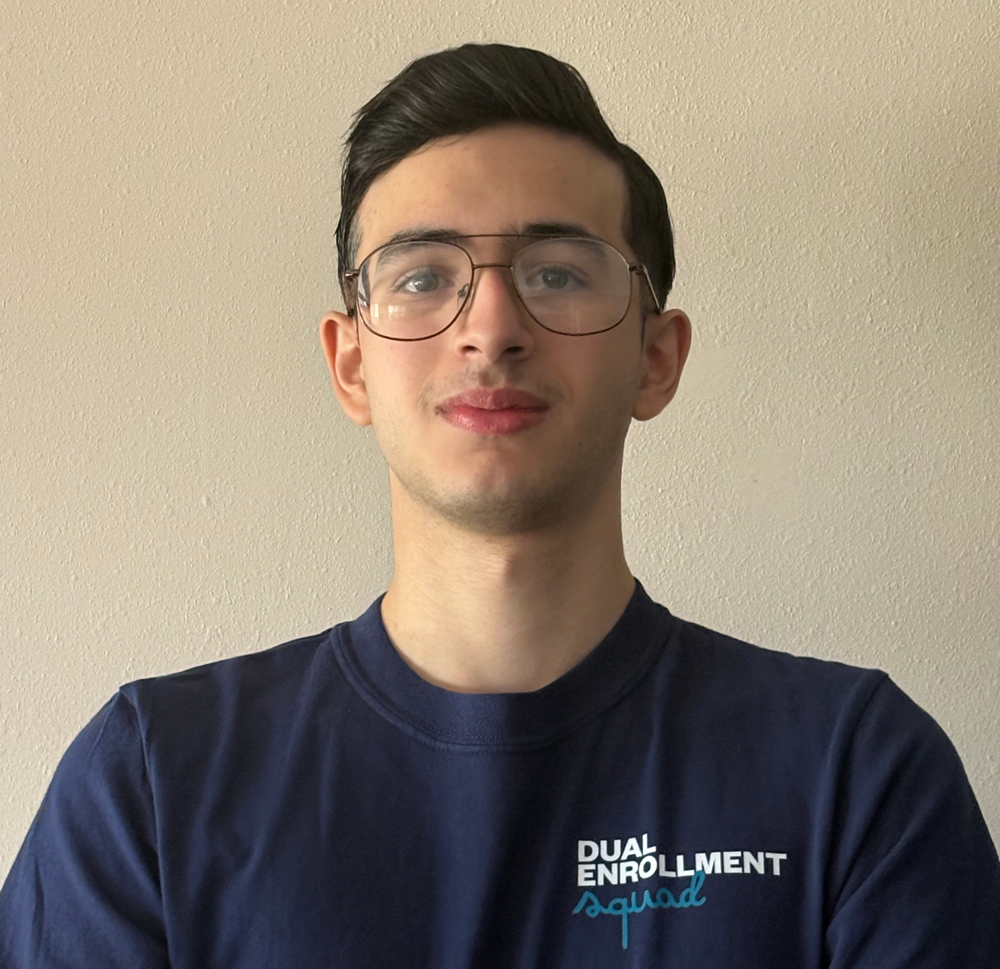
After earning around 18 credit hours through dual enrollment at my local community college, I chose to stay at home and enroll at Texas A&M International University, where I am now in my fourth semester. The credits I earned transferred smoothly into my degree plan, allowing me to skip roughly a semester and a half of coursework and making the transition into college feel far less overwhelming. Financial realities played a major role too, as higher tuition and living costs at other four-year universities made leaving seem out of reach, and receiving a full-ride scholarship locally ultimately solidified my decision. It wasn’t the direction I initially imagined, but it’s the one that has given me stability, opportunity, and the space to keep figuring out what I want from my college experience.