
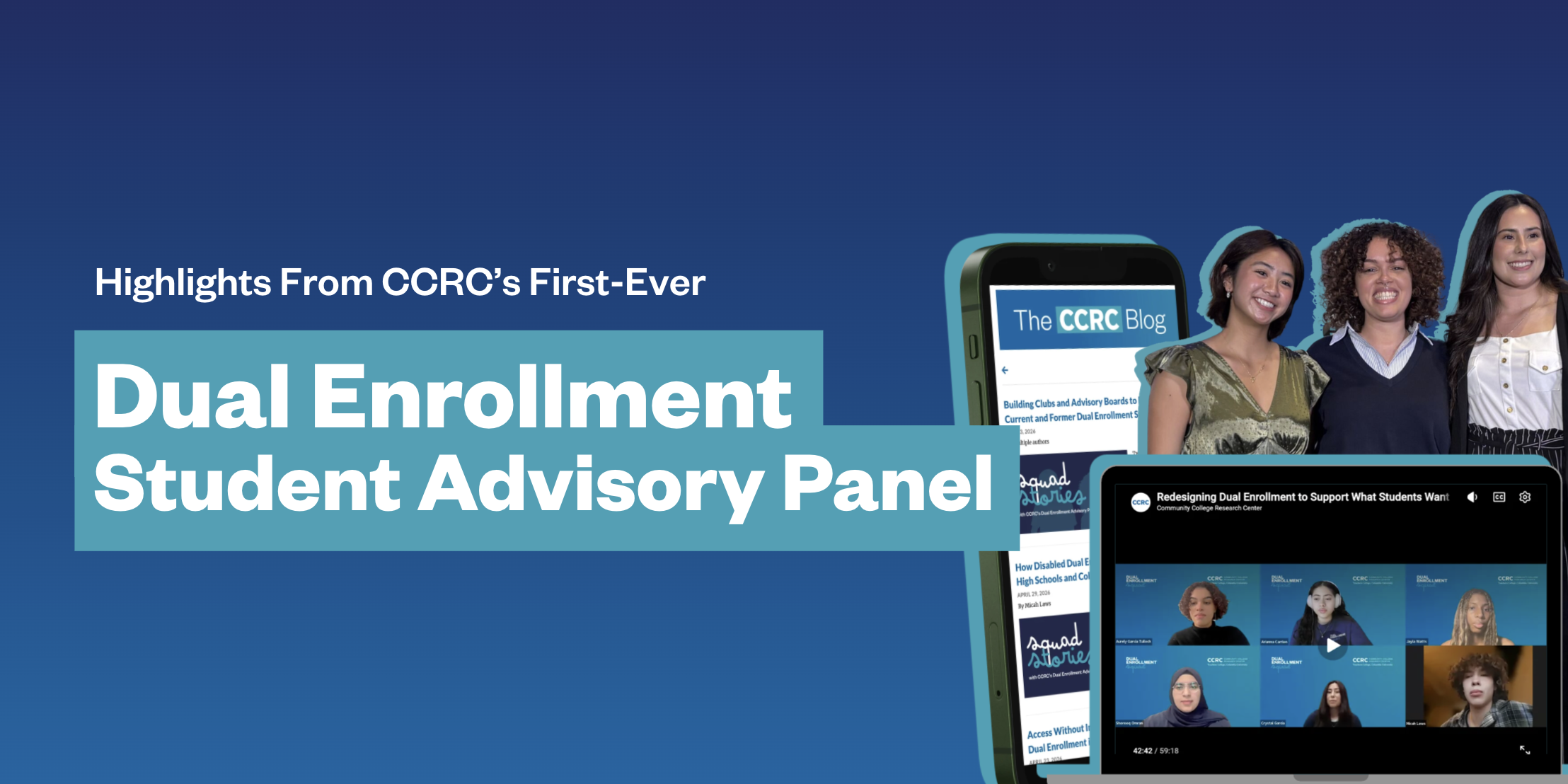
In 2025, CCRC’s dual enrollment team recruited 11 current and former dual enrollment students to establish our first student advisory panel. The students, who ranged from 14 to 24 years old, were charged with supporting our research and amplifying student voices through blogs, social media, and more. Our first Dual Enrollment Student Advisory Panel brought perspectives informed by a range of dual enrollment experiences and from different communities that have been underrepresented in dual enrollment.
Over the past year, the students supported our team’s research and field engagement by providing feedback on our study designs, co-presenting at conferences, and contributing to blogs and digital media. As the students on the first panel end their tenure, we want to share some highlights of their contributions. We also encourage your help in recruiting our second cohort! More information on that can be found in this document and below.
How Panelists Supported Our Research and Field Engagement
One of the key ways panelists supported our research was by sharing their experiences directly with research team members, which supported our framing and interpretation of research findings. The panelists met monthly to discuss and reflect on their own experiences in dual enrollment, facilitated by CCRC researchers who shared insights and key takeaways. We also tasked the panelists with providing feedback on our student focus group protocols, which helped to strengthen the questions and sharpen the phrasing.
Members of the student advisory panel also elevated the dual enrollment student experience through presentations to national and state audiences. In an October 2025 webinar, six current and former dual enrollment student panelists shared their first-hand experiences with dual enrollment practices and policies. Over 250 attendees joined the webinar, which featured a Q&A panel where students answered questions on how to improve access to dual enrollment resources and advising for students.
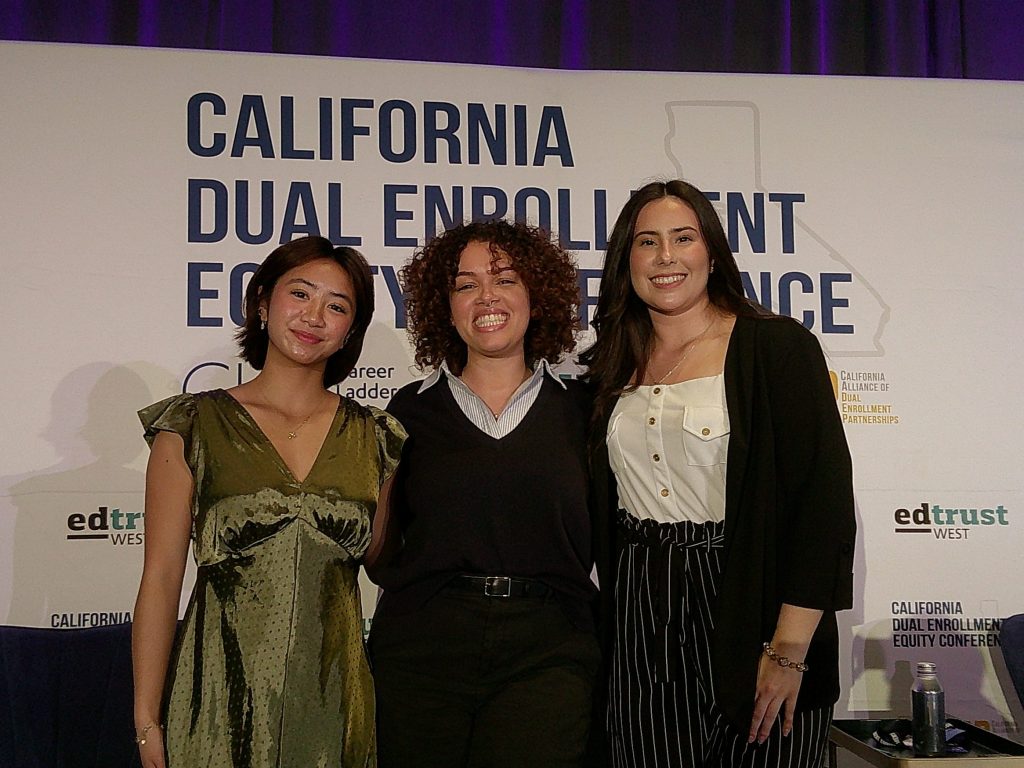
In addition, two student panelists had the opportunity to fly to San Diego with the dual enrollment team to speak at the California Dual Enrollment Equity Conference, engaging with an audience of over 300 practitioners, policymakers, and researchers. The panel, led by CCRC’s Aurely Garcia Tulloch, included advisory panel members Erika Rayo and Crystal Garcia, who provided insight into how dual enrollment policies and practices are encountered by students, adding crucial context to questions involving access, equity, and program design. When students were unable to join presentations in person, they contributed short videos about their dual enrollment experiences to help frame findings from our research.
A key component of the panel’s work involved communicating student experiences to the broader public. Former dual enrollment student Jayla Watts was featured in The Washington Post, where she spoke about policy differences across colleges and why dual enrollment students need consistent communication and support every step of the way, bringing light to dual enrollment barriers to a national audience. Throughout the year, students also had the opportunity to contribute to the Squad Stories blog series, sharing stories on how dual enrollment can impact college choices and how disabled students navigate dual enrollment, among other topics. Other panelists helped improve our social media efforts, assisting with Instagram takeovers and creating videos highlighting their experiences.
Looking Ahead
Our team is so grateful for the first Dual Enrollment Student Advisory Panel, which we believe greatly advanced our work and understanding of dual enrollment. If you are a student interested in developing your own dual enrollment club or panel at your school, make sure to read our latest blog post to learn more!
With the end of our first panel, we are looking for our second cohort of panelists. Current and former dual enrollment students aged 14–25 are encouraged to apply. Panelists will receive an honorarium and be expected to attend monthly virtual meetings, provide feedback on dual enrollment project materials, and support field engagement, including co-presenting, writing blog posts, and creating social media content. The deadline to apply is May 29, and you can apply using this Google form.