
When I was approached in 2015 to create an online degree completion program for stopped-out students, I was wary. Research is clear on the importance of belonging to student success. Also critical are connections with faculty and advisors. How might a sense of belonging and supportive campus connections be fostered in an online program?
More than 5,000 former California State University, Fresno students who in the prior decade had “stopped out” within a few terms of graduation were eligible to return. They hadn’t been academically disqualified—they had just stopped attending. Most sobering, the data also showed that 95% of students who stayed out for more than three years were not expected to ever return. Some likely matriculated at another university, but most just walked away from college.
A new CCRC analysis based on a survey of California community college students confirms what I’ve found in the bachelor’s degree completion program I now coordinate, where community college transfers make up about 75% of the students. Most students who leave college before earning a degree do so for reasons outside the university: family needs, job demands, finances, and mental and physical health challenges. Students in the program I coordinate left college for pregnancies, professional sports team offers, bullying, addictions, parents’ losing jobs, transportation and scheduling challenges—and for reasons we could never predict, like the former music major and historical horn player who received an offer to enlist and play with the Marine Band in Washington, DC.
But part of why students leave early, and, perhaps more importantly, often do not return has to do with what happens—or doesn’t happen—at the college itself. Significantly, the CCRC research brief highlights that while many stopped-out students reported having support from family and friends, few had connected with faculty or advisors, and they did not consult them on their challenges or decision to leave. I sought to design an online program that would foster that connection to support students’ return to college.
From past work on in-person degree completion, I knew such programs were most successful when highly individualized (read: labor-intensive). I was also aware of mounting data on student success—or lack thereof—in online programs, which are often a disaster for traditional-age college students (a finding echoed by students in the CCRC survey). I had myself witnessed online education practices that were, at best, boring (read a chapter, take a quiz), and, at worst, disorganized and distancing.
So, I sought to design the most rooted online program possible: a deliberately “place-based,” fully online degree completion program for California students, especially those in the Central Valley. Through intensive advising, accessible faculty, and engaging curriculum focused on students’ local needs and interests, we hoped to offer a platform for stopped-out student success.
Asynchronous (but interactive!) online instruction allows for flexible scheduling for this small program, serving students with swing, graveyard, and early morning work shifts and family demands. To accommodate students from different former majors (engineering, English, nursing, music, enology, etc.), program learning goals focus on critical thinking, skill and confidence in communication, interdisciplinary approaches to problem-solving, and professional and civic ethics. Cohorts start together in an advanced academic writing course. They end the program, also together, in a capstone course in which they each research and create an “action piece” on a career or community challenge. All instructors are vetted, experienced, and creative online educators who are regular Fresno State faculty. Most are tenured professors.
The BA Liberal Arts Online Degree Completion Program has slowly grown, from an initial cohort of 14 in fall 2020 (all but one graduated) to 38 students admitted for fall 2026. More than 90% of students starting the program finish in two terms. Aged 25 to 75, students otherwise reflect Fresno State’s diverse demographics. Most are first-generation college students.
Advising is intensive but productive. We first connect when former students inquire about returning; we determine together their next steps. Once admitted, I serve as point person throughout their time in the program, connecting them with services across campus as needed, encouraging them to connect with their professors when they miss an assignment or need help.
The biggest surprise has been the sense of belonging this online and asynchronous program has been able to foster. Before starting, students attend a Zoom orientation together. For the first assignment in the required writing course, students introduce themselves to the cohort with photos and a few paragraphs about their hopes and fears in returning to school. This simple assignment, and ongoing peer response work throughout their courses, has proved to be remarkably bonding. Students get to know each other, start to rely on each other. Fully online. Asynchronous. And yet—they are in this together.
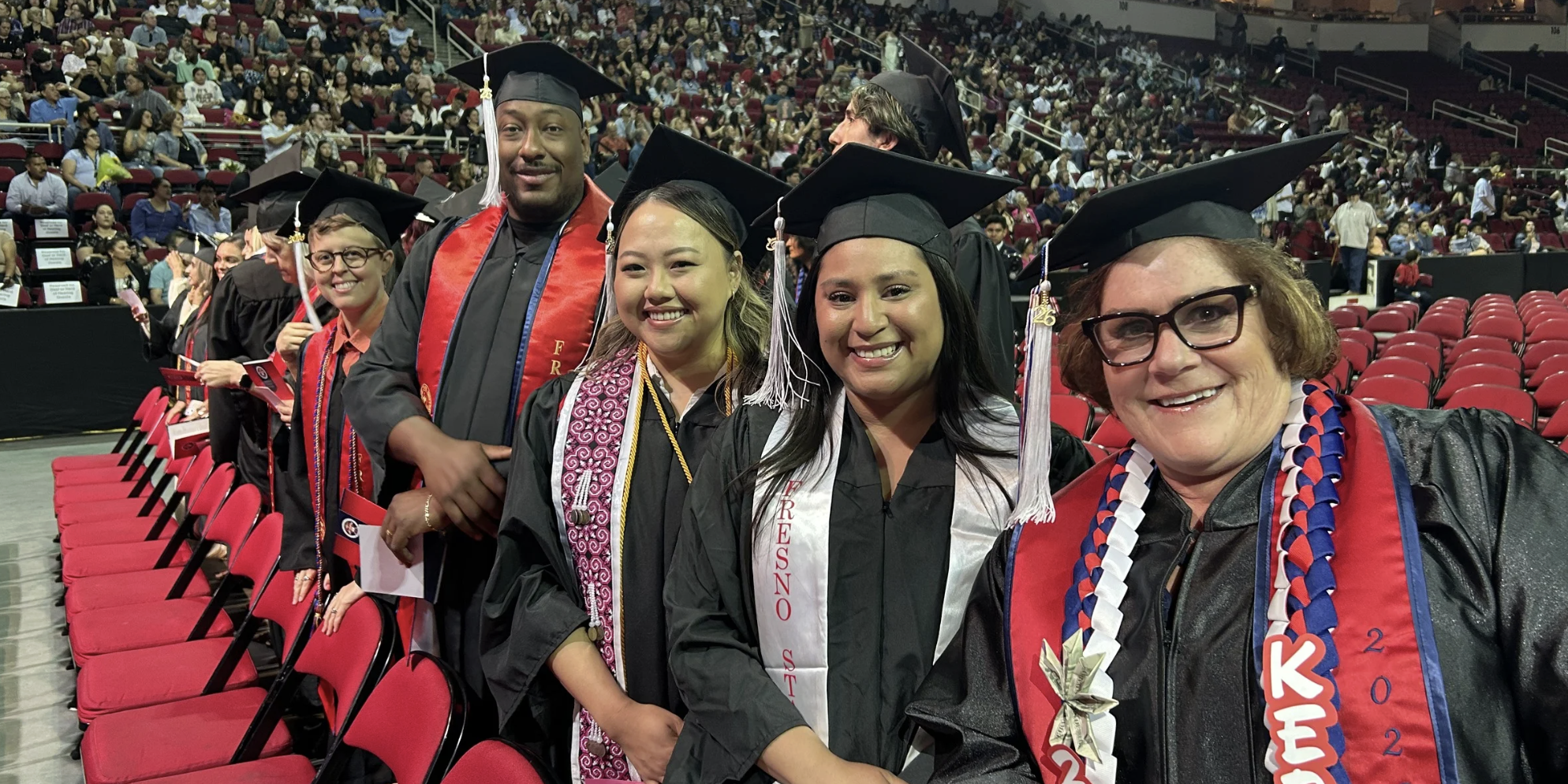
This week we celebrate graduation. Of 24 students who started the year, 21 are graduating this spring or summer; at least two are continuing. Most will participate in a Zoom celebration and presentation of capstone projects with program faculty, staff, family, and friends. Many will walk in the official commencement ceremony—often the first time they have set foot on campus since leaving. They will meet each other in person, and exclaim: “I feel like I know you!” and “We did it!” They will speak of being role models for kids and grandkids, go on to report new jobs, promotions, graduate school. The CCRC study details reasons students stop out. This program may offer a model for supporting their successful return.