This summary is intended to help decision-makers understand why research on the effectiveness of dual enrollment programs is important and how policymakers can support research activities.
This report discusses findings and recommendations from a study of the New York City Virtual Enterprises International program, in which students create and run virtual businesses.
This essay describes the characteristics of community college students and discusses the role of the community college in increasing access to higher education by traditionally underserved students.
Monica Reid KerriganJames JacobsAnalia IvanierVanessa Smith Morest
This paper analyzes how effective ATE regional centers, which work with community colleges and businesses in a single region to improve technical education, have been in meeting their goals.
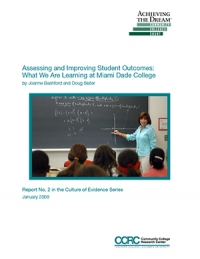
This report describes how Miami Dade College is using a variety of data to make better-informed choices about the operation of student programs and services.
This guide is intended to help researchers in colleges and state agencies use longitudinal student unit record data to create simple and meaningful statistics on student achievement.
This book chapter reviews three dominant strategies to create academic linkages between high school and college—remediation, dual enrollment, and the high school/college alignment movement.