This report, the first in CCRC's Culture of Evidence Series, presents findings from a CCRC study on how community colleges are using their own data and research to work toward improving student success.
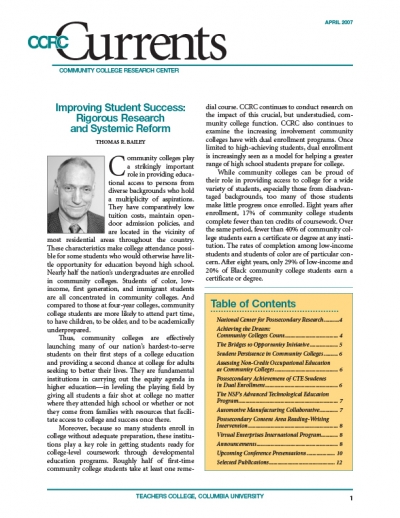
In CCRC's 2007 newsletter, Director Thomas Bailey argues that in order to improve, community colleges need to make better use of student data. He discusses CCRC's involvement in two national initiatives that emphasize the use of data to inform institutional decision making.
This report describes what policies all 50 states have in place with respect to key community college practices in three main areas: access, success, and performance accountability.
This working paper explores the impact of students' reasons for enrollment and educational expectations on their outcomes and, thus, on the performance of their college.