This fact sheet describes how traditional developmental education may have unintended consequences for students and the growing body of research evidence on promising reforms.
Susan BickerstaffElizabeth M. KopkoErika B. LewyJulia RaufmanElizabeth Zachry Rutschow
This brief discusses how community college systems in four states—Indiana, Virginia, Texas, and Washington—supported large-scale changes to student placement practices in reaction to challenges associated with the COVID pandemic.
This paper examines the equity implications of existing reforms to developmental math and explores the potential of more targeted reforms to address factors such as stereotype threat, math anxiety, instructor bias, and tracking.
Elisabeth A. BarnettElizabeth M. KopkoDan CullinanClive Belfield
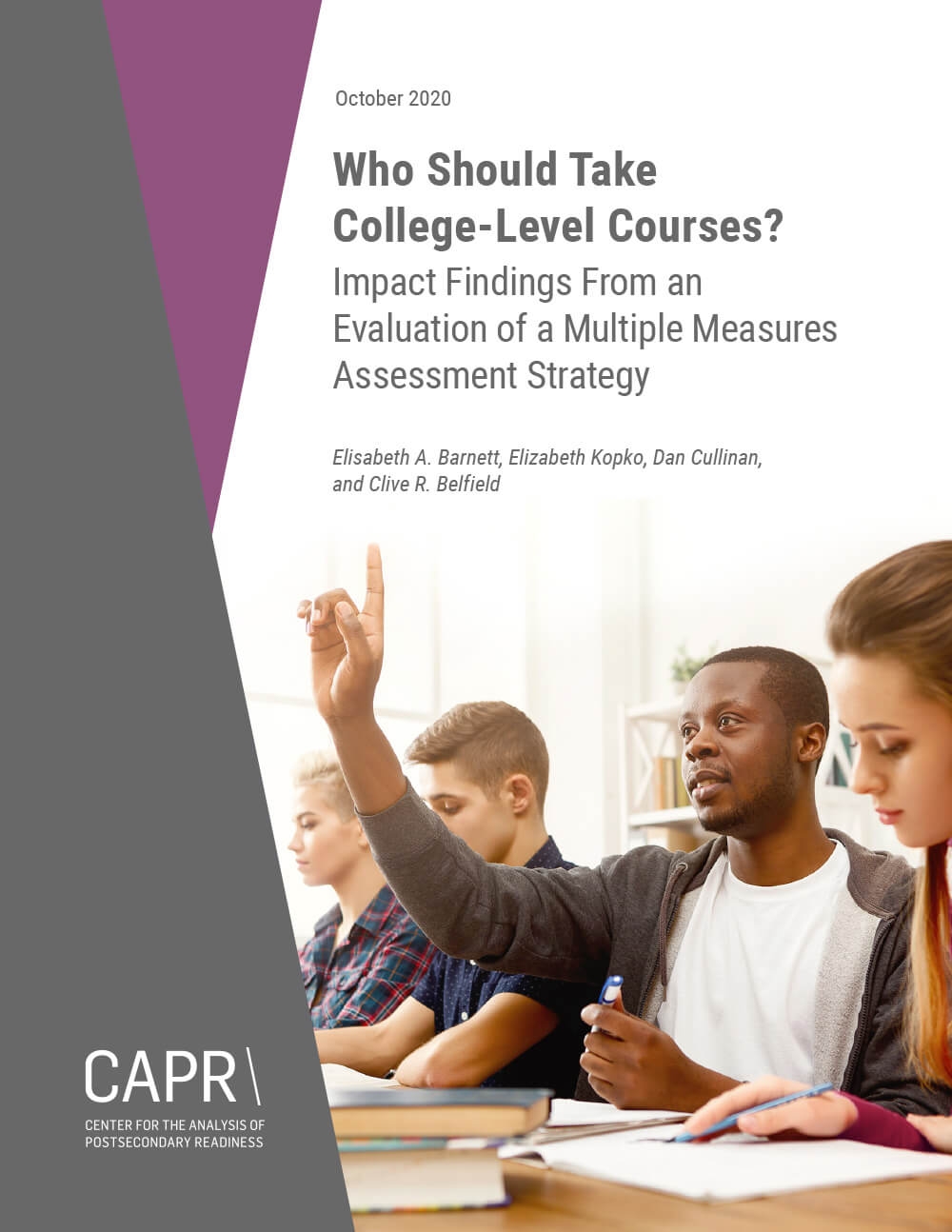
This report describes impact findings from an evaluation of multiple measures assessment and placement at seven State University of New York (SUNY) community colleges.
This paper describes the professional development model used in CUNY Start, a program developed at the City University of New York to support entering students identified as academically underprepared in literacy and mathematics.
This report examines the efforts of six state higher education systems to improve student outcomes and close opportunity gaps in mathematics as part of a three-year project led by the Charles A. Dana Center at The University of Texas at Austin.
Dan CullinanElisabeth A. BarnettElizabeth M. KopkoAndrea Lopez SalazarTiffany Morton
This study uses a randomized controlled trial to evaluate the efficacy of multiple measures assessment programs at five colleges in Minnesota and Wisconsin and also examines the implementation and cost of the programs.
Elizabeth Zachry RutschowSusan SepanikVictoria DeitchJulia RaufmanDominique DukesAdnan Moussa
This CAPR report examines how four Texas community colleges implemented Dana Center Mathematics Pathways (DCMP) and the impact of DCMP on student outcomes over as many as four semesters. Costs of the initiative and student perspectives are also discussed.
Elizabeth Zachry RutschowMaria S. CormierDominique DukesDiana E. Cruz Zamora
This CAPR report documents developmental education practices used in broad-access two- and four-year colleges across the country based on a 2016 survey of public two- and four-year colleges and private, nonprofit four-year colleges as well as interviews with institutional and state leaders.
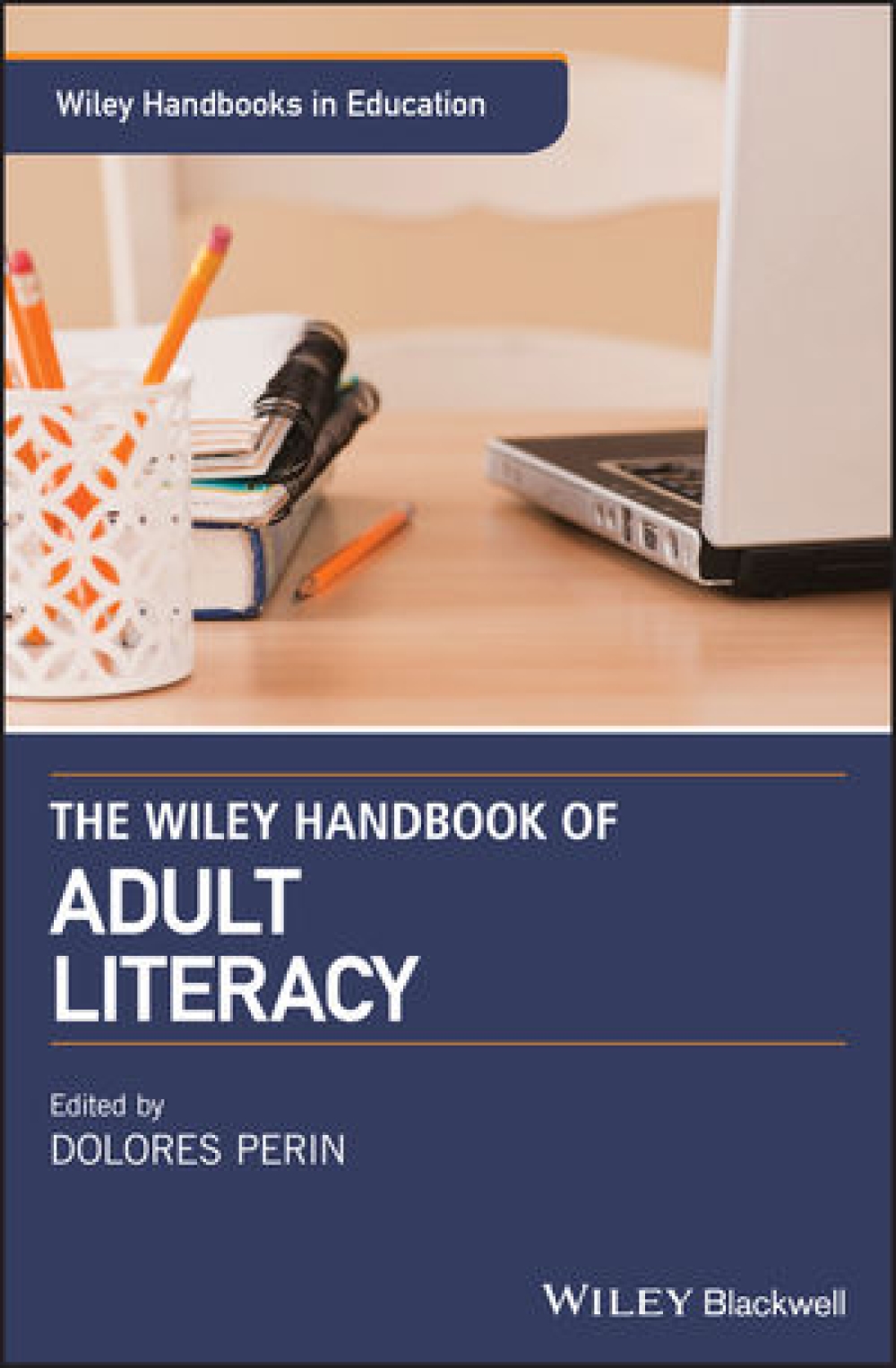
This handbook presents a wide range of research on adults who have low literacy skills. It looks at the cognitive, affective, and motivational factors underlying adult literacy; adult literacy in different countries; and the educational approaches being taken to help improve adults’ literacy skills.
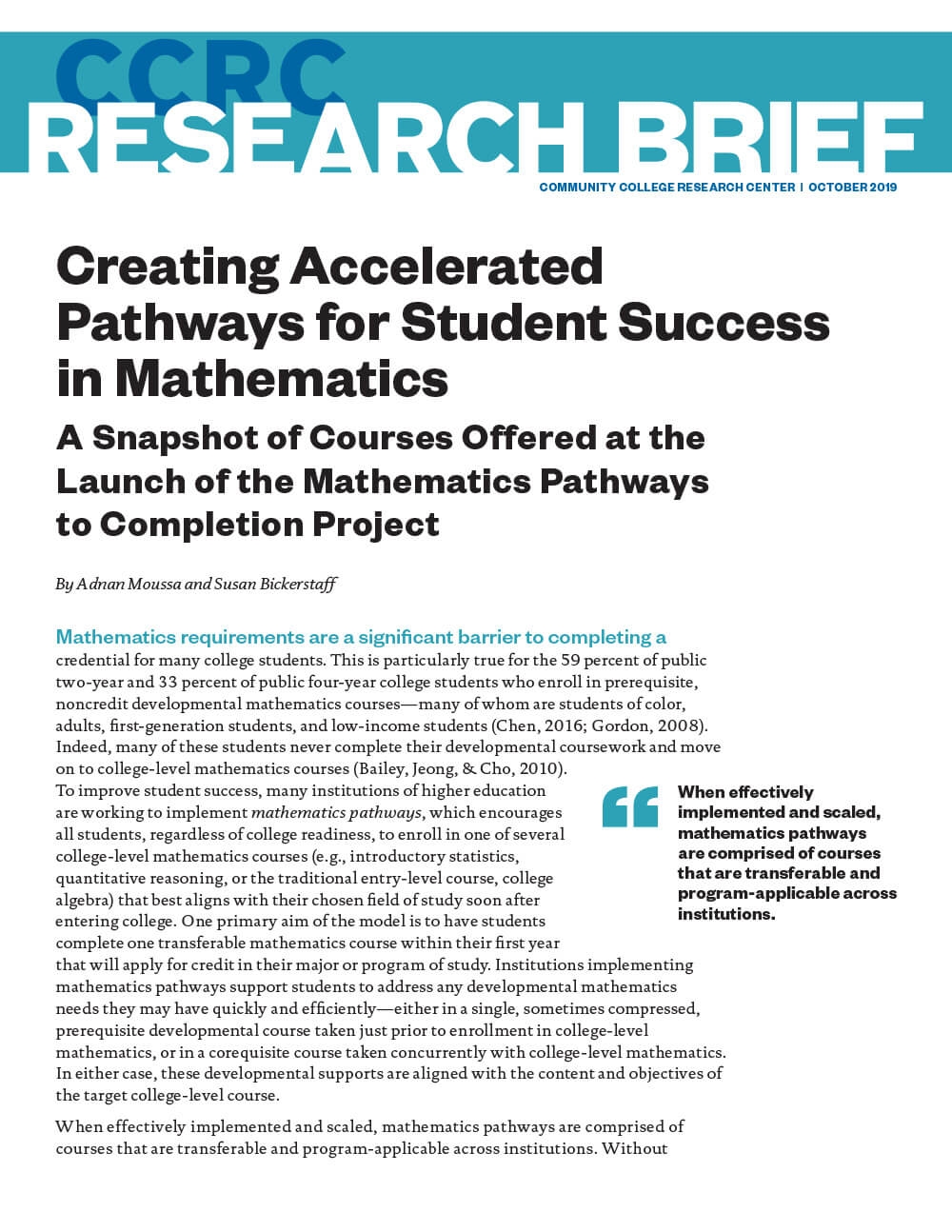
This research brief describes findings from a survey about mathematics course offerings at institutions in six states implementing mathematics pathways.
Susan BickerstaffJacqueline RaphaelDiana E. Cruz ZamoraMelinda Leong
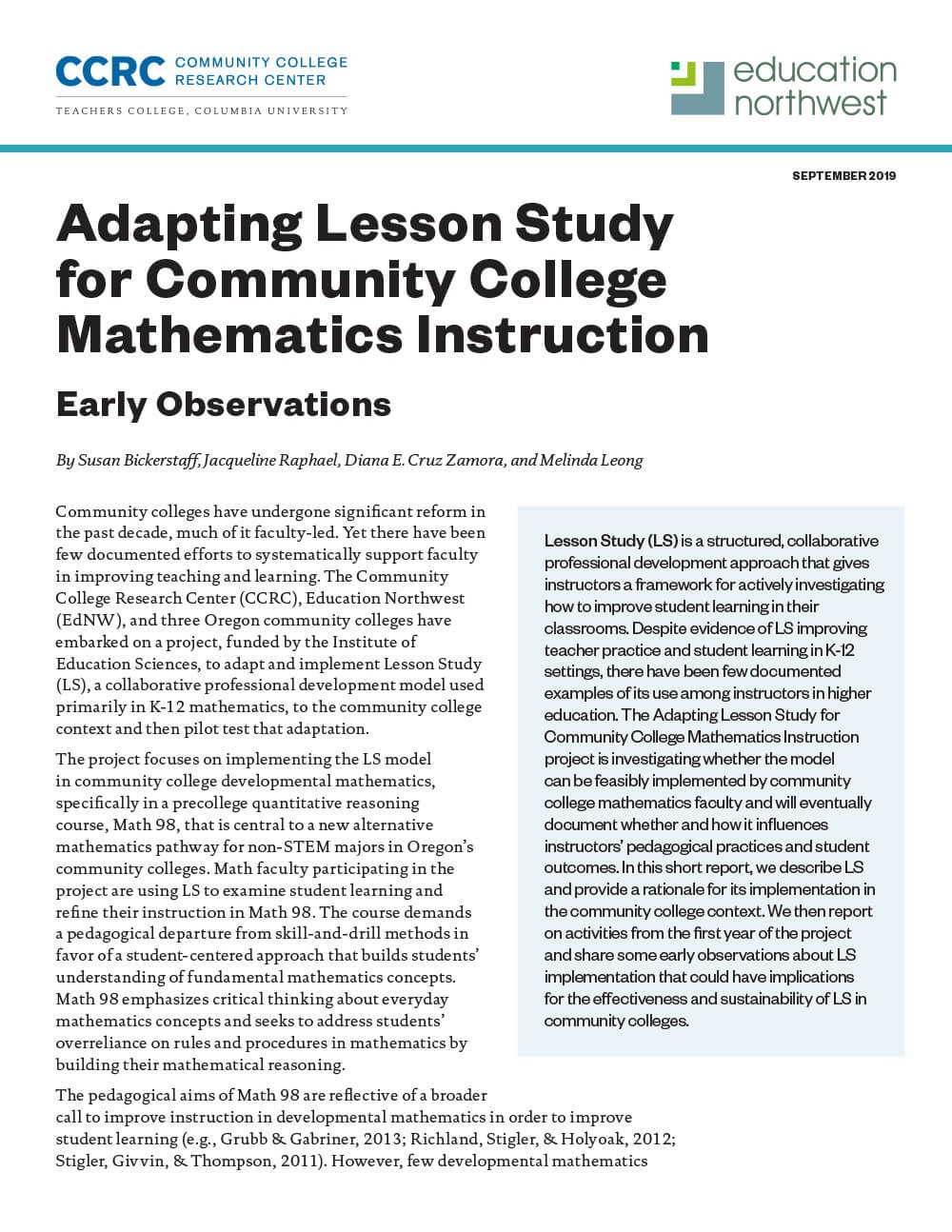
This short report provides a rationale for implementing Lesson Study, a collaborative and structured professional development approach, in the community college context.
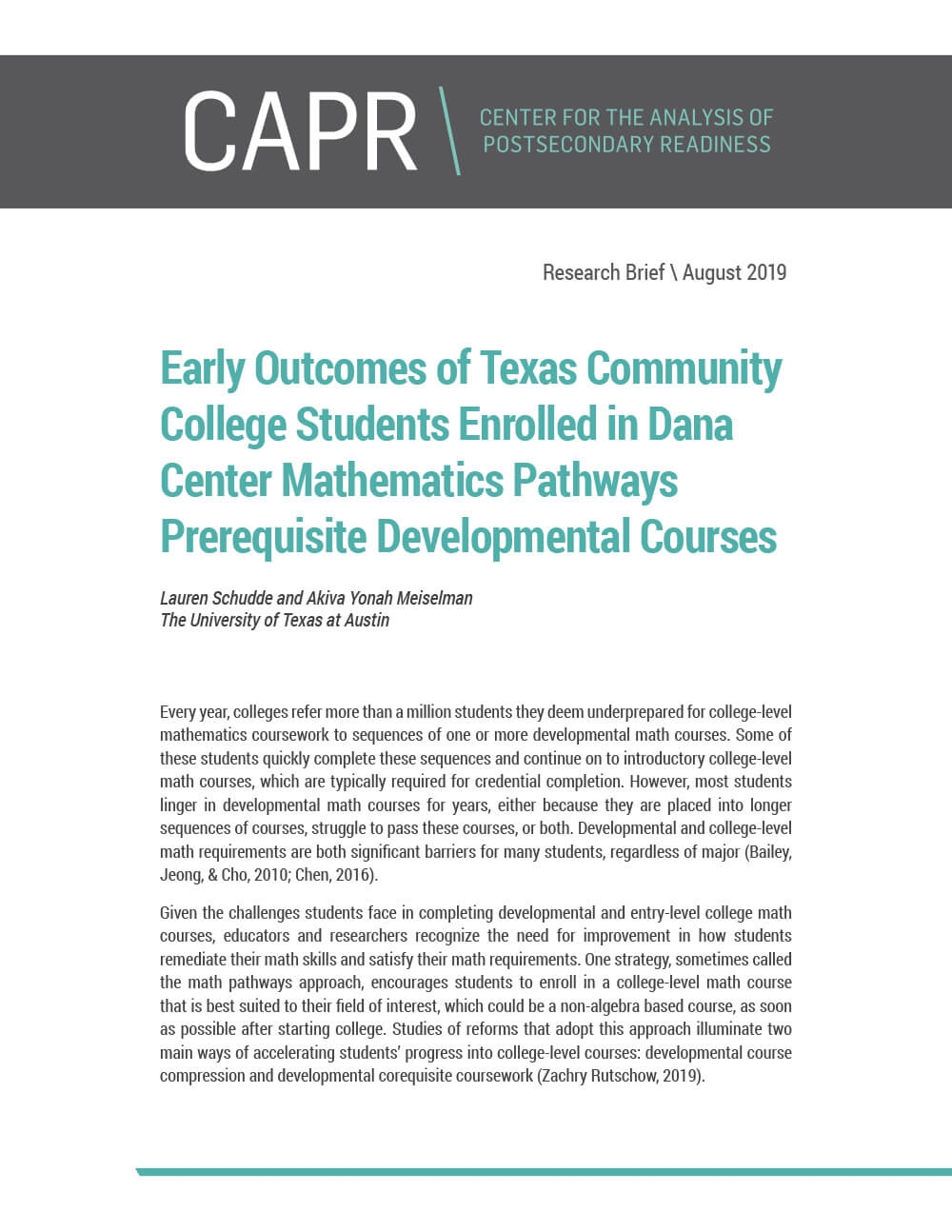
This study examines if students participating in Dana Center Mathematics Pathways (DCMP) developmental courses enroll in and pass college-level math courses at higher rates than students who take traditional developmental math courses.
This paper explores how technology is integrated into developmental education programming and considerations for institutional leaders when deciding whether and how to integrate technology in developmental education.
Julia RaufmanJessica BrathwaiteHoori Santikian Kalamkarian
This paper examines factors within the community college context that affect the experiences and academic outcomes of the English learner population broadly and students who enroll in ESL courses in particular.
Written in conjunction with the Education Commission of the States, this brief provides an overview of multiple measures assessment and placement and describes how several states are implementing the approach.
This report describes the Mathematics Pathways to Completion project developed by the Charles A. Dana Center and the condititions that facilitate the statewide implementation of math pathways reforms.
This brief, written in collaboration with the Education Commission of the States, describes three math pathways models, lays out the evidence for their effectiveness, and gives recommendations for the effective implementation of math pathways.
Elisabeth A. BarnettPeter BergmanElizabeth M. KopkoVikash ReddyClive BelfieldSusha Roy
This report from the Center for the Analysis for Postsecondary Readiness (CAPR) examines implementation of a multiple measures placement system at seven State University of New York community colleges and presents results on first-term impacts.