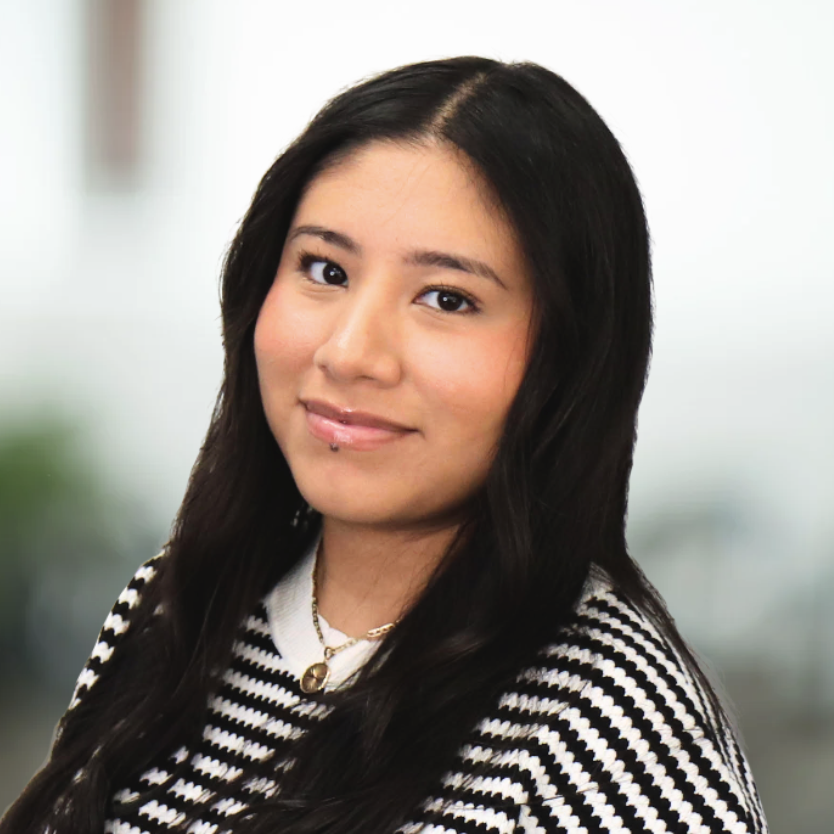

Narju Nawar is a student at the City College of New York majoring in childhood education and English. She is spending her summer interning at CCRC through the S Jay Levy Fellowship program, working with both the dual enrollment research team and the communications team. In this Q&A, Nawar discusses her work at CCRC, what inspired her interest in education and research, and her future goals.
This Q&A was condensed and edited for clarity.
Claribeth Gutierrez: How did your experiences influence what you chose to study?
Narju Nawar: For a long time, I wasn’t really sure what I wanted to do. But one summer in high school, I volunteered at a summer academy at my community mosque. I really enjoyed working and learning with these students. I found the work was really fulfilling. I didn’t know what I wanted to do, but I knew that whatever it was, I would want it to make a difference, which is what led me to pursue childhood education. I have also always been interested in research and the human brain, which naturally led me to psychology.
Gutierrez: One of the goals of the Levy Fellowship is to help remove barriers for high-achieving City College students so they can reach their potential. Were there any challenges you personally faced while transitioning into college?
Nawar: Yes. Sometimes it can be difficult to get clear guidance from college advisors, so I struggled with figuring all of that out alone. I wouldn’t say I’m a first-generation student, but I’ve faced similar challenges because I didn’t really have anyone to help me through the process. That’s why I’ve made it my personal mission to help students starting college and navigating similar challenges.
Gutierrez: I think a lot of people relate to that. What is it that you like about City College and what can it do better?
Nawar: The first thing that comes to mind is the community and diversity. It’s not just the diversity in students, but also the many different programs offered. I felt I could really explore different fields of study there. Also, the students are friendly and eager to help each other out. I’ve often gotten more support from students rather than advisors, and that’s actually something City College could improve on.
Gutierrez: I agree. That’s definitely something all colleges can work on. To turn to your work at CCRC, what is a project you are currently working on?
Nawar: Currently, I am working on a project alongside the dual enrollment team supporting their student advisory panel. This panel consists of nine former or current dual enrollment students from all over the country who come together to share their experiences, challenges, and success with dual enrollment. The team uses their insights to better understand their research. I’ve really learned why it’s important to not just do the research, but to understand and improve its impact.
Gutierrez: It sounds like you’re comfortable with researching dual enrollment and have a lot of knowledge about it. Is there another higher education topic that you are looking forward to working on that you haven’t yet?
Nawar: One of the PhD students mentioned a project about education in prisons during one of the intern seminars. I found it interesting because I studied incarceration and criminal justice in high school, and I have always been really passionate about it. I would love to learn more about how education in the prison system is carried out and the impacts of it. I am also interested in learning about non-traditional students and how to make education more accessible and equitable for them.
Gutierrez: Now that you are coming up on almost two months here, what are some challenges you faced during your internship at CCRC?
Nawar: One of the biggest challenges I faced was coming out of my bubble. As an intern, I didn’t want to interrupt other researchers because everyone seemed so busy. But once I started asking people about their work, those conversations became much easier. I learned about so many different research projects, and everyone was excited to share what they were working on.
Gutierrez: Finally, what are your long-term goals?
Nawar: I would say my first goal after graduation is to become a teacher. I would love to spend time in the classroom working directly with children, because I think that experience will make me a stronger researcher. I’m not entirely sure if I want to go down the education research route or if I want to get more into developmental psychology, since both areas really interest me. No matter which direction I choose, I hope my work continues to center students and their experiences.