

Dual enrollment is often described as a strategy to expand access to higher education. At its best, it allows high school students to earn college credit, reduce future tuition costs, build academic confidence, and add flexibility to their college schedules. Nationally, participation in dual enrollment has grown substantially in recent years, with 2.8 million students enrolled in 2023–24, a 13% increase from the previous year.
But growth does not automatically translate into equitable access.
For students who are low-income, first-generation, enrolled in under-resourced schools, or attending faith-based institutions, dual enrollment can be uneven. Colleges may offer courses for high school students, but the surrounding support, advising, exam preparation, scheduling flexibility, and transfer clarity determine whether students can meaningfully benefit.
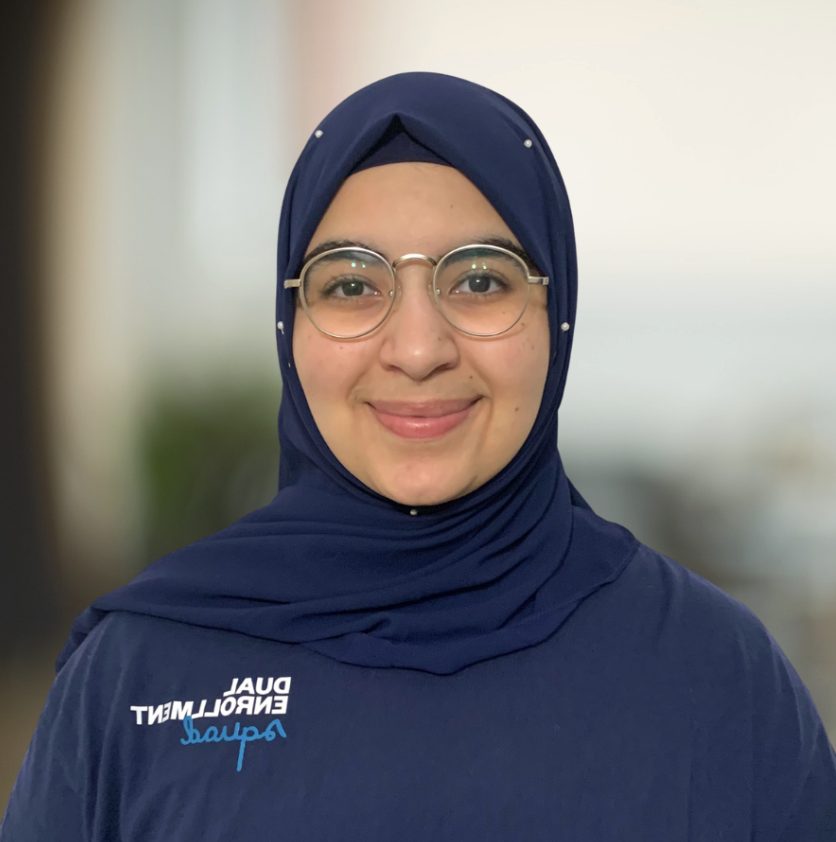
My experience attending a private Islamic high school in Park Slope, Brooklyn, reflects that tension.
A High School Rich in Community, Limited in Capacity
My high school was co-educational, Muslim-led, and racially diverse. Many students were poised to be first-generation college students, and many came from low-income households. The sense of belonging was strong: Faith and identity were integrated into daily life, and students did not have to negotiate their religious practice to feel academically legitimate.
At the same time, the school operated with limited institutional capacity. Class sizes averaged around 30 students. It was common for teachers to teach four or five classes in a day. One or two individuals often filled multiple roles—teaching, informal counseling, and advising—because of limited staffing and investment in faith-based schools. These constraints shaped how Advanced Placement (AP) and dual enrollment were implemented.
AP Courses: Rigor Without Infrastructure
Our school offered nine AP courses. Taking AP classes was one of the primary ways students attempted to earn early college credit. However, earning AP credit requires not just completing the course but getting a sufficiently high exam score, often a 4 or 5 depending on the college.
In under-resourced settings, that distinction matters. Teachers at my school worked hard to prepare us, often while managing overwhelming workloads. But AP success depends heavily on exam-specific preparation: access to practice materials, detailed scoring breakdowns, targeted strategies, and structured review resources. Without those supports, students may master course content but still be underprepared for the exam format. Additionally, certain courses, regardless of the exam score, cannot be used for course prerequisites for certain career tracks, such as medical or dental school. I experienced this most clearly in AP Physics. My prior Regents-level physics preparation was enough to handle the course content. The curriculum ultimately helped me in college-level physics. However, while AP Physics counted for elective credit, I was unable to use it to skip the course for my major, limiting the flexibility in my college schedule. For first-generation and low-income students, that flexibility is not a luxury. It can mean the difference between exploring additional academic interests and managing a rigid, full-credit load each semester. When AP courses are offered without the support infrastructure to maximize exam outcomes, and colleges have restrictive policies on the exam scores they will accept, students may invest time and money without receiving the full benefit they were promised.
A Pilot Dual Enrollment Program Reinforces the Importance of Wraparound Support
In addition to AP courses, our school had one pilot dual enrollment partnership with a nearby college. Students could apply and, if accepted, take college courses at no cost. Importantly, the program accepted students from diverse academic and social backgrounds. However, courses were offered in only one program pathway, which limited its scale and utility. While technically open to applicants, participation required awareness, guidance, and the capacity to navigate unfamiliar college systems.
In my first dual enrollment experience, I ultimately made the decision to drop the course.
I dropped it not because I couldn’t handle the academic content, but rather, like with AP courses, because succeeding in dual enrollment courses involves far more than mastering content. Students must navigate college registration and learning management platforms, strict deadlines, and administrative procedures. Students additionally have to deal with long-term academic implications if they do not succeed in their coursework, since course grades remain on a transcript past high school and are reported to graduate programs. In schools where counseling resources are stretched thin, students often manage these systems independently.
With clearer orientation, structured advising, and dedicated program support, that initial experience might have unfolded differently. The lesson I carried forward is not that dual enrollment was out of reach, but that support structures are central to whether early college opportunities translate into long-term benefit.
The Cultural Dimension: Muslim Students Navigating College Transitions
Attending a Muslim high school provided cultural comfort and identity affirmation. Religious practice was normalized. Teachers and staff understood the social and cultural realities many of us navigated. For many students, particularly young Muslim women, this environment supports confidence and academic focus during adolescence.
However, transitioning from a faith-centered environment to a secular college campus can be an adjustment and require extra work to adapt, including locating prayer spaces, navigating exam schedules that conflict with religious holidays, accessing halal food, building community without pre-existing religious networks, and managing visibility and representation as a visibly Muslim student.
While my university had a center for Muslim student engagement and various other resources, it was difficult navigating administrative issues and cultural landscapes in a college that did not account for the full Muslim religious experience.
Dual enrollment has the potential to ease that transition by exposing students to college environments while they remain grounded in supportive high school communities. But this potential is realized only when programs are culturally responsive and intentionally inclusive. Expanding dual enrollment access for Muslim students, and for faith-based school communities more broadly, requires partnerships that do not assume large public-school infrastructure as the default model.
Recommendations for More Equitable Dual Enrollment Design
Drawing from my experience and from research highlighting persistent access gaps in dual enrollment participation, I offer several recommendations:
- Include faith-based and under-resourced schools in dual enrollment partnerships. Expansion efforts should not disproportionately benefit schools that already have strong infrastructure.
- Embed structured advising within dual enrollment programs. Orientation to college systems, add/drop policies, credit transfer implications, and workload expectations should be a standard support.
- Scale beyond pilot initiatives. Dual enrollment opportunities should be stable, predictable pathways rather than selective, small-cohort experiences.
- Provide resource equity for AP and dual enrollment implementation. Offering AP and dual enrollment courses without exam-aligned preparation materials, practice resources, and teacher support undermines their intended benefit. For dual enrollment, offering initial student orientation, mandatory and effective student advising, and overall program resources ensures resource equity and promotes student success.
- Build culturally responsive transition supports. Connect students to campus religious organizations, clarify accommodation processes, and normalize religious scheduling needs.
Dual enrollment participation continues to grow nationally. The critical question is whether that growth will be accompanied by intentional design that centers historically underrepresented students.
My experience with AP and dual enrollment at a private Islamic high school illustrates both the promise and the limitations of early college credit pathways in under-resourced contexts. The opportunities were real. The ambition among students was real. But so were the barriers. The promise of dual enrollment is still there: With the right support and a true commitment to equity, it can open doors for every student to step into opportunities that once felt out of reach, and into futures they deserve.