In this brief, the authors propose three measures of early academic momentum that colleges can use to gauge whether institutional reforms are improving student outcomes
Thomas BaileyDavis JenkinsClive BelfieldElizabeth M. Kopko
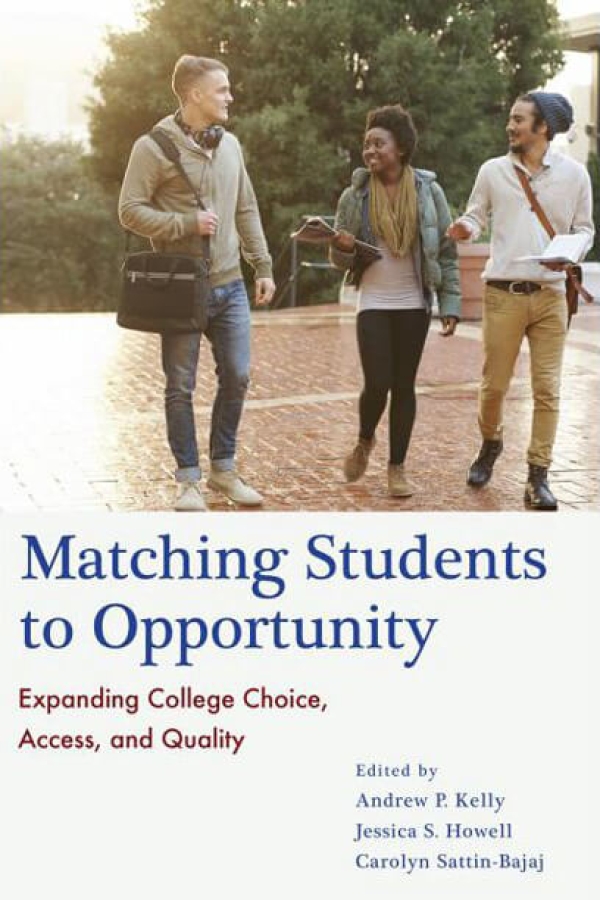
This chapter in the book Matching Students to Opportunity examines the matching process between students and college programs or majors, primarily in community colleges.
Using student-level data from the Tennessee Board of Regents, this paper explores the academic and economic consequences of taking higher or lower credit loads in the first semester and first year of college.
Michelle Van NoyMadeline Joy TrimbleDavis JenkinsElisabeth A. BarnettJohn Wachen
This study documents the specific ways that community college career-technical programs are structured to support student success, and it provides a framework for examining structure to inform practice and guide future research efforts.
This Corridors of College Success brief highlights challenges involved in collective impact work and provides a lens for understanding why well-intentioned collective impact efforts may not take root.
This brief, the second in CCRC’s Corridors of College Success series, describes the challenges that early-stage collective impact communities face as they work to identify potential backbone organizations and establish a backbone structure.
The authors of this book argue that to substantially increase student completion, community colleges must engage in fundamental redesign and outline research-based strategies to help colleges achieve this goal.
This practitioner packet summarizes evidence supporting the guided pathways reform model, describes how one college implemented guided pathways, and offers tips for getting started on guided pathways reforms.
This chapter reports on a major college-wide effort to smooth students’ paths as they enter the college, choose a program, and progress to a credential.
This report reviews research evidence on college policies designed to facilitate on-time degree completion among students by encouraging them to enroll in at least 15 credits per semester.
This paper employs a novel graphical technique to illustrate the diverse enrollment patterns of community college students and examines the relationship between these patterns and successful student outcomes.
This publication describes efforts by a growing number of colleges and universities to create “guided pathways” designed to increase the rate at which students enter and complete a program of study.
This brief examines characteristics and course-taking patterns of students who accumulate a substantial number of college credits but do not earn an award by their fifth year of enrollment.
This publication examines the diversity of enrollment patterns among community college students and demonstrates a novel graphical technique for displaying large numbers of enrollment patterns.
This article reviews research on what community colleges and less selective public universities can do to graduate more students at a lower cost without sacrificing access or quality.
This publication, the second in CCRC’s Analytics series, examines the progression of community college students in transfer-oriented programs through the general education core curriculum.
This report examines the use of data on students by faculty, administrators, and student services staff at six Washington State colleges that joined Achieving the Dream in 2006–2007.
This report introduces an approach to examining students’ college experiences, identifying factors that catalyze or impede their progress, and using these insights to improve student outcomes.
This publication examines the hidden complexity of completion outcome data and offers an approach to teasing out the complex factors that affect student completion in order to boost student success.