This brief highlights efforts at Southwest Wisconsin Technical College to integrate career, educational, and financial planning to support student success.
This brief showcases how Tallahassee State College reimagined its career exploration and long-term academic planning processes to create a stronger foundation for its 16,000 students to complete degrees or successfully transfer.
Ellen WassermanHana LahrDavis JenkinsSerena C. Klempin
Based on research from "More Essential Than Ever" and other recent research, this brief shows how educational plans convert abstract choices into personalized roadmaps in order to improve student persistence, timely program completion, and long-term career success.
Judith Scott-ClaytonVeronica MinayaCJ LibassiJoshua K.R. Thomas
Using data from a multi-campus public college system, this brief shows that differences in first post-college jobs—primarily starting salaries—can explain two thirds or more of the Year 5 earnings gap
between otherwise similar low- and high-SES graduates.
This tool and accompanying guide are designed to help community colleges assess the extent to which they have implemented at scale key practices for strengthening guided pathways, as laid out in CCRC's recent book.
Michael WeissColin HillKayla WarnerVeronica MinayaJudith Scott-ClaytonChristine BrongniartZineta Kolenovic
This report revisits a randomized controlled trial of the CUNY ASAP program that began in 2010 and assesses the program's long-term impacts on educational attainment and labor market outcomes over fourteen years.
Drawing on data from interviews and site visits at three Texas community colleges and their partner high schools, this paper examines how college and high school staff navigate boundaries between their organizations and make decisions to support dual enrollment students and courses.
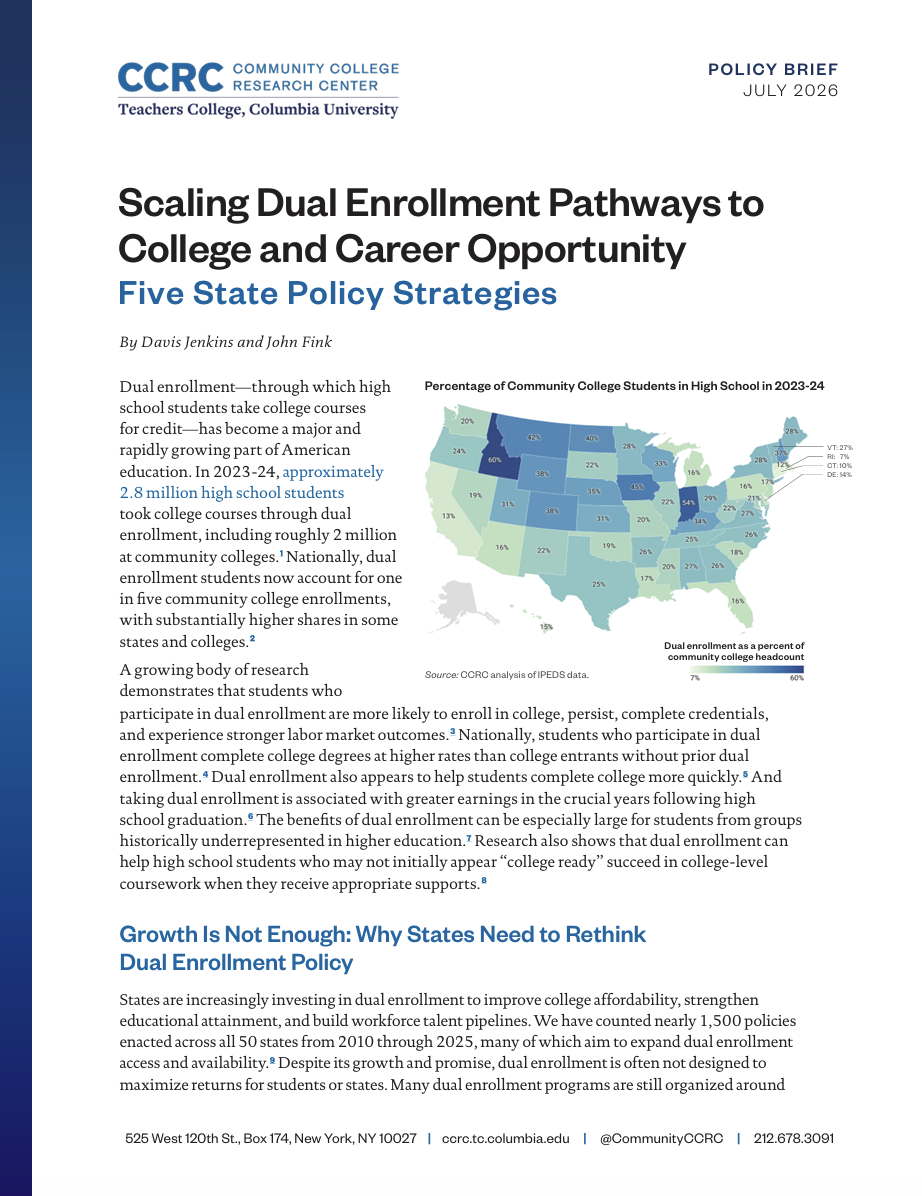
Drawing on examples from around the country, this policy brief identifies five strategies states can use to help colleges and school districts adopt and sustain purposeful dual enrollment practices that lead to greater opportunity for students.
Veronica MinayaAdela SolizJudith Scott-ClaytonAmy E. Brown
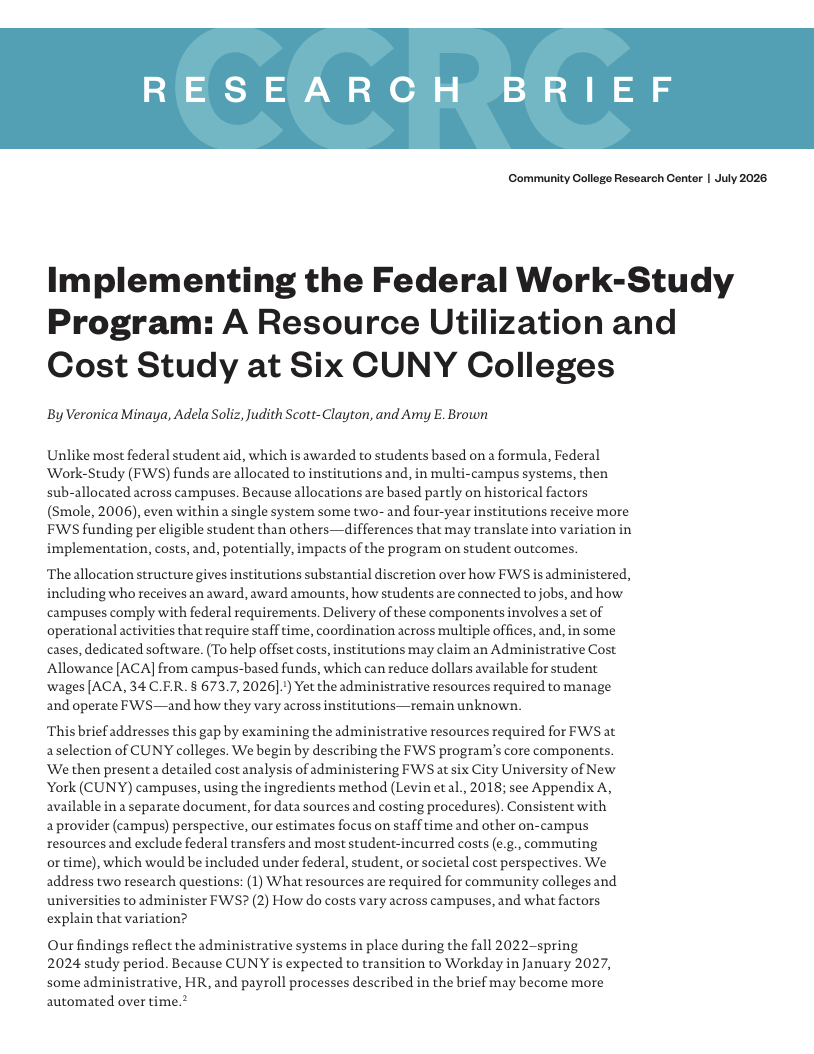
Using information and cost data from several CUNY campuses, this brief describes the FWS program’s core administrative components, estimates the campus costs of its implementation, and shows how program scale, staffing, and technology shape these costs.