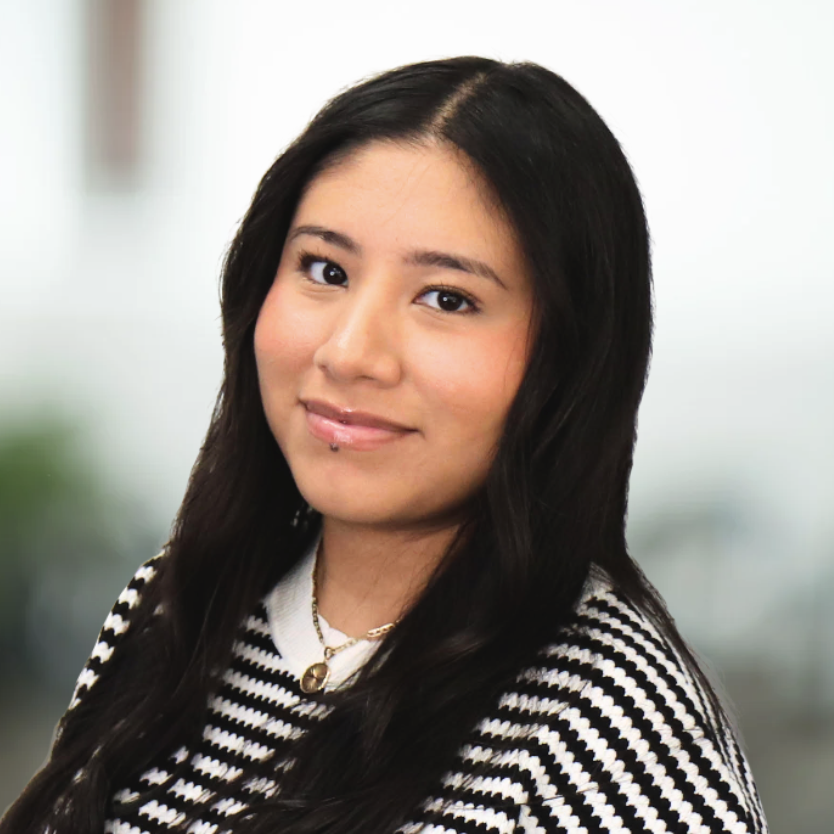

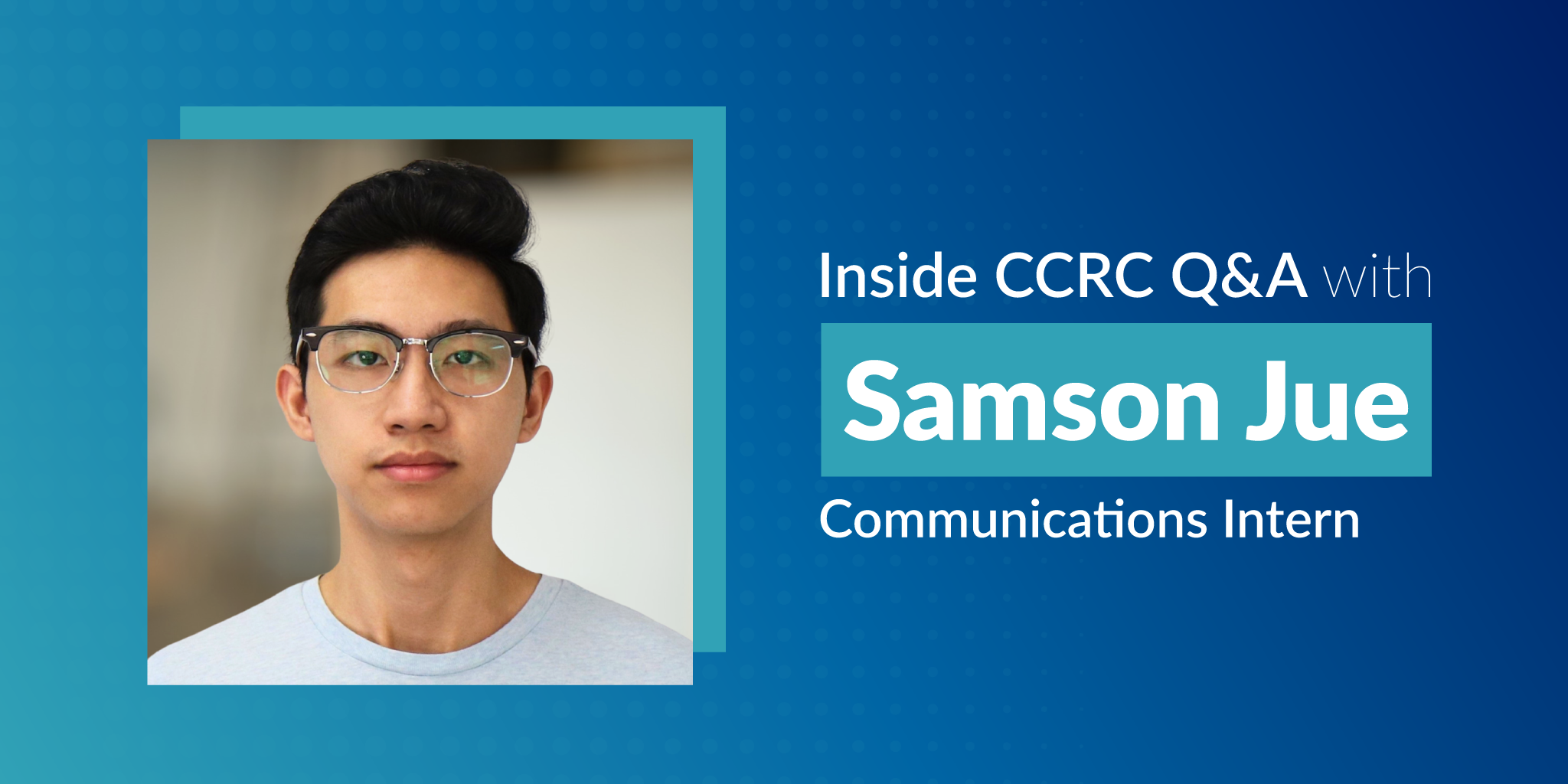
Samson Jue is a rising senior at the College of Staten Island, where he is pursuing a bachelor’s in communications with a concentration in design and digital media and a minor in history. As a summer communications intern at CCRC through the CUNY Career Launch Program, Jue is working with the communications team to write blogs and create graphics for the website.
In this Q&A, Jue discusses why his academic interests changed from software engineering to communications and what he hopes to accomplish long term. He also highlights the challenges he faced navigating higher education, specifically during the aftermath of the COVID-19 pandemic.
This Q&A has been edited and condensed for clarity.
Claribeth Gutierrez: Why did you decide to study communications and design?
Samson Jue: I originally studied software engineering in high school and realized it wasn’t something I particularly enjoyed, so I decided to explore the field of communications instead because it allows me to engage with people while also incorporating graphic design, which is something I’m interested in.
Gutierrez: How do your interests align with the work that you’re doing at CCRC?
Samson: Here at CCRC, I’m doing graphic design work for their website. I get to have hands-on experience with graphic design in a professional setting. It’s interesting work because I am given branding guidelines that I have to follow while also inputting my own creativity.
Gutierrez: What is a recent project you’ve been working on?
Samson: The most recent project I’ve been working on is designing a flyer for an online survey that will help collect qualitative data for a larger project involving a collaboration between CCRC and Hartnell College. The flyer will be printed, posted around campus, and distributed to students to encourage participation.
Gutierrez: Have you had any difficulties navigating higher education?
Jue: The registration process can be difficult because I don’t find the advisors at my school very helpful. When it comes to enrolling in classes, I just use the other resources that my school provides, like the course catalog and a tool that tracks my degree progress, and I do the entire process myself. Sometimes I ask professors or other students for their input. Also, the classes I need to fulfill degree requirements often don’t have enough sections available, fill up too quickly, or are not even offered at all for the upcoming semester.
Gutierrez: And what are some challenges you’ve personally faced while transitioning into college?
Jue: I would say the biggest challenge I faced transitioning into college is having no sense of direction. Coming out of COVID, I missed out on most of my high school experience, so I did not feel 100% prepared for college. The experience of online learning and being socially isolated for a long period of time was really detrimental to my mental health and academic performance. My grades suffered to the point where I became a failing student and I lost the motivation to do well in school. When it came to applying to college, I didn’t know which school I wanted to go to or whether college was even right for me. And being a first-generation student, I didn’t have anyone who could provide me guidance and advice. I ultimately attended the College of Staten Island (CSI), which was actually the only school I applied to, since they have a 90% acceptance rate and it seemed like a safe option. But choosing CSI came with the stigma around going to a lower-ranking school. Attending Brooklyn Tech, a specialized high school in New York City where students are accepted to private institutions, Ivy Leagues, and other highly selective universities, many of my classmates looked down on me. Their attitude made me feel inferior to an extent, but I did not let their opinions define me.
Gutierrez: Yeah, I agree that the effects of the pandemic definitely made transitioning to college harder for many students. Now that you’re in college, what are your long-term goals?
Jue: My long-term goals are to gain more work experience, graduate, and have a meaningful career. From my difficulties navigating higher education, I’ve learned that pursuing a career that is fulfilling is most important. I want to be in a position where I can make a positive and meaningful impact on the lives of others and the world around me.
Gutierrez: What is the most valuable lesson you have learned as a student that is helping you in your college career?
Jue: I would say the most valuable lesson I learned as a student is the importance of authenticity and to follow a path that’s right for you. Sometimes what society tells you isn’t always what’s best for you, and to be your best self, you need to do what’s the most optimal for you.