This report examines how Ohio community colleges—which have been engaged in guided pathways reform for several years—are innovating within the model to provide scaled, personalized support to help students gain early academic momentum.
This brief discusses why whole-college, guided pathways reforms hold promise for improving student success on a large scale, what they cost, and how the federal government can support their adoption.
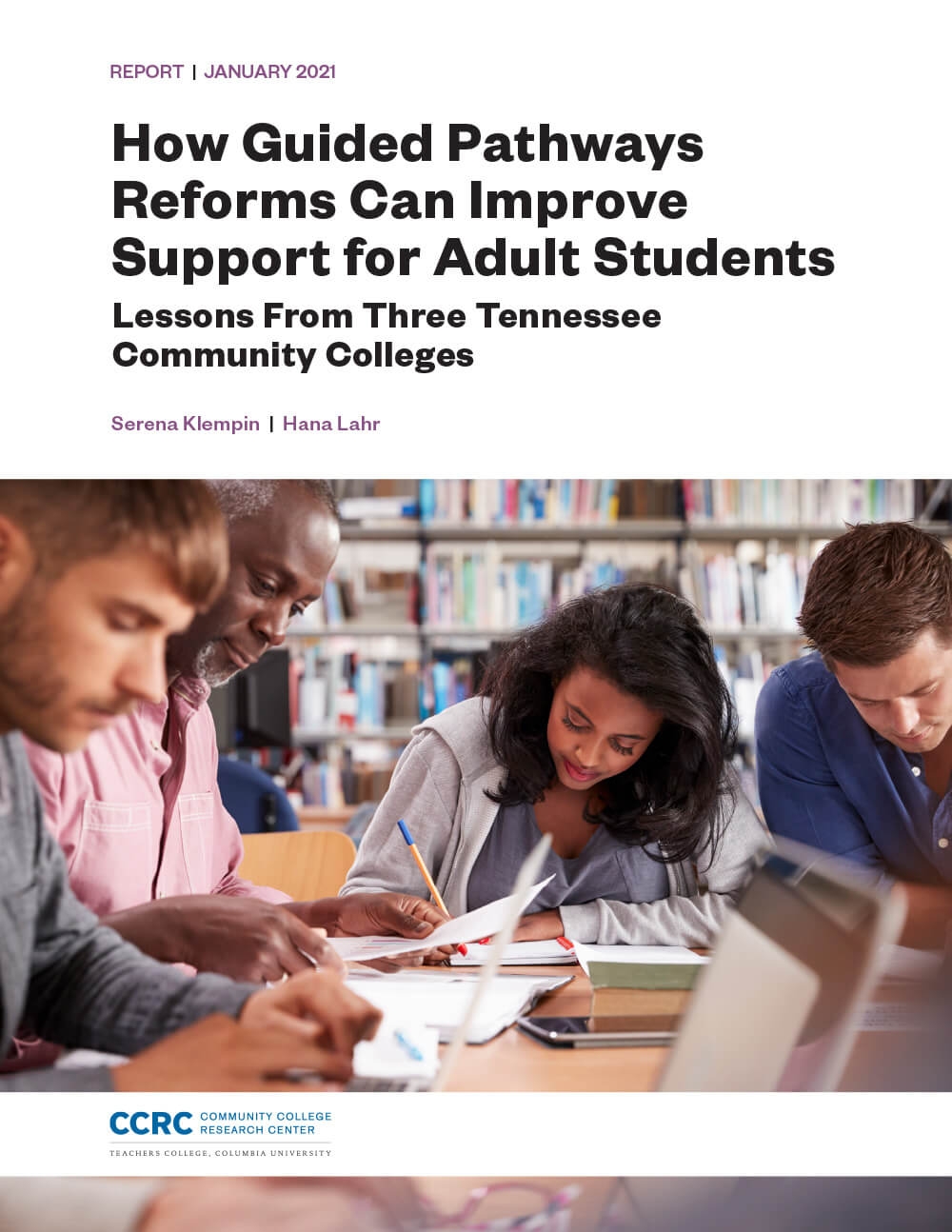
Drawing on interview data, this report discusses strategies that three guided pathways colleges use to help adult students enter programs of study, stay on path, and enhance learning.
Drawing on research at six institutions, this guide is intended to help community college leaders understand the costs involved in implementing guided pathways reforms and develop plans for funding and sustaining them.
Drawing on data from 12 community colleges, this paper analyzes the resources required to implement guided pathways reforms and examines their feasibility and affordability, as well as their value for students.
Vivian Yuen Ting LiuSoumya MishraElizabeth M. Kopko
Using state administrative data and propensity score matching, this study examines the characteristics and academic outcomes of community college students who switch majors.
Using administrative data from Florida, this article examines the effect of changing the grading scale from whole-letter grades to plus/minus grades on STEM major choice.
This guide presents a set of example data analyses colleges can replicate to examine whether underserved groups of students are equitably represented in programs that lead to higher opportunity outcomes for employment and/or baccalaureate transfer.
Davis JenkinsHana LahrLauren PellegrinoElizabeth M. KopkoSarah Griffin
This practitioner packet provides guidance to colleges seeking to redesign their new student onboarding practices to better help students explore, choose, and plan a program of study best suited to their interests and aspirations.