Drawing on survey and interview data, this article describes what students want from their dual enrollment experiences and implications for college and K-12 leaders working to strengthen their dual enrollment programming.
John FinkDavis JenkinsSarah GriffinAurely Garcia Tulloch
This report describes strategies for providing purposeful dual enrollment, which better guides underserved students into degree- and career-connected education after high school, without shifting the cost burden onto students and families.
Using data from Texas, this report examines how students combine different types of accelerated coursetaking in high school and how these combinations are associated with students’ subsequent postsecondary attainment and earnings trajectories.
Judith Scott-ClaytonVeronica MinayaCJ LibassiJoshua K.R. Thomas
Using administrative data from a large, urban, public college system, this paper documents large gaps in earnings five years after graduation by SES and the extent to which differences in the first job transition can explain these gaps.
This book chapter examines the role of community colleges in higher education and discusses enrollment trends and student characteristics and outcomes. The authors synthesize research on reforms intended to improve student outcomes and conclude with new directions for research and practice.
Hana LahrVeronica MinayaRachel BakerPatrick Lavallee Delgado
Using survey data from incoming students at four colleges, this report examines how they think about choosing a program of study, how well their educational and career goals align, and implications for colleges seeking to better support students’ decision-making.
Serena C. KlempinMaggie P. FayAkilah H. ThompsonEstefanie Aguilar PadillaKaylee Converse
Based on faculty and staff interviews at four colleges, this brief describes how students experience the program choice process, including barriers they face, and discusses practices for improving support for program and career exploration.
This paper documents the annual costs associated with six common community college success strategies; overall costs, the distribution of costs, and costs per student, as well as how costs are borne by various actors are identified.
Davis JenkinsHana LahrJohn FinkSerena C. KlempinMaggie P. Fay
Drawing on a decade of research on whole-college guided pathways reforms, this book presents five next-frontier strategies colleges can use to strengthen pathways to post-completion student success in jobs and further education.
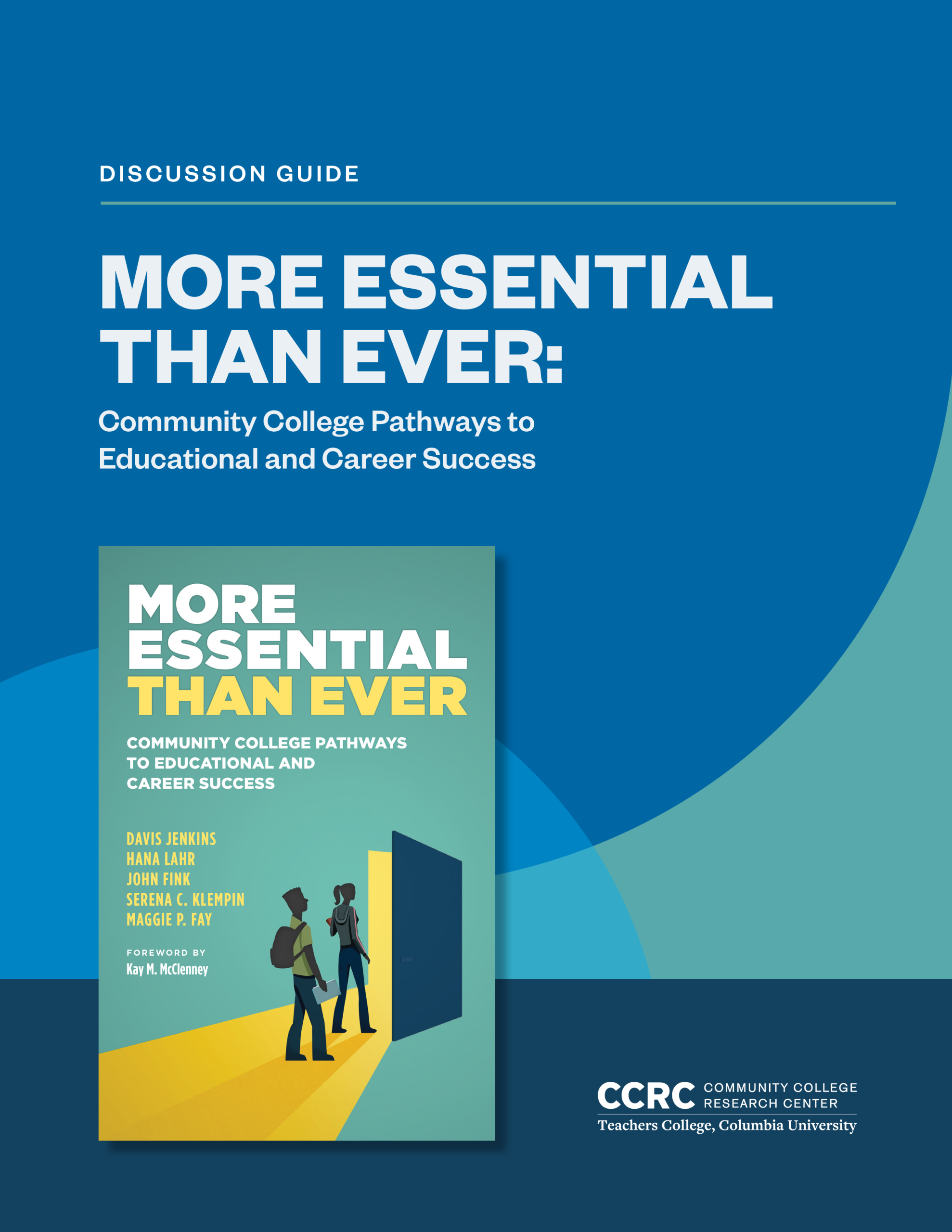
This discussion guide for More Essential Than Ever is designed to help community college faculty, staff, and administrators discuss ideas presented in the book and consider which might be most helpful for improving student success at their institutions.