This how-to guide provides information for practitioners, schools, and districts on how to incorporate college coursework into high school academies and pathways.
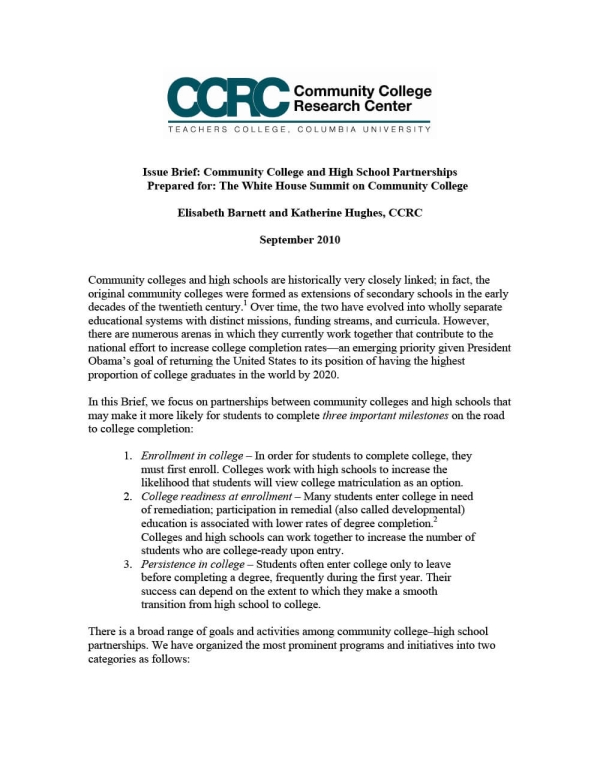
Prepared for the 2010 White House Summit on Community College, this brief discusses partnerships that promote college enrollment, college readiness, and postsecondary persistence.
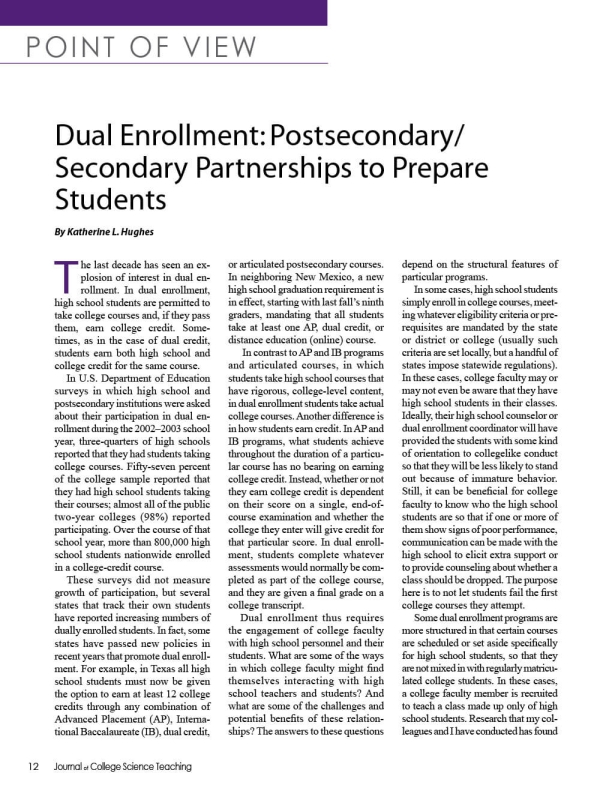
This article describes some of the ways in which dual enrollment requires the engagement of college faculty with high school personnel and their students, and it reviews the challenges and potential benefits of these relationships.
Based on analysis of nationally representative AP exam data taken from the Education Longitudinal Study of 2002, this article examines whether incentives provided to students, teachers, and schools help students enroll and succeed in AP exams.
This report is intended to inform educators, policymakers, administrators, and researchers about current policies and practices that shape dual enrollment in California.
This article provides a theoretical rationale for policymakers' support for programs that allow high school students to take college-level classes for credit.
This summary is intended to help decision-makers understand why research on the effectiveness of dual enrollment programs is important and how policymakers can support research activities.
This book chapter reviews three dominant strategies to create academic linkages between high school and college—remediation, dual enrollment, and the high school/college alignment movement.