This brief discusses current research, including CAPSEE analysis, regarding both the effectiveness of the Federal Work-Study (FWS) program and its equity in terms of the distribution of funds.
Using an administrative data set from one state, this paper examines the effects of receiving a modest Pell Grant on financial aid packages, labor supply while in school, and academic outcomes for community college students.
This CAPSEE working paper examines the prevalence and consequences of Pell Grant recipients’ failure to meet the standards for satisfactory academic progress required for grant renewal.
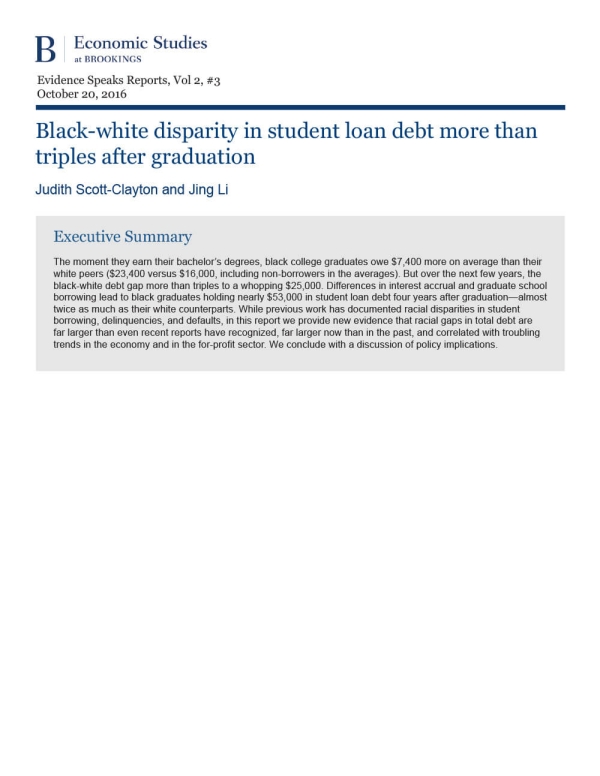
In this report for Brookings, Judith Scott-Clayton lays out a new analysis that shows that the gap in student debt between Black and White bachelor's degree earners triples in the four years after graduation.
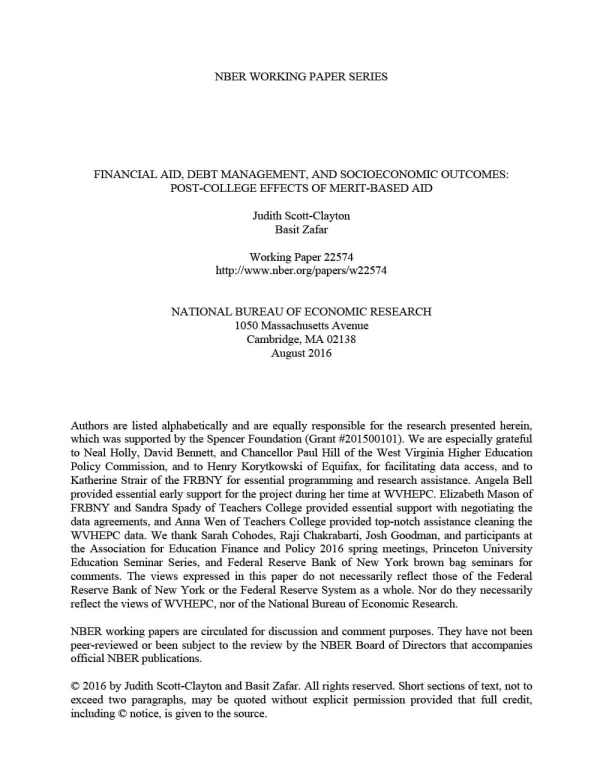
This paper utilizes two complementary quasi-experimental strategies to identify causal effects of the WV PROMISE scholarship, a broad-based state merit aid program, up to 10 years post–college entry and examine important outcomes that have not previously been examined, including homeownership, neighborhood characteristics, and financial management.
Using two waves of the Beginning Postsecondary Student survey, this paper provides the first national estimates of the effect of the Federal Work-Study program on students' academic and labor market outcomes.
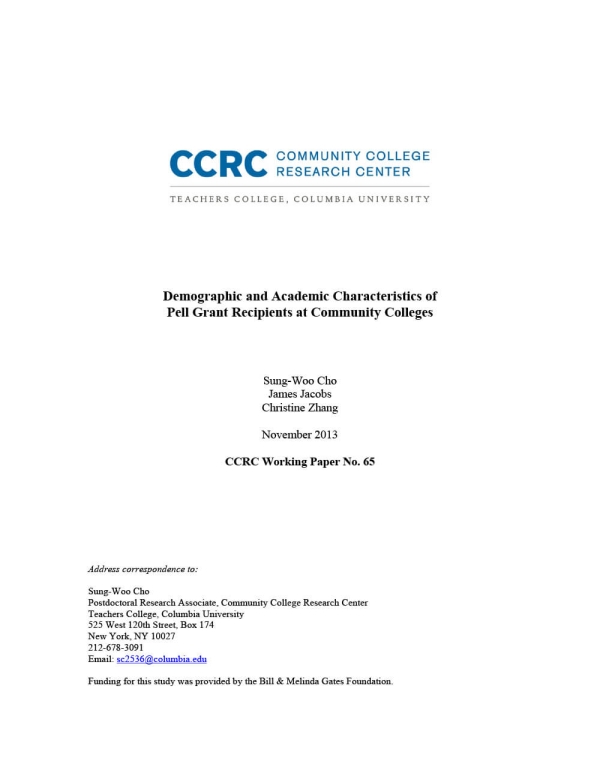
Findings from this paper suggest that while Pell recipients at community colleges have a stronger academic focus than non-Pell recipients, they may be taking more time to complete a credential than is prudent.
In this discussion paper, the authors argue that the time has come to comprehensively redesign the Pell program, and they propose three major structural reforms to the Pell Grant program.
This article reviews the evidence on various student aid programs and their effects on college enrollment, persistence, and completion and discusses the implications of these findings for aid policy.