Using administrative data from the City University of New York (CUNY), this paper examines the impact of the summer Pell program on community college student persistence, completion, and employment outcomes.
Using three case studies, this paper examines the conditions under which dual enrollment programming could be made sustainable through efficiency gains, even for colleges that charge discounted tuition (or none at all)
Hoori Santikian KalamkarianAndrea Lopez SalazarElisabeth A. BarnettArmando LizarragaNoemi GaribayCameron Diwa
This report shares results of research undertaken to understand what five iPASS institutions were doing before and during the iPASS grant period to advise and support Black, Latinx, and low-income students both in and outside the classroom.
Caring Campus/Faculty is a program aimed at increasing students’ connection to college; this report shares findings from a study on how it is being adopted at several colleges, including insights into effective faculty engagement and implementation.
Based on fieldwork at six institutions, this report describes how colleges are implementing Caring Campus/Staff, a program designed to engage nonacademic staff in improving interactions with students and fostering a culture of caring at community colleges.
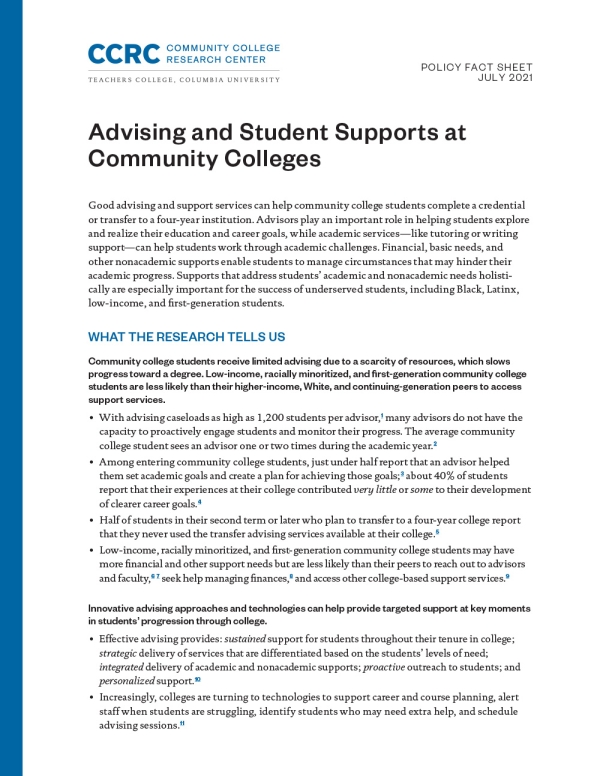
This fact sheet describes the importance of academic and nonacademic services, particularly for underserved students, and how students that receive targeted, intensive support experience improved outcomes.
This fact sheet outlines how the Federal Work-Study program works, its effects on academic and labor market outcomes, and why so few community college students receive Federal Work-Study aid.
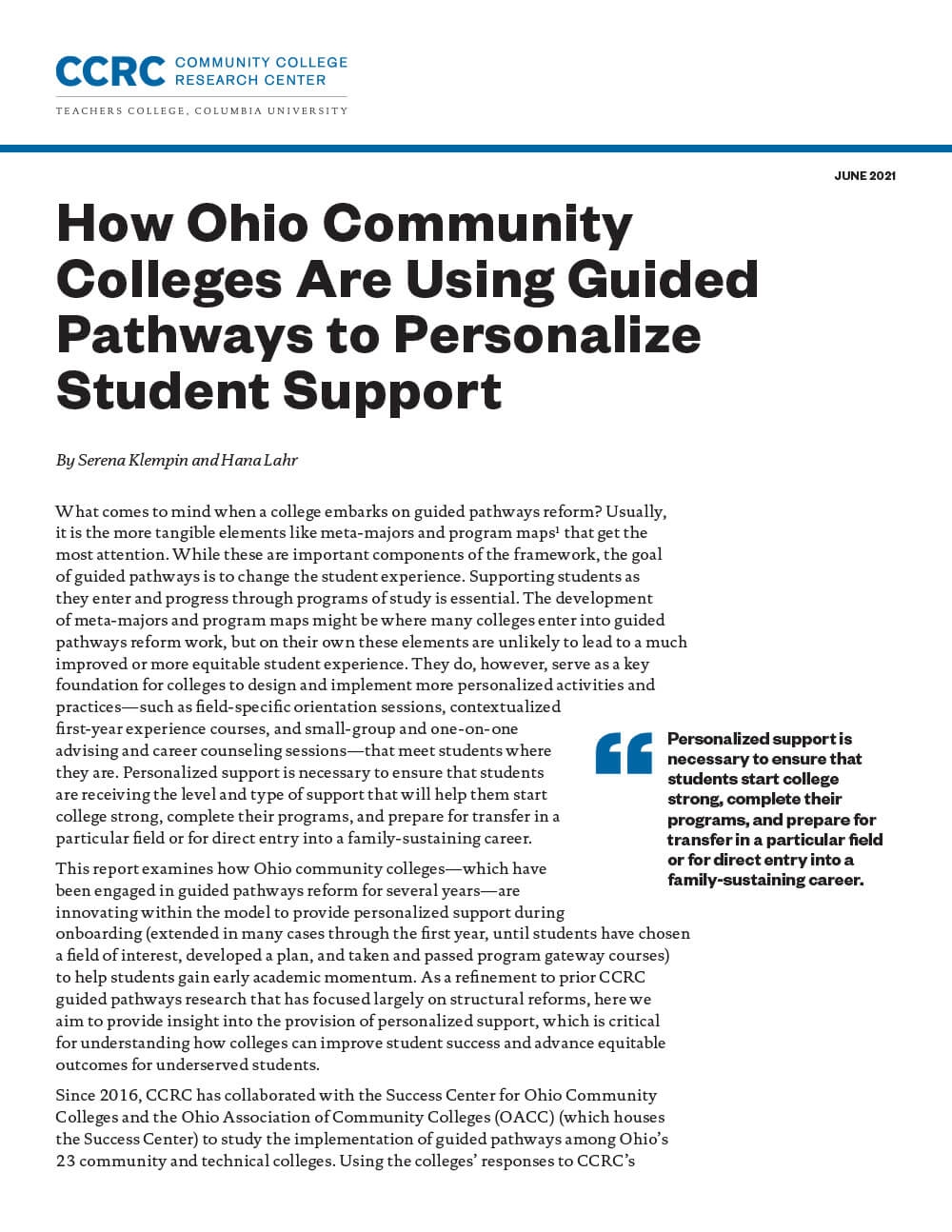
This report examines how Ohio community colleges—which have been engaged in guided pathways reform for several years—are innovating within the model to provide scaled, personalized support to help students gain early academic momentum.
This set of three studies examines what states and community colleges can do to address the needs of racially minoritized adult learners who are pursuing postsecondary education and training as a path to re-employment, better jobs, and higher incomes.
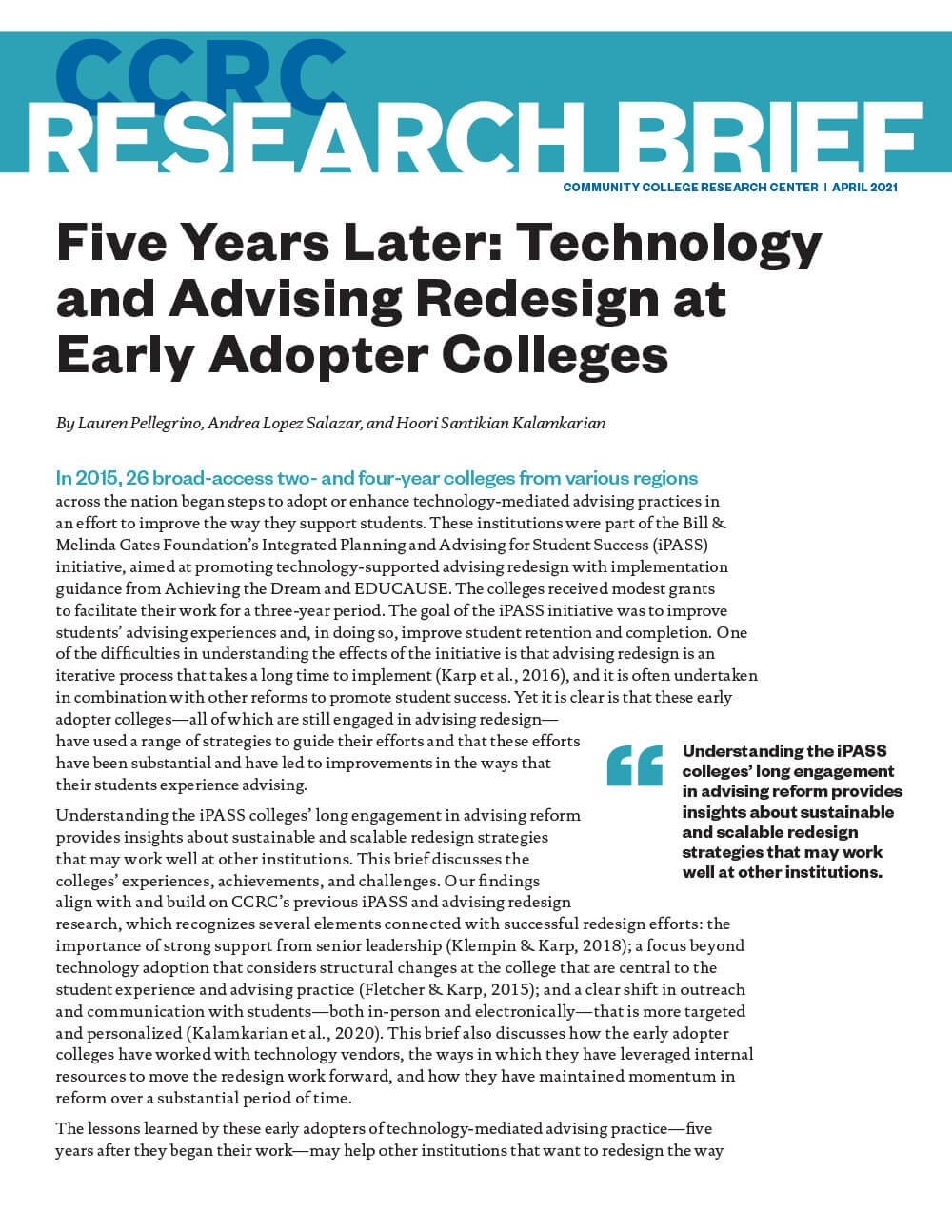
This brief discusses the experiences, achievements, and challenges of 26 broad-access two- and four-year colleges that, in 2015, began steps to adopt or enhance technology-mediated advising practices to improve the way they support students.