Using three case studies, this paper examines the conditions under which dual enrollment programming could be made sustainable through efficiency gains, even for colleges that charge discounted tuition (or none at all)
Elisabeth A. BarnettMaggie P. FayCynthia ListonRyan Reyna
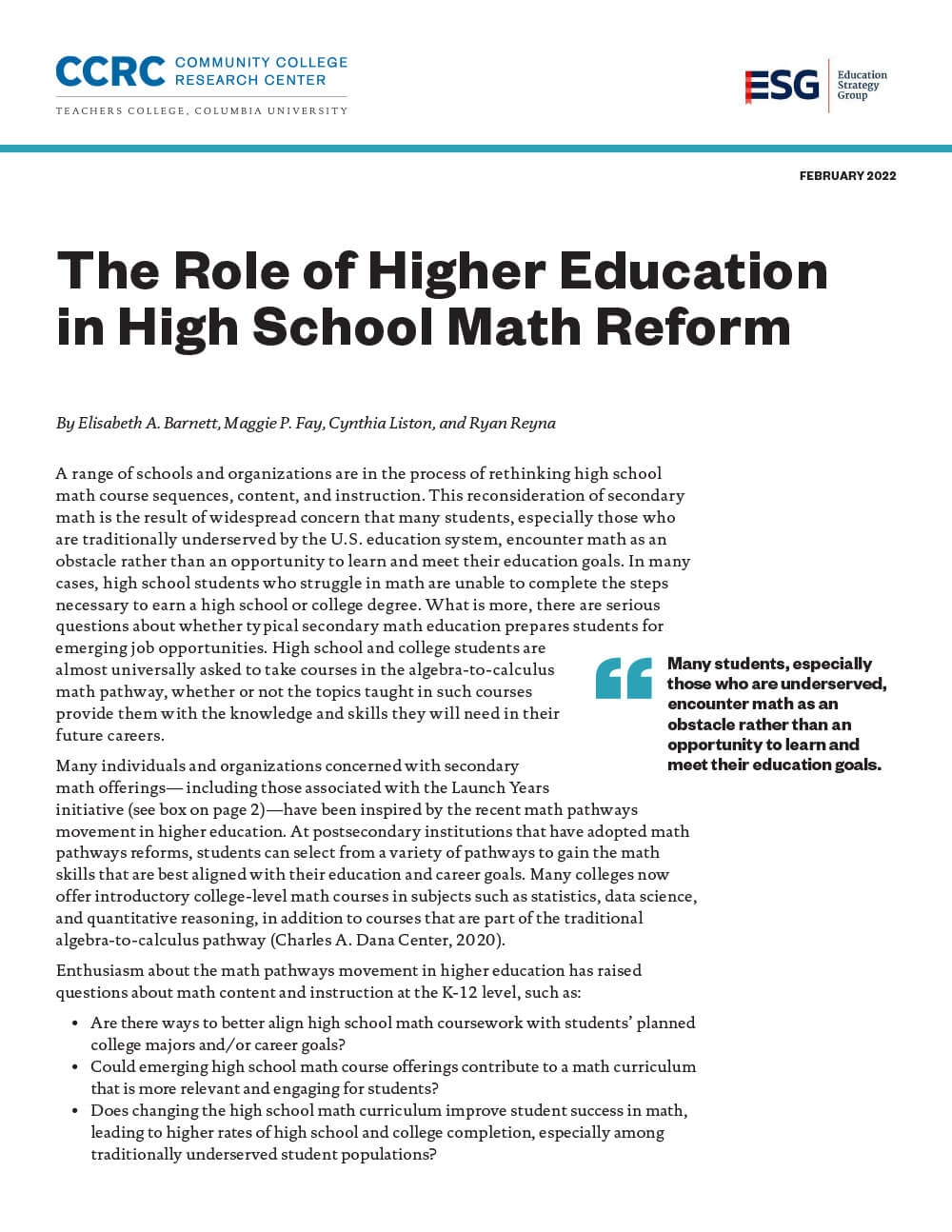
Based on interviews with educators who are rethinking and revising secondary math coursework, this report describes the role of higher education in influencing high school math reform nationally and in three particular states.
Using administrative data from a large state community college system, this paper examines whether being exposed to a higher percentage of dual enrollment peers influences non-dual enrollment enrollees’ performance in college courses.
This paper estimates the patterns and sources of White–Black and White–Hispanic enrollment gaps in Advancement Placement (AP) and dual enrollment programs across several thousand school districts and metropolitan areas in the United States.
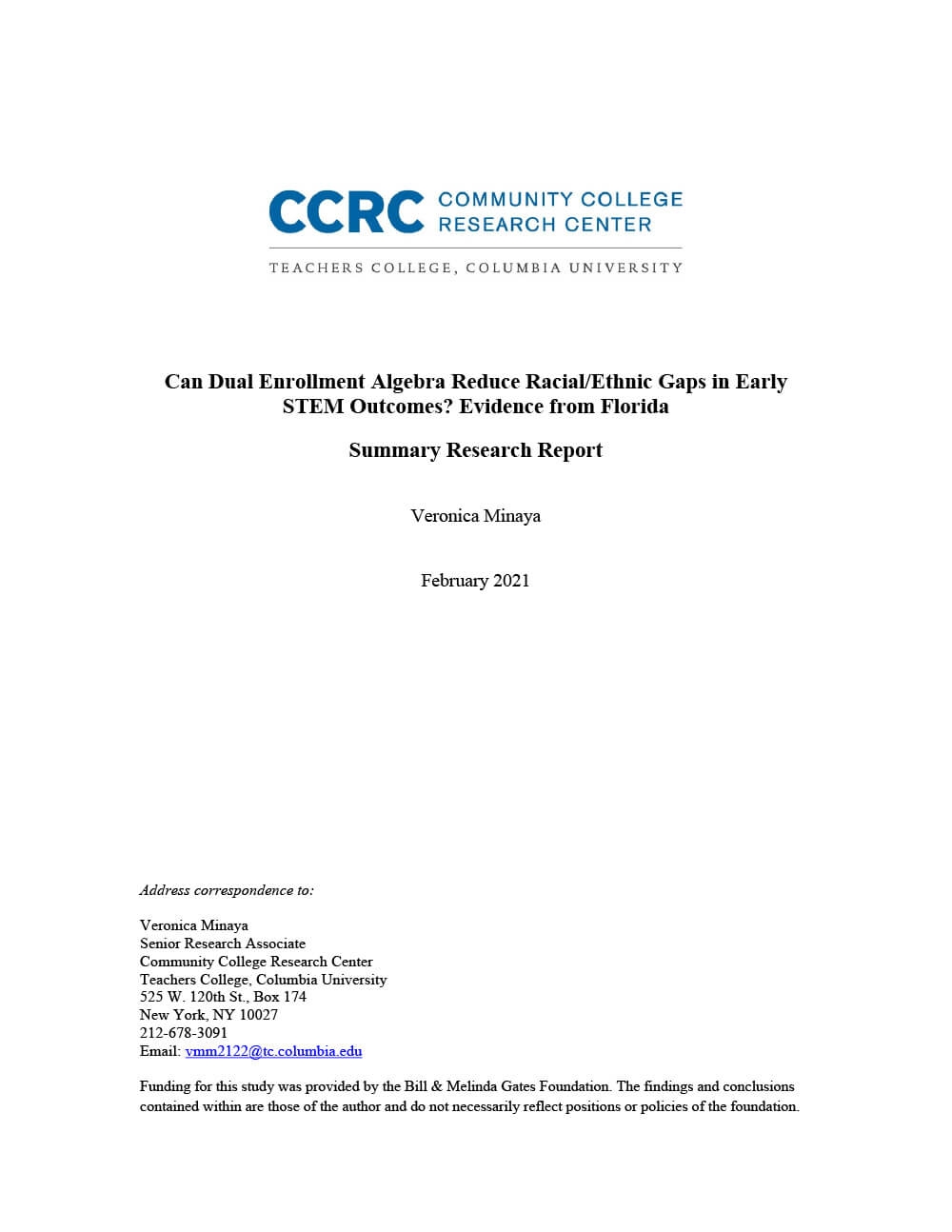
Using descriptive methods as well as a quasi-experimental approach, this report examines the early college outcomes of Florida high school students who enrolled in a dual enrollment college algebra course.
Adnan MoussaElisabeth A. BarnettJessica BrathwaiteMaggie P. FayElizabeth M. Kopko
This paper examines challenges embedded within the prevailing high school mathematics course sequence, which prioritizes algebra, and explores innovations that aim to provide curricula and pedagogy more aligned with students’ academic and career goals.
Using data on two cohorts of Florida students who started public high school in 2007 and 2012, this report analyzes dual enrollment course-taking and outcomes by racial/ethnic group (Black, Hispanic, White) and course modality (face-to-face on-college-campus, face-to-face off-campus, and online).
Gelsey MehlJoshua WynerElisabeth A. BarnettJohn FinkDavis Jenkins
Based on research conducted in three states, this report identifies five principles that undergird the strategies and practices of equitable dual enrollment partnerships between high schools and colleges.
Drawing on interviews with 96 first-year community college students, this journal article compares the roles of students' on- and off-campus relationships in providing information and support.
Christine MokherElisabeth A. BarnettDaniel M. LeedsJulie C. Harris
Using Florida as a case study, this Change Magazine article describes the complexities of implementing effective college readiness reforms and offers insights for policymakers looking to improve student success.