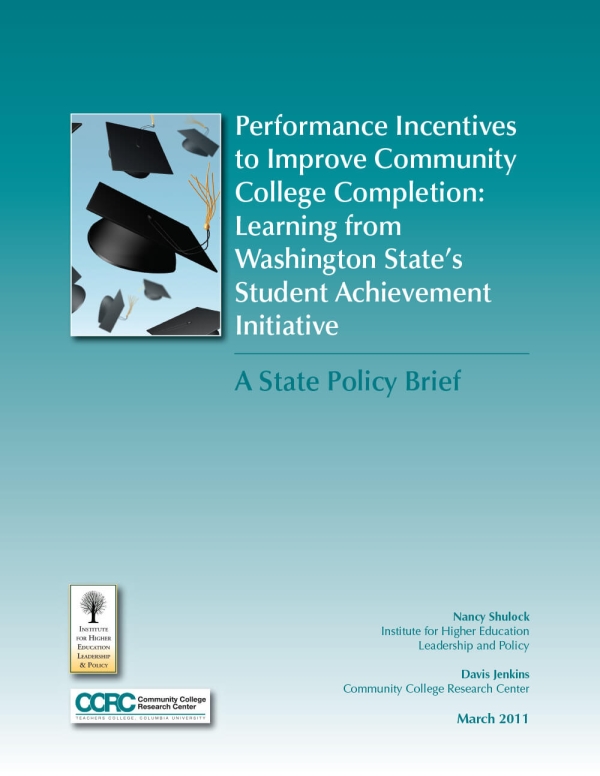
Based on findings from a three-year study of Washington State’s Student Achievement Initiative, this policy brief offers lessons for state leaders seeking to design effective higher education performance funding systems.
Kevin DoughertyRebecca NatowRachel Hare BorkSosanya JonesBlanca Vega
This article discusses political forces that shaped performance funding policies in eight states: Florida, Illinois, Missouri, South Carolina, Tennessee, Washington, California, and Nevada.
Davis JenkinsColleen MooreJohn WachenNancy Shulock
This report assesses how and to what extent the Student Achievement Initiative has encouraged two-year public colleges in Washington State to take steps to improve student achievement.
This paper examines the performance of Washington State’s two-year colleges under the Student Achievement Initiative, a policy to reward colleges for improvements in student achievement.
This paper gives a preferred economic definition of college efficiency—fiscal and social cost per degree—and assesses the validity of using IPEDS data to calculate efficiency for a community college system.
This policy brief examines key issues raised by Washington State's experience with the Student Achievement Initiative model of performance funding for community and technical colleges.
Kevin DoughertyRebecca NatowRachel Hare BorkSosanya JonesBlanca Vega
This report discusses political forces that shaped performance funding policies in eight states: Florida, Illinois, Missouri, South Carolina, Tennessee, Washington, California, and Nevada.
The experiences of three states that dropped performance funding (Missouri, Washington, and Florida) are contrasted with those of a fourth (Tennessee) that has retained it more than 30 years.