Elisabeth A. BarnettOctaviano ChavarínSarah Griffin
Based on interviews with stakeholders in 11 states and other data, this brief describes the design, implementation, and effectiveness of math transition courses and identifies major trends in course development.
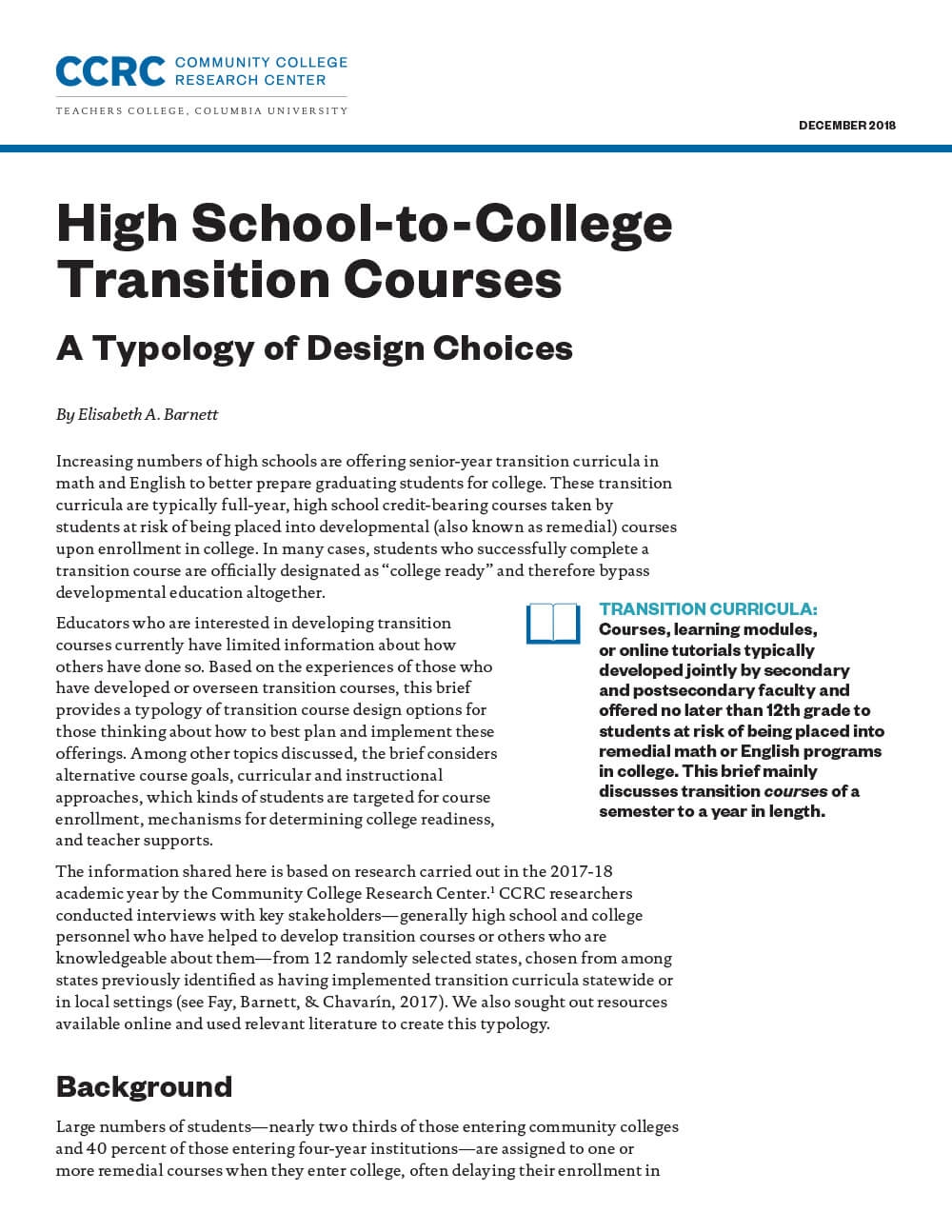
High schools across the country are implementing transition curricula to boost college readiness. This short publication offers an overview of course design options for educators thinking about implementing transition courses.
Based on interviews and other data, this brief describes key elements of English transition curricula in seven states and highlights ways this type of intervention may help prepare students for college.
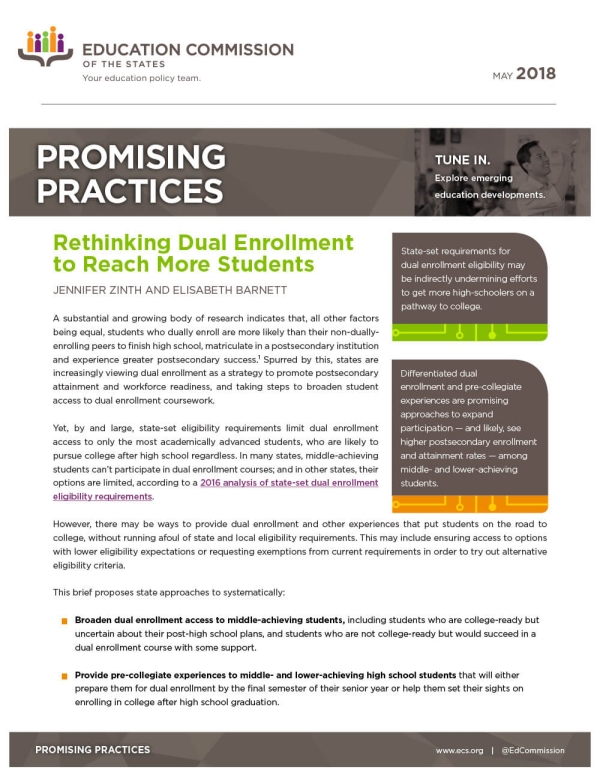
This brief published by Education Commission of the States discusses state approaches that systematically broaden dual enrollment access and provide pre-collegiate experiences to middle- and lower-achieving students.
Maggie P. FayElisabeth A. BarnettOctaviano Chavarín
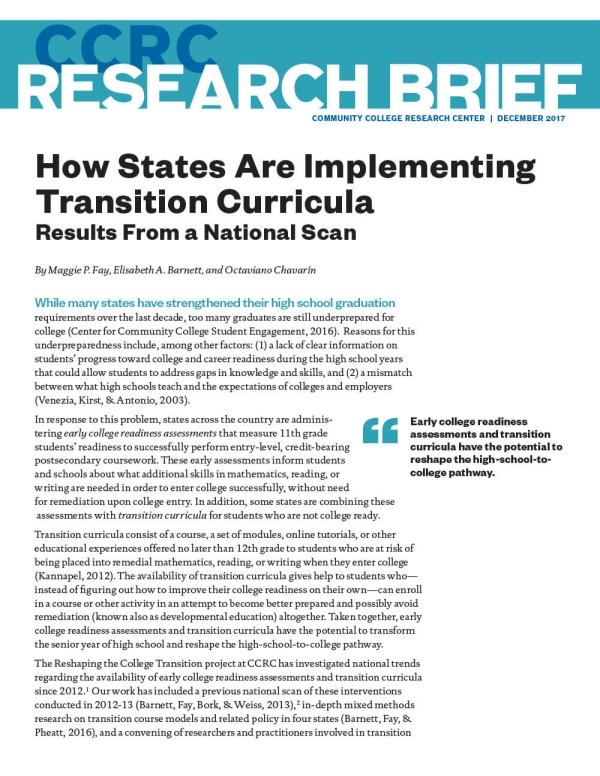
This brief describes the availability of transition courses across the country and offers insights into curricular design and goals, subject-area focus, how students are selected to participate, and whether completion of transition curricula guarantees placement into college-level courses.
Madeline Joy TrimbleLara PheattTatev PapikyanElisabeth A. Barnett
This paper examines the impact of one transition course model, the At Home in College program, offered to selected high school students in New York City by the City University of New York (CUNY).
This report uses student enrollment and degree records from the National Student Clearinghouse to examine who enrolls in community college dual enrollment courses and what happens to them after high school.
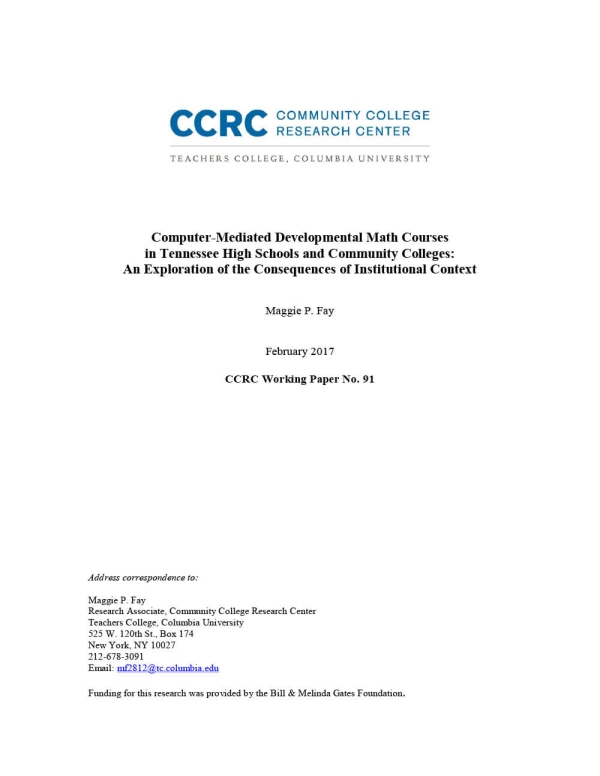
Using site visit data from three community colleges and four high schools, this paper explores how the institutional context of the high schools compared with that of the colleges in ways that may have affected the implementation and efficacy of computer-mediated mathematics.
Lara PheattMadeline Joy TrimbleElisabeth A. Barnett
This study uses a regression discontinuity design to estimate the effect of participation in a mathematics transition course on college-level math outcomes in West Virginia for the 2011–12 and 2012–13 high school senior cohorts.
This Jobs for the Future publication proposes research-based milestones of student momentum from twelfth grade through the first year of college, and suggests ways that local high school and college partners can collaborate to support student success.