


How to Achieve More Equitable Community College Student Outcomes: Lessons From Six Years of CCRC Research on Guided Pathways

This report describes how CCRC’s thinking about guided pathways has evolved since the publication of Redesigning America’s Community Colleges in 2015.
How Ohio Community Colleges Are Using Guided Pathways to Personalize Student Support
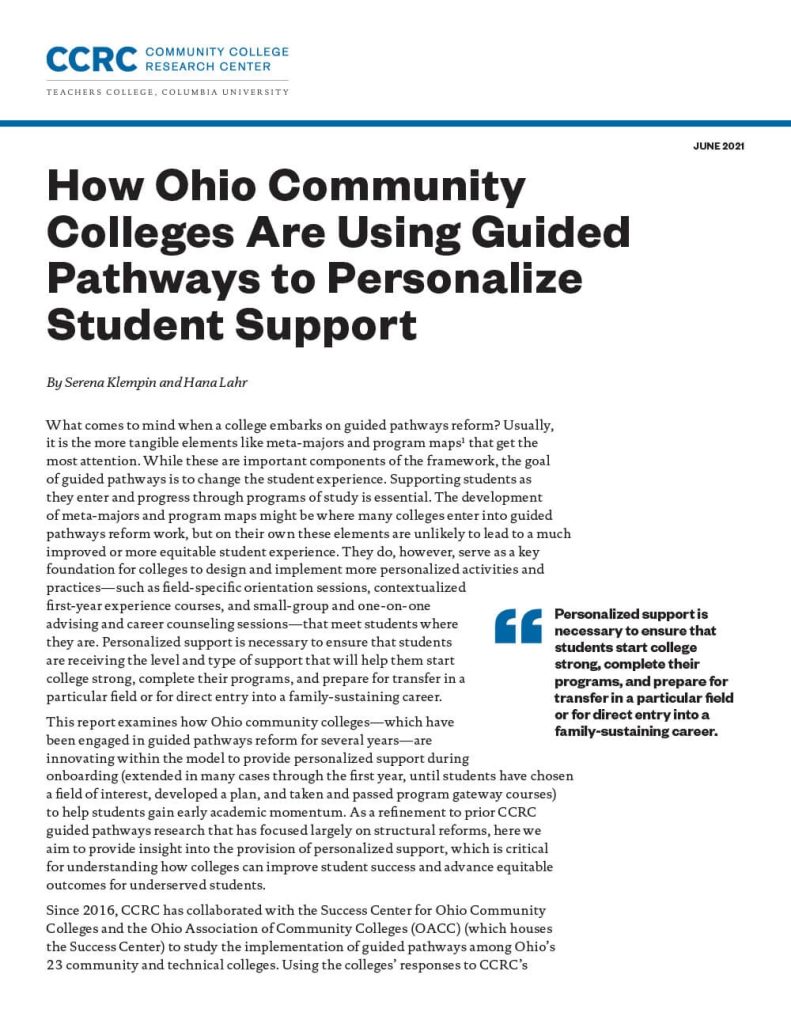
This report examines how Ohio community colleges—which have been engaged in guided pathways reform for several years—are innovating within the model to provide scaled, personalized support to help students gain early academic momentum.
Investing in Student Success at Community Colleges: Lessons From Research on Guided Pathways
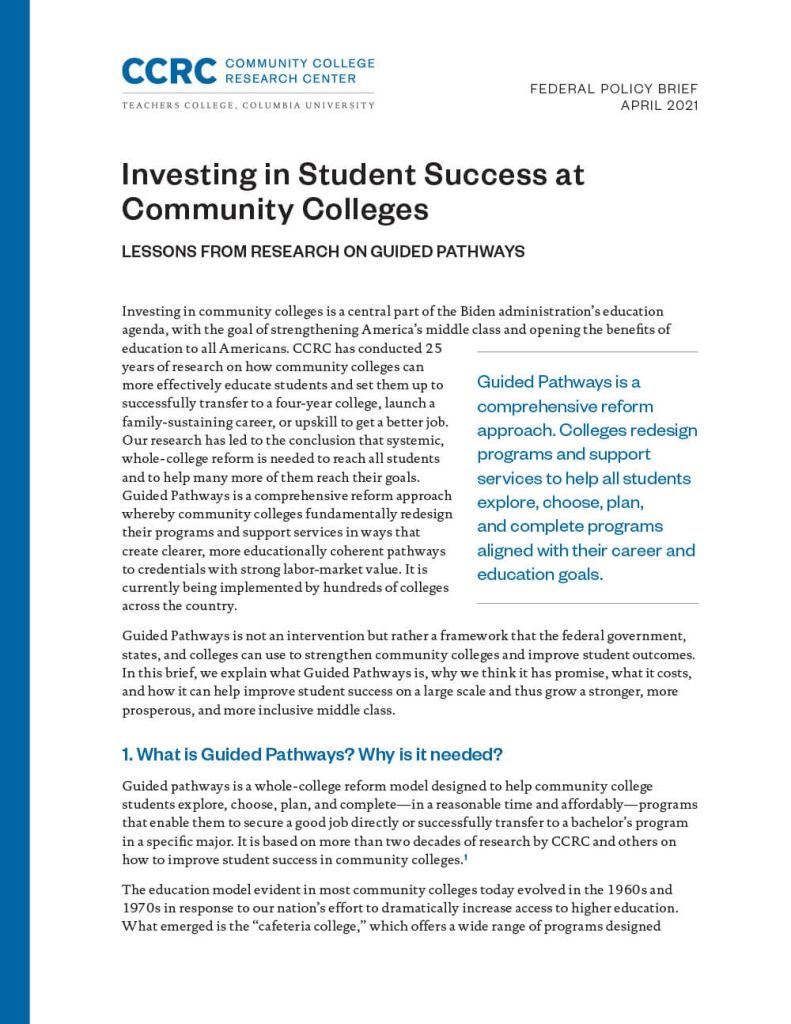
This brief discusses why whole-college, guided pathways reforms hold promise for improving student success on a large scale, what they cost, and how the federal government can support their adoption.
How Guided Pathways Reforms Can Improve Support for Adult Students: Lessons From Three Tennessee Community Colleges
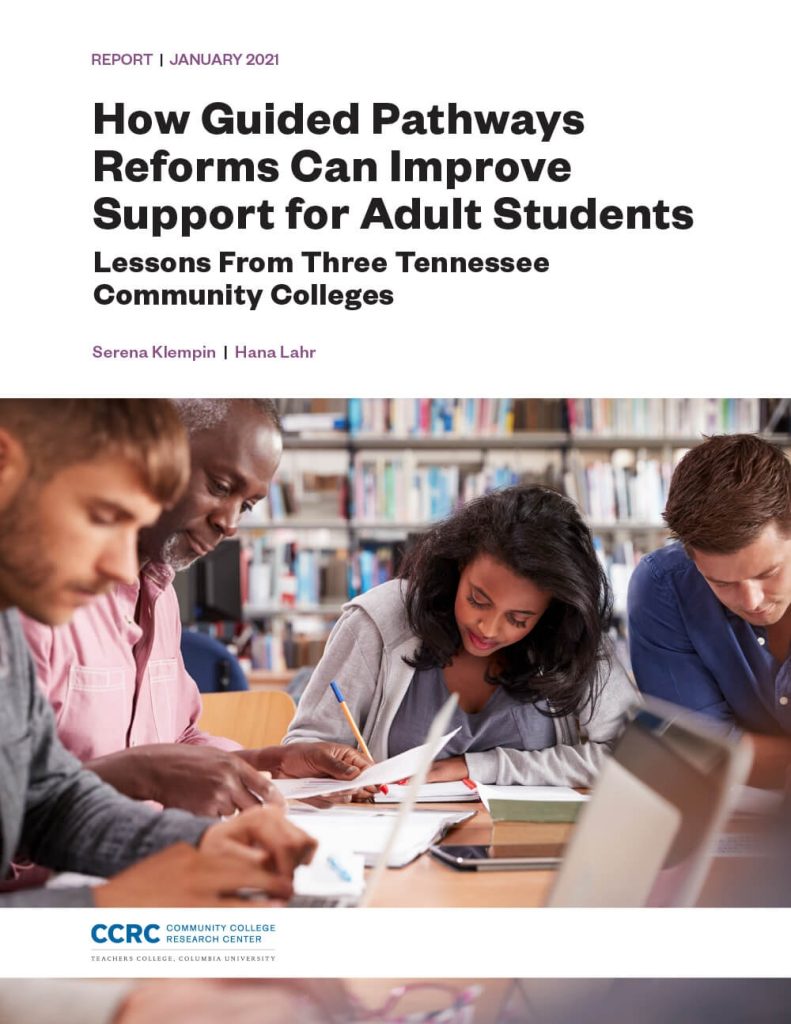
Drawing on interview data, this report discusses strategies that three guided pathways colleges use to help adult students enter programs of study, stay on path, and enhance learning.
Funding Guided Pathways: A Guide for Community College Leaders
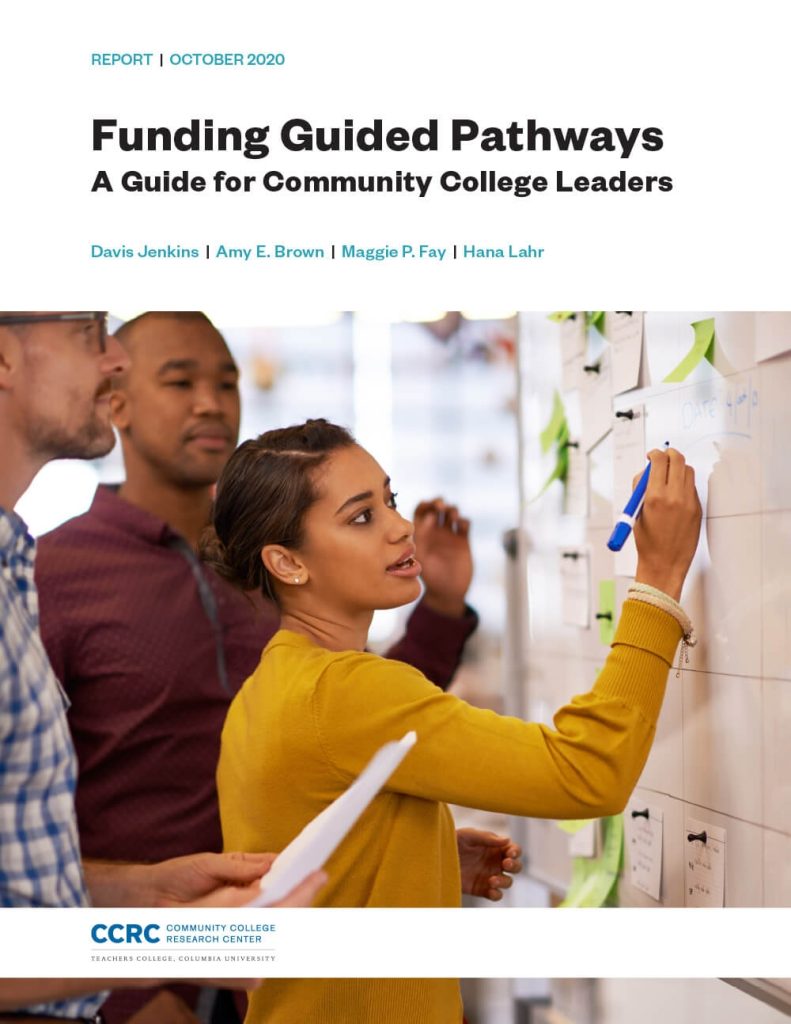
Drawing on research at six institutions, this guide is intended to help community college leaders understand the costs involved in implementing guided pathways reforms and develop plans for funding and sustaining them.