


Whole-College Reforms in Community Colleges: Guided Pathways Practices and Early Academic Success in Three States
Using institutional survey and administrative data, this paper examines the association between statewide adoption of guided pathways practices by community colleges in Tennessee, Ohio, and Washington and improvements in first-year student outcomes.
Heterogeneity in Labor Market Returns to Master’s Degrees: Evidence from Ohio
This Annenberg Institute working paper provides up-to-date causal evidence on labor market returns to master’s degrees and examines heterogeneity in the returns by field area, student demographics, and initial labor market conditions.
Whole-College Guided Pathways Reform Practices: Scale of Adoption by Community Colleges in Three States
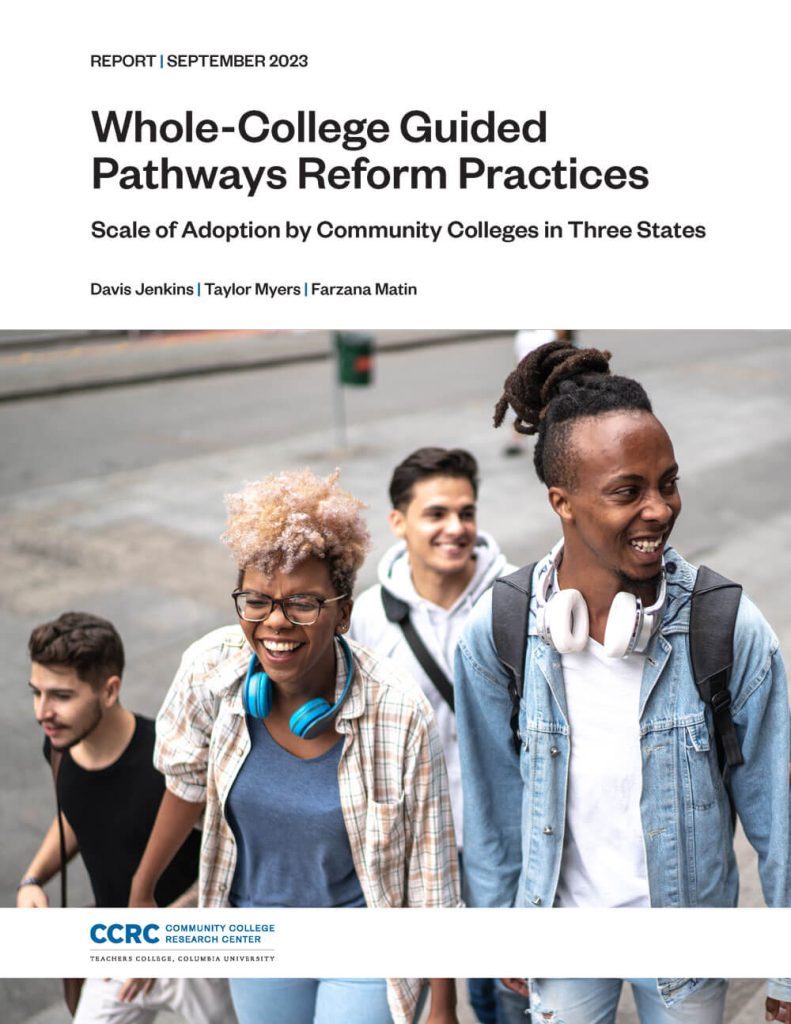
Based on institutional survey data, this report presents findings from a study on the scale of adoption of guided pathways practices at community and technical colleges in Ohio, Tennessee, and Washington State.
Mapping Community College Finance Systems to Develop Equitable and Effective Finance Policy

This report describes the diversity and complexity of community college state finance systems, and how to identify the often competing incentives within them, by comparing the systems of three very different states: California, Ohio, and Texas.
How Can Community Colleges Afford to Offer Dual Enrollment College Courses to High School Students at a Discount?
Using three case studies, this paper examines the conditions under which dual enrollment programming could be made sustainable through efficiency gains, even for colleges that charge discounted tuition (or none at all)