


Heterogeneity in Labor Market Returns to Master’s Degrees: Evidence from Ohio
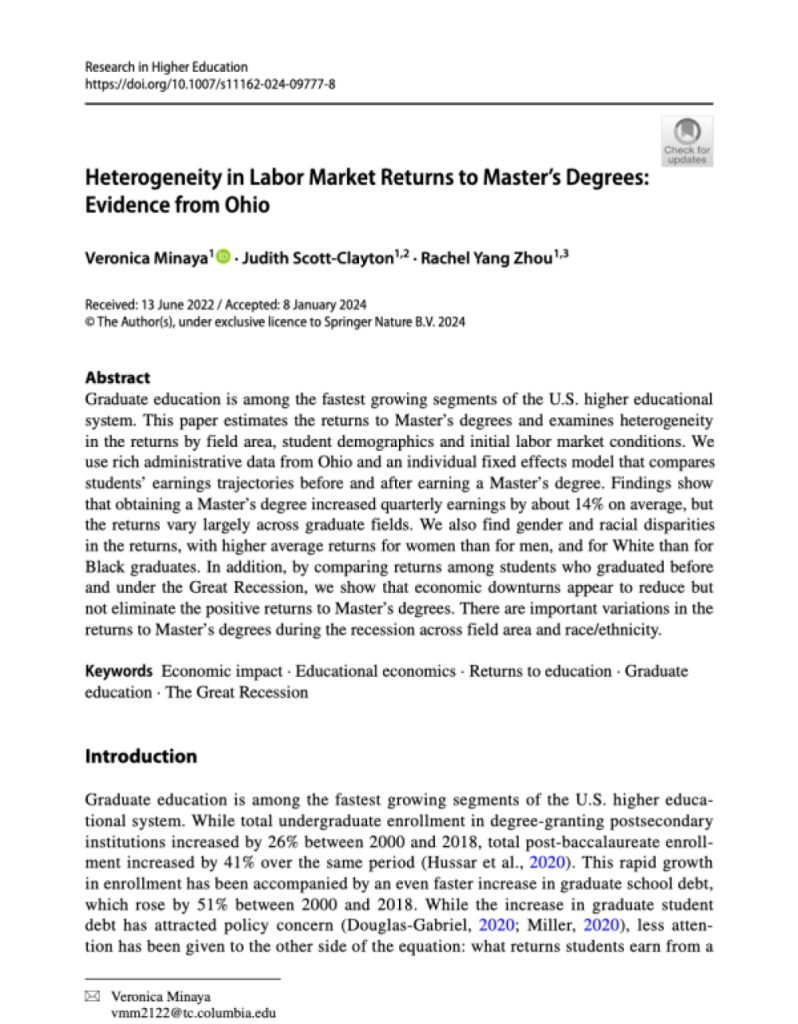
This Annenberg Institute working paper provides up-to-date causal evidence on labor market returns to master’s degrees and examines heterogeneity in the returns by field area, student demographics, and initial labor market conditions.
An Analysis of Federal Pandemic Relief Funding at Community Colleges
This ARCC Network report examines how Higher Education Emergency Relief (HEER) funds were distributed to community colleges and the extent to which the colleges spent those funds. It also explores how HEER funding and spending patterns differed by institutional and student characteristics.
Tracking Transfer: Community College and Four-Year Institutional Effectiveness in Broadening Bachelor’s Degree Attainment
These two reports use student data disaggregated by race/ethnicity, neighborhood income, and age to measure the performance of two- and four-year institutions in enabling students who start college at a community college to transfer and complete bachelor’s programs. State-by-state breakdowns of transfer metrics designed for use by college and state system leaders are included in the reports and in an online data dashboard.
How States and Systems Can Support Practitioner Efforts to Strengthen Dual Enrollment
Informed by findings from The Dual Enrollment Playbook and site visits to Title I high schools and their community college partners in Texas and Florida, this report offers guidance for state leaders on how to support practitioner efforts to broaden the benefits of dual enrollment.
How Important Are Community Colleges in Promoting STEM?
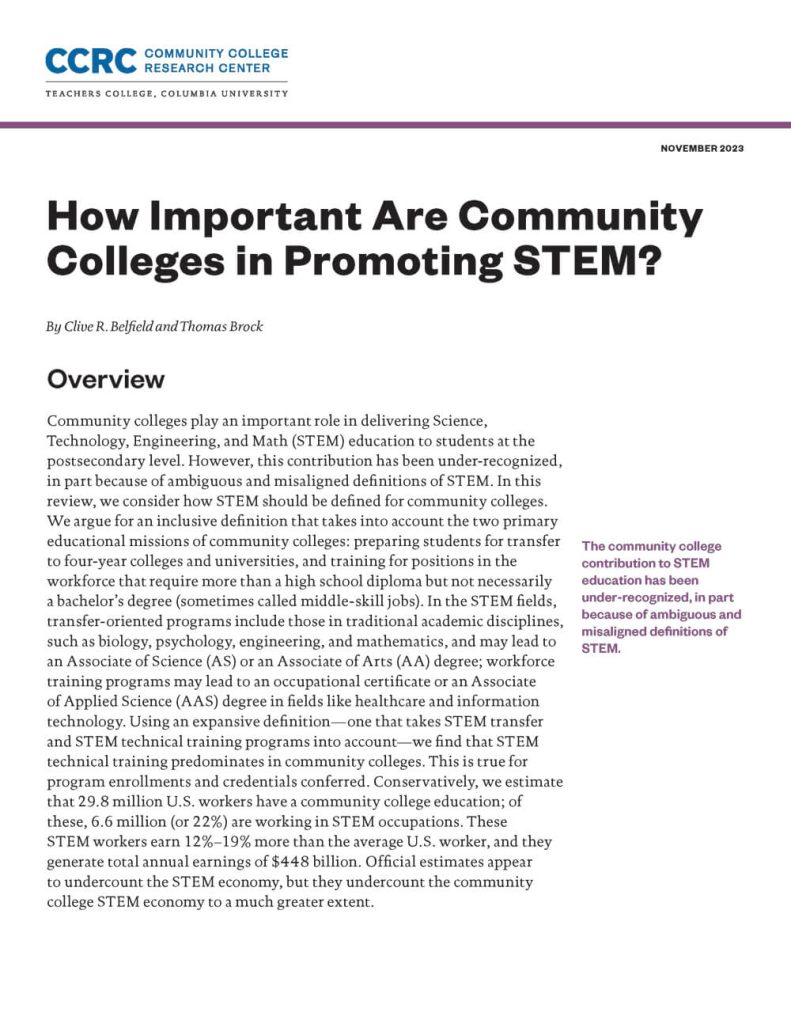
This report argues that a more inclusive definition of STEM that accounts for STEM-oriented technical training programs would better represent the contribution community colleges make to STEM education and the STEM workforce.