


The Transfer Playbook: Essential Practices for Two- and Four-Year Colleges
This playbook is a practical guide to designing and implementing a key set of practices that will help community colleges and their four-year college partners improve bachelor’s completion rates for students who start at community colleges.
How and Why Does Two-Year College Entry Influence Baccalaureate Aspirants’ Academic and Labor Market Outcomes?
Using detailed administrative data from Virginia, this CAPSEE working paper examines how and why the community college pathway to a baccalaureate influences students’ degree attainment and short-term labor market performance.
Tracking Transfer: New Measures of Institutional and State Effectiveness in Helping Community College Students Attain Bachelor’s Degrees
This report uses five metrics to measure the effectiveness of two- and four-year institutions in enabling community college students to transfer to four-year institutions and earn bachelor’s degrees.
Should Community College Students Earn an Associate Degree Before Transferring to a Four-Year Institution?

Using data on students who entered community college and then transferred, this paper examines the impact on bachelor’s degree attainment of earning an associate degree before transferring to a four-year college.
What We Know About Transfer
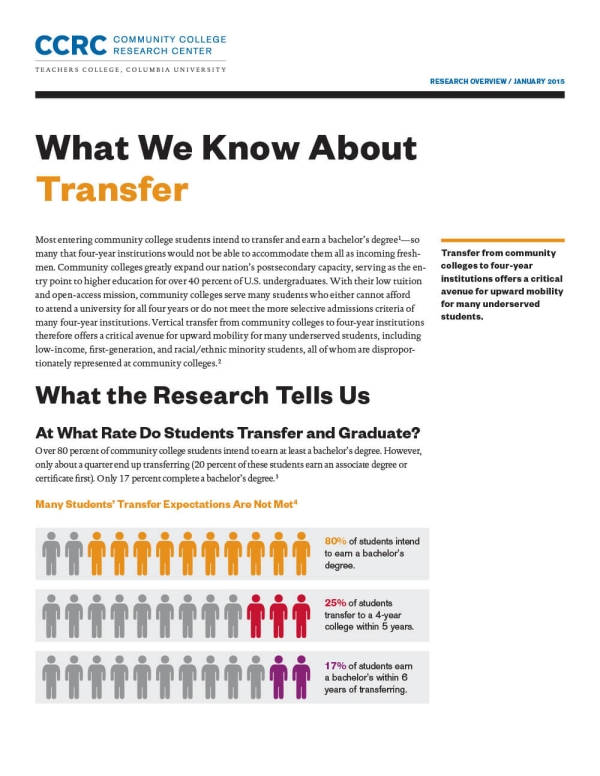
This research overview reviews findings on transfer from community colleges to four-year colleges, including student outcomes, barriers to transfer, the economic benefits of transfer, and potential benefits to four-year colleges.