


Developmental Education
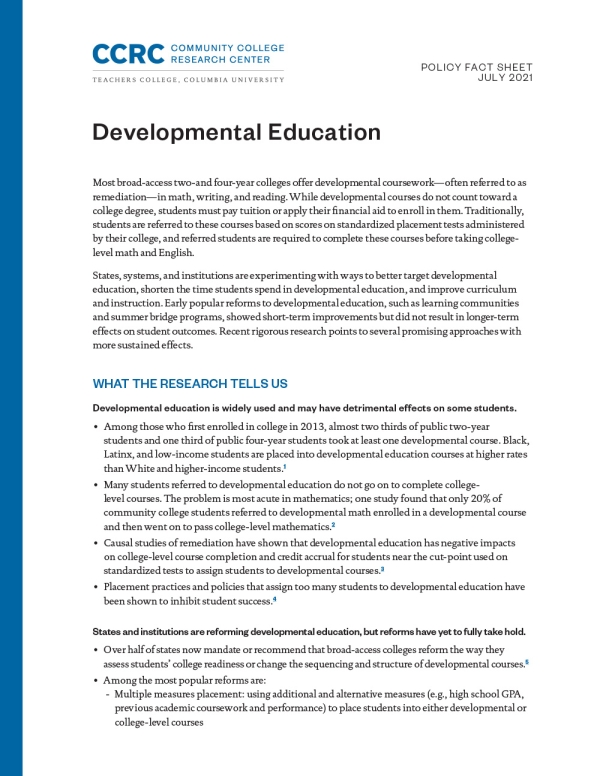
This fact sheet describes how traditional developmental education may have unintended consequences for students and the growing body of research evidence on promising reforms.
Implementing and Scaling Multiple Measures Assessment in the Context of COVID-19
This brief discusses how community college systems in four states—Indiana, Virginia, Texas, and Washington—supported large-scale changes to student placement practices in reaction to challenges associated with the COVID pandemic.
Improving Developmental and College-Level Mathematics: Prominent Reforms and the Need to Address Equity
This paper examines the equity implications of existing reforms to developmental math and explores the potential of more targeted reforms to address factors such as stereotype threat, math anxiety, instructor bias, and tracking.
Who Should Take College-Level Courses? Impact Findings From an Evaluation of a Multiple Measures Assessment Strategy
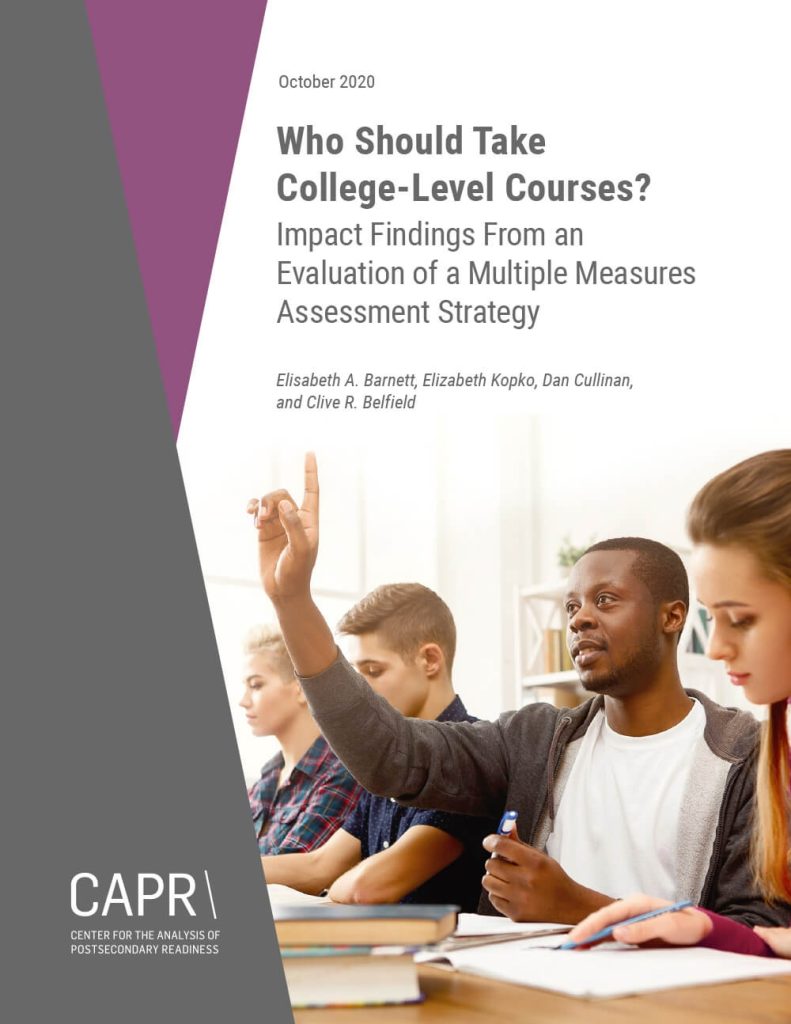
This report describes impact findings from an evaluation of multiple measures assessment and placement at seven State University of New York (SUNY) community colleges.
How Can We Improve Teaching in Higher Education? Learning From CUNY Start
This paper describes the professional development model used in CUNY Start, a program developed at the City University of New York to support entering students identified as academically underprepared in literacy and mathematics.