


How Community Colleges Can Help Address Teacher Shortages
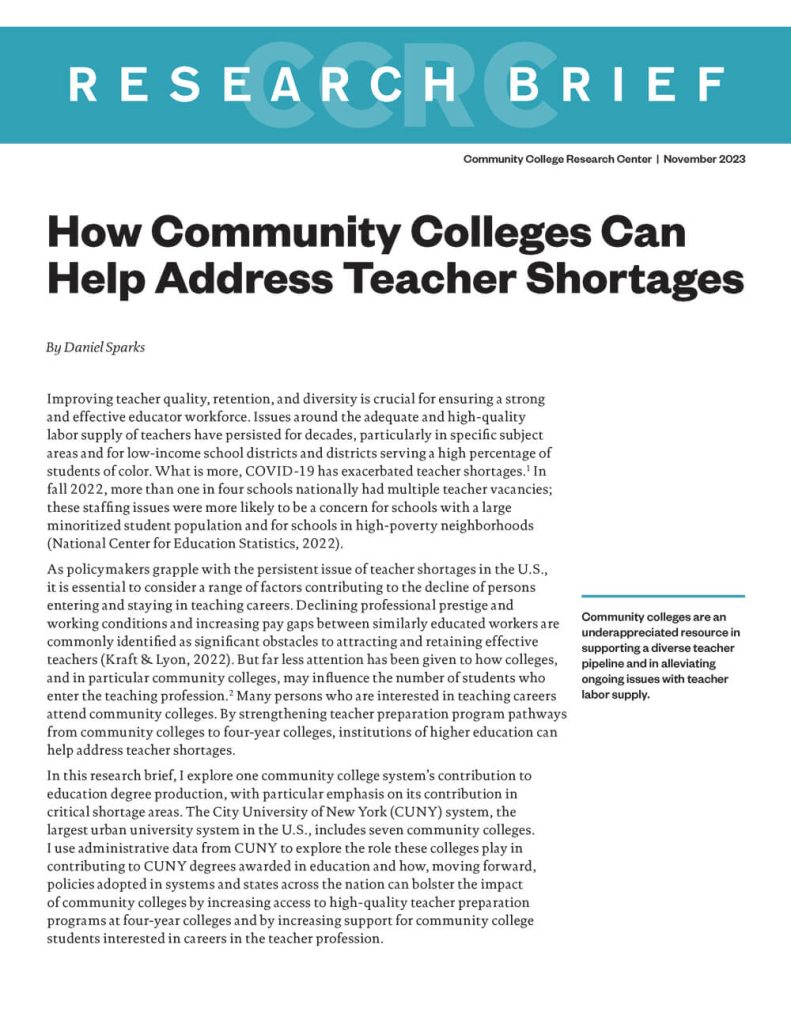
Using administrative data from CUNY, this brief explores the role that community colleges play in contributing to degrees awarded in education, and it considers how the transfer experience for students interested in pursuing careers as teachers can be improved.
How Important Are Community Colleges in Promoting STEM?
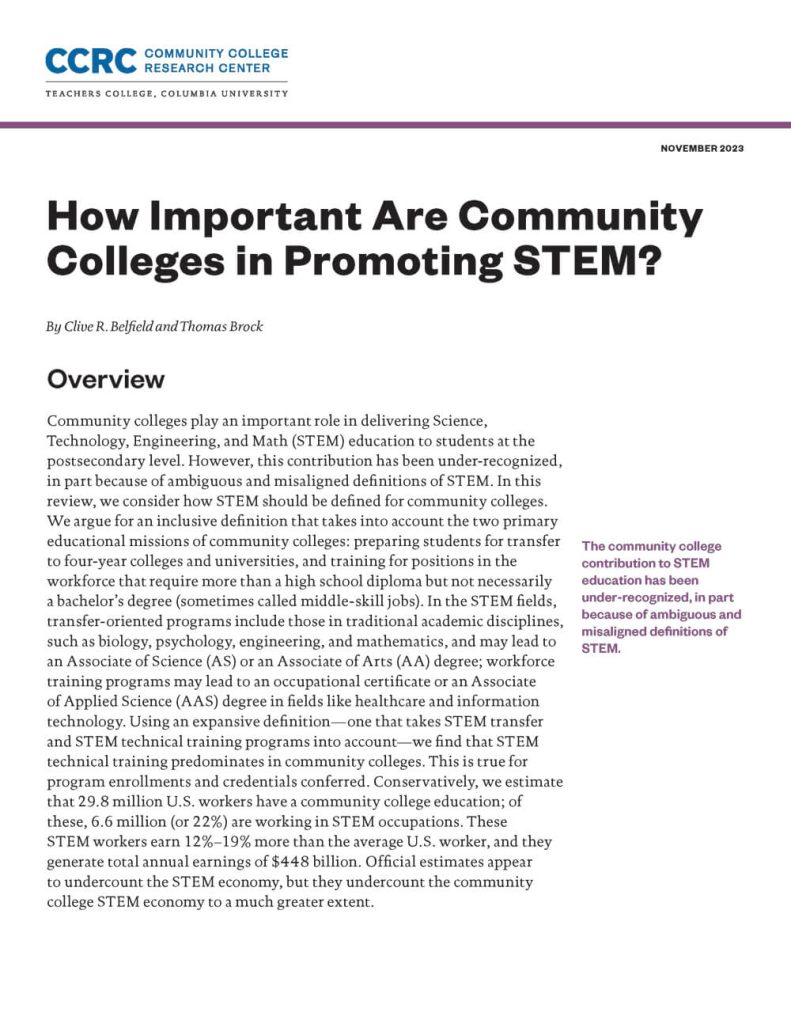
This report argues that a more inclusive definition of STEM that accounts for STEM-oriented technical training programs would better represent the contribution community colleges make to STEM education and the STEM workforce.
Healthcare Training Programs in Community Colleges: A Landscape Analysis of Program Availability and Student Completions
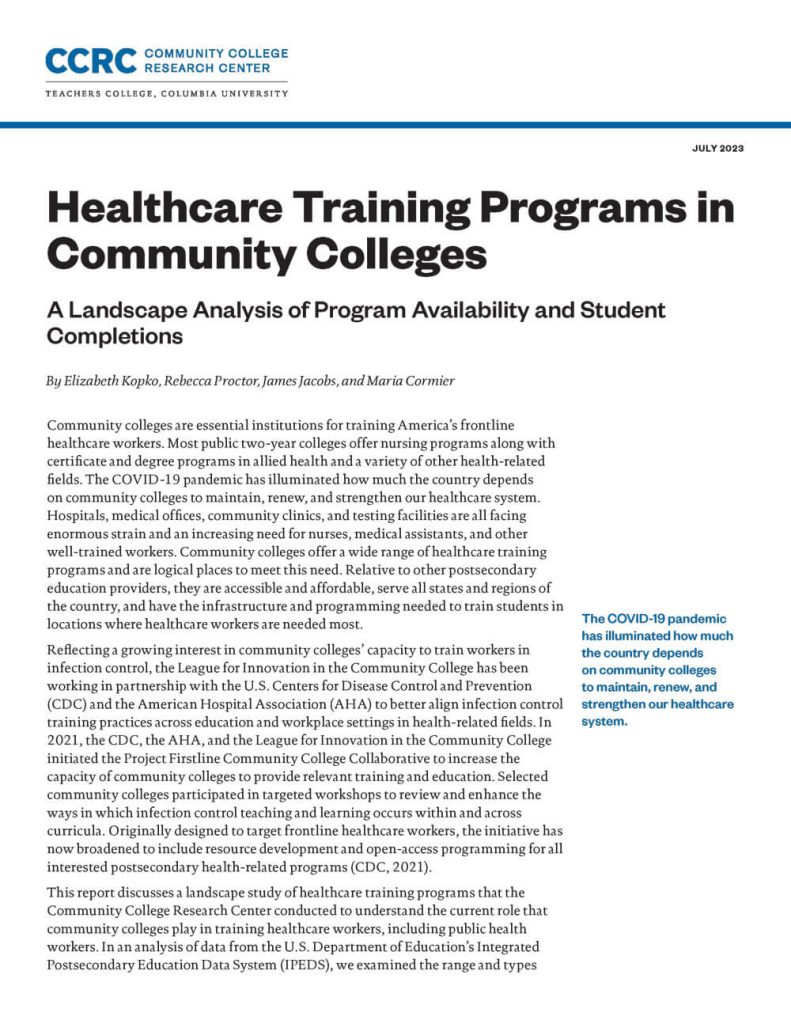
This report uses IPEDS data to better understand healthcare training programs and the current role that community colleges play in training healthcare workers, including public health workers.
Assessing College-Credit-in-High-School Programs as On-Ramps to Postsecondary Career Pathways for Underrepresented Students
This brief examines research on five programs—AP, IB, dual enrollment, ECHSs and P-TECHs, and high school CTE with articulated credit—and assesses their potential as large-scale on-ramps to high-quality postsecondary programs for underrepresented students.
Six Years Later: Examining the Academic and Employment Outcomes of the Original and Reinstated Summer Pell
Using administrative data from the City University of New York (CUNY), this paper examines the impact of the summer Pell program on community college student persistence, completion, and employment outcomes.