


Undocumented Immigrants and State Higher Education Policy: The Politics of In-State Tuition Eligibility in Texas and Arizona
The eligibility of undocumented students to apply for in-state tuition varies by state. This article analyzes the political origins of divergent responses among states, drawing on the advocacy coalition framework and policy entrepreneurship theory of policymaking.
Dual Enrollment: Postsecondary/Secondary Partnerships to Prepare Students
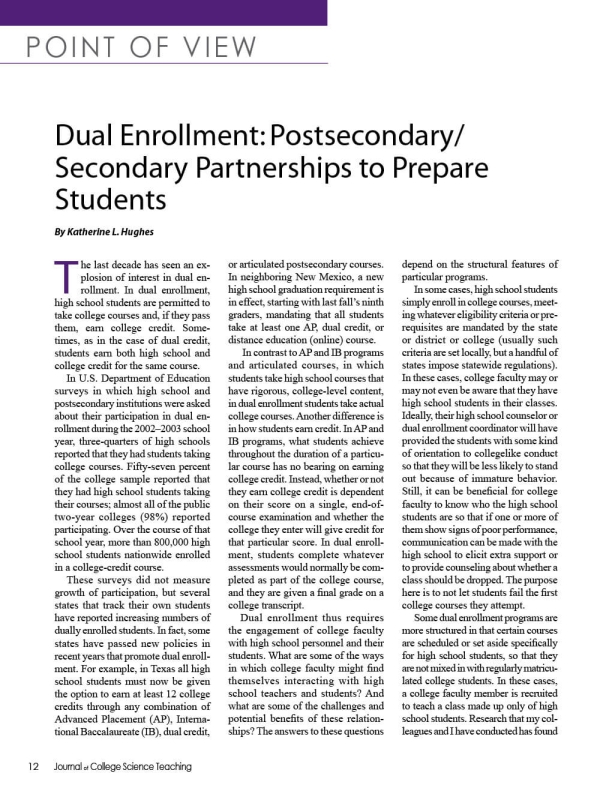
This article describes some of the ways in which dual enrollment requires the engagement of college faculty with high school personnel and their students, and it reviews the challenges and potential benefits of these relationships.
An Exploration of Tinto’s Integration Framework for Community College Students
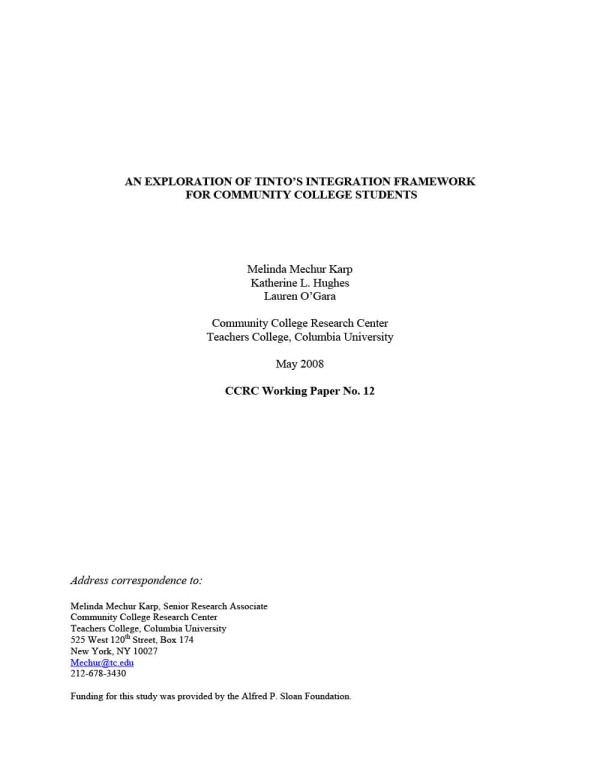
This paper examines whether Tinto’s integration framework—commonly used to examine student persistence in the four-year sector—is applicable to two-year institutions.
Student Participation and Performance on Advanced Placement Exams: Do State-Sponsored Incentives Make a Difference?
Based on analysis of nationally representative AP exam data taken from the Education Longitudinal Study of 2002, this article examines whether incentives provided to students, teachers, and schools help students enroll and succeed in AP exams.
English Further Education Through American Eyes
This article examines various commonalities and divergences between the English further education system and its nearest U.S. equivalent, the community college system.