


Student Parents in Community College
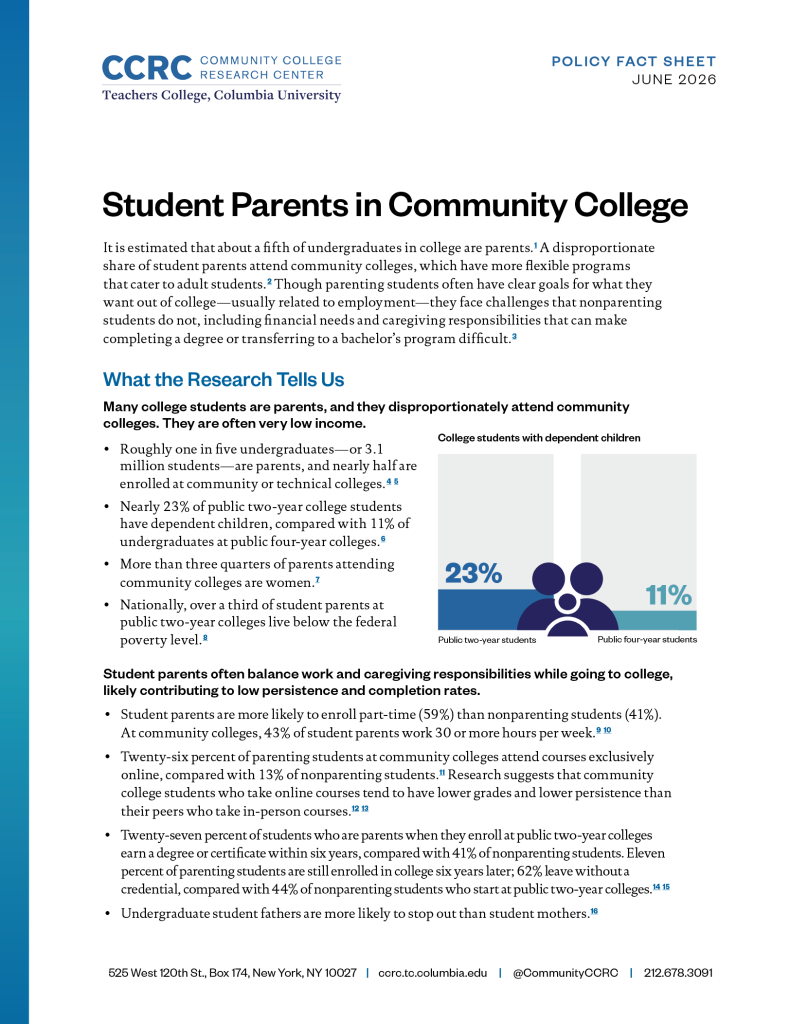
This new fact sheet provides an overview of student parents and the challenges they face, and provides policy considerations for supporting student parents and improving their experiences.
Reframing Support: A Social Network Perspective on Whom First-Generation Students Turn to for Help
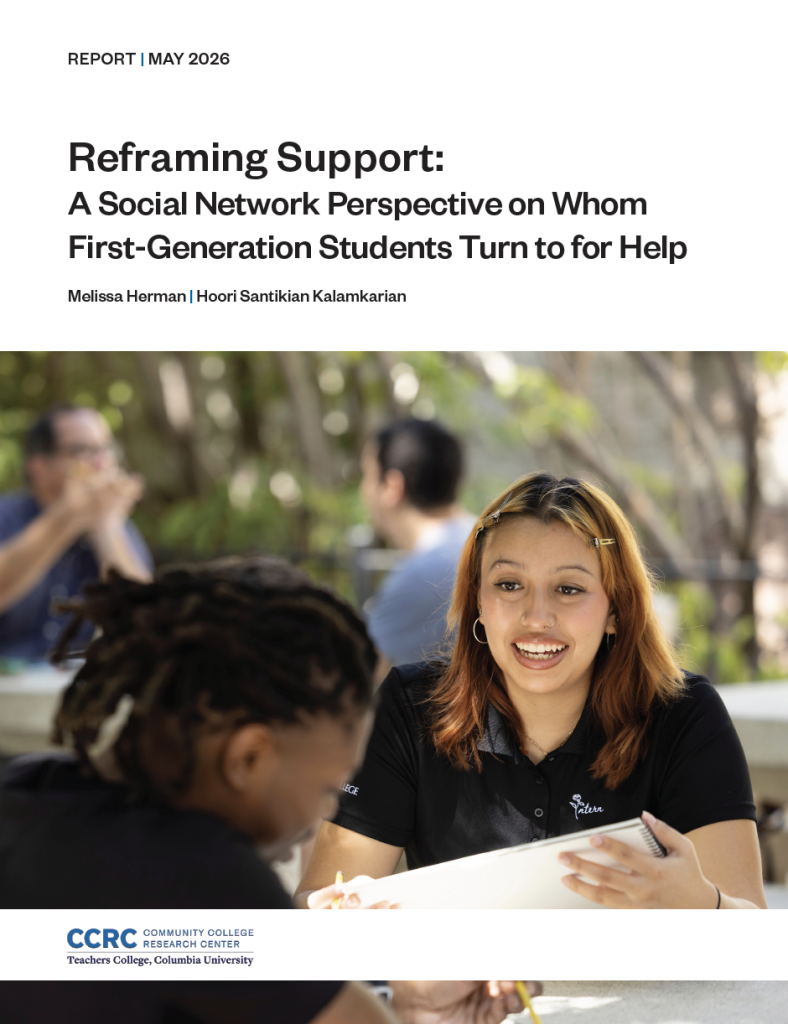
This report uses student survey and interview data from four California colleges to examine how first-generation college students build relationships and use support networks on- and off-campus to address academic and nonacademic challenges in the first year of college.
Community Colleges as Providers of Adult Education ESL: The Role of Federal Policy
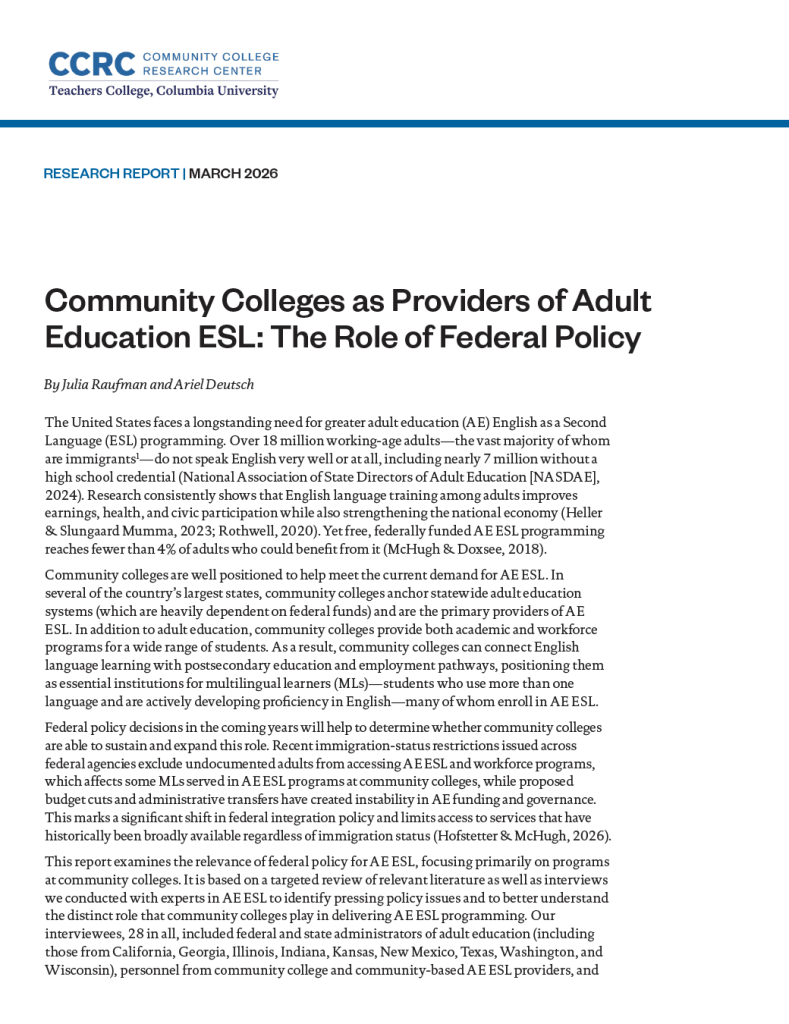
Based on a review of relevant literature and interviews with experts and administrators, this report discusses how federal policy aims are addressed by AE ESL providers and the distinct role that community colleges play in delivering AE ESL programming.
The Causal Effects of Federal Work-Study Offers on College Enrollment and Program Participation
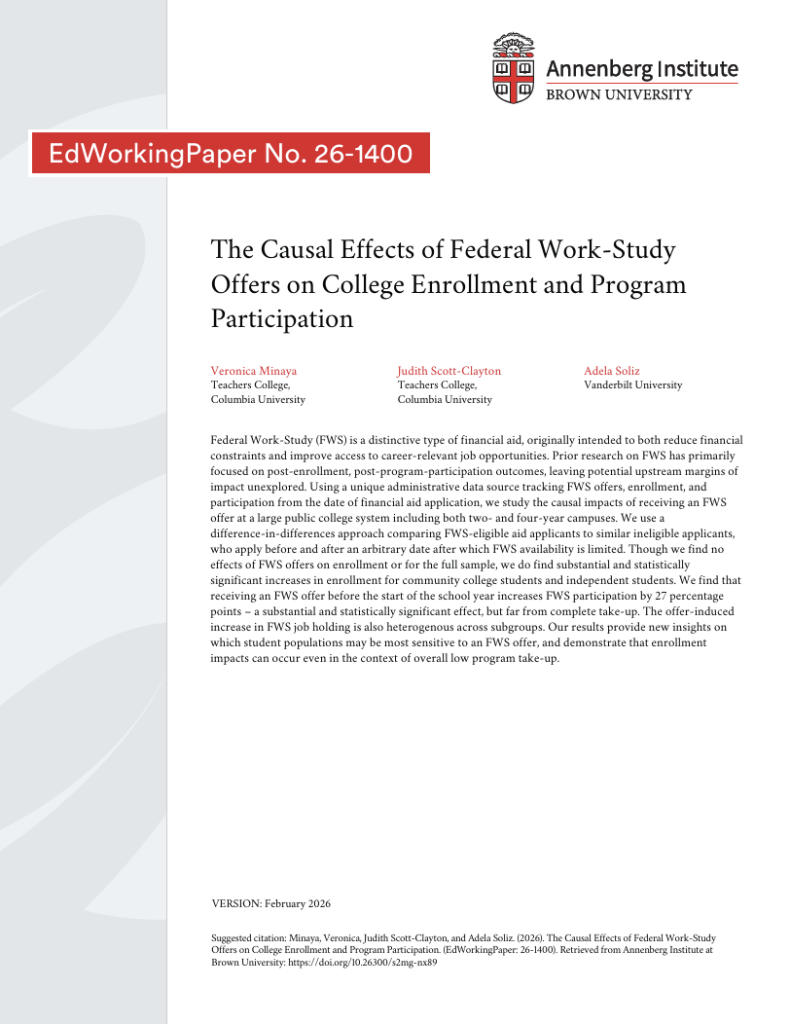
Using administrative data tracking Federal Work Study (FWS) offers, enrollment, and participation from the date of application, this working paper studies the causal impacts of receiving an FWS offer at a large public college system, including both two- and four-year campuses.
Understanding the Needs of First-Generation College Students Who Stop Out
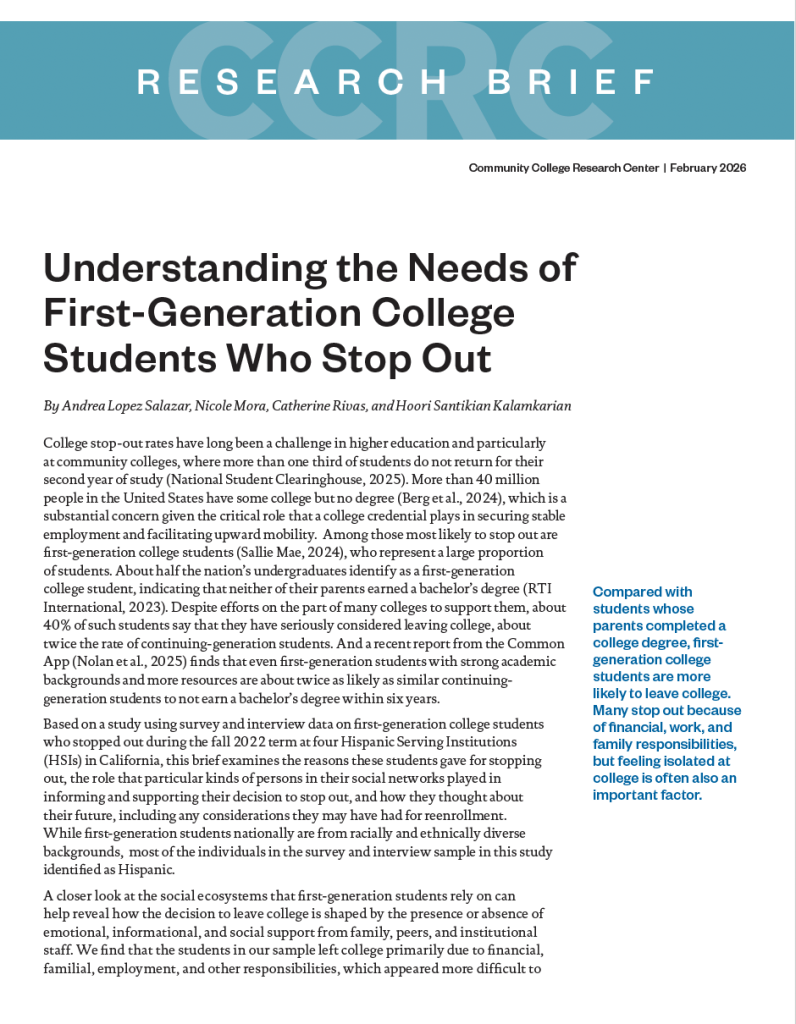
Based on survey and interview data from first-generation students who stopped out of four colleges in California, this brief examines students’ reasons for leaving, the role their social networks played in informing or supporting their decision, and how they thought about their futures—including the possibility of reenrollment.