


High School Dual Enrollment in Florida: Effects on College Outcomes by Race/Ethnicity and Course Modality
Using data on two cohorts of Florida students who started public high school in 2007 and 2012, this report analyzes dual enrollment course-taking and outcomes by racial/ethnic group (Black, Hispanic, White) and course modality (face-to-face on-college-campus, face-to-face off-campus, and online).
The Dual Enrollment Playbook: A Guide to Equitable Acceleration for Students
Based on research conducted in three states, this report identifies five principles that undergird the strategies and practices of equitable dual enrollment partnerships between high schools and colleges.
Unpacking Program Enrollments and Completions With Equity in Mind
This guide presents a set of example data analyses colleges can replicate to examine whether underserved groups of students are equitably represented in programs that lead to higher opportunity outcomes for employment and/or baccalaureate transfer.
Expanding Access to College-Level Courses
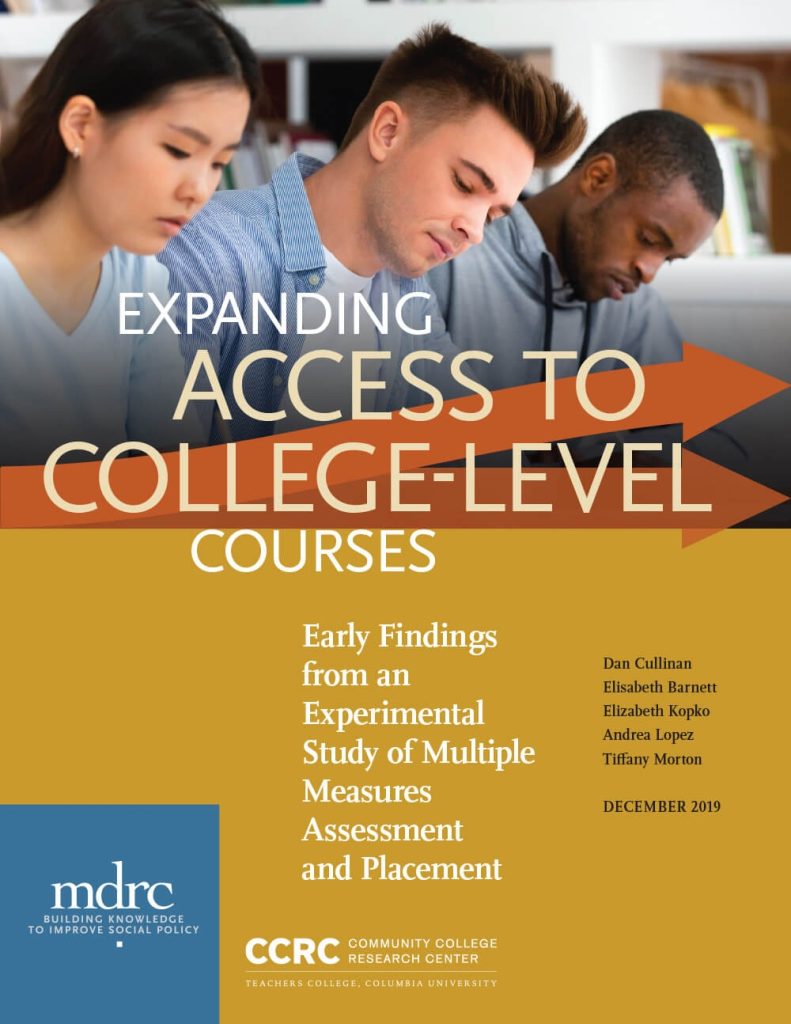
This study uses a randomized controlled trial to evaluate the efficacy of multiple measures assessment programs at five colleges in Minnesota and Wisconsin and also examines the implementation and cost of the programs.
Gaining Ground: Findings From the Dana Center Mathematics Pathways Impact Study
This CAPR report examines how four Texas community colleges implemented Dana Center Mathematics Pathways (DCMP) and the impact of DCMP on student outcomes over as many as four semesters. Costs of the initiative and student perspectives are also discussed.