


Employer Perceptions of Associate Degrees in Local Labor Markets: A Case Study of the Employment of Information Technology Technicians in Detroit and Seattle
Based on fieldwork in two distinct labor markets, this paper compares how associate and bachelor’s degrees are perceived by employers seeking to hire IT technicians.
What Explains Trends in Labor Supply Among U.S. Undergraduates, 1970-2009?
This National Bureau of Economic Research (NBER) working paper examines working patterns among traditional-age college students from 1970–2009, considers several explanations for the long-term trend of rising employment, and examines whether the upward trend is likely to resume when economic conditions improve.
Institutional Variation in Credential Completion: Evidence From Washington State Community and Technical Colleges
This paper uses administrative data from Washington State to compare the outcomes of young career-technical students across both technical colleges and comprehensive community colleges
How I-BEST Works: Findings From a Field Study of Washington State’s Integrated Basic Education and Skills Training Program
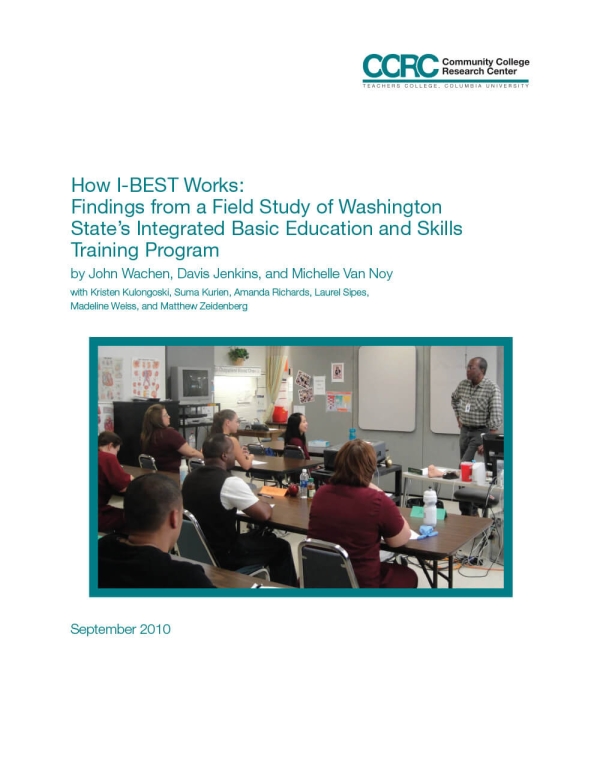
The I-BEST program at Washington State’s community and technical colleges integrates basic skills education with vocational training and has increased completion rates for participating students.
The Benefits of Attending Community College: A Review of the Evidence
This article reviews the existing literature on the economic and other benefits of attending community college and considers the methodological challenges associated with calculating earnings gains from attending a community college.