


Trends in Key Performance Indicators Among Colleges Participating in a Technology-Mediated Advising Reform Initiative
This report describes trends in key performance indicators among the 26 two- and four-year institutions that participated in the Integrated Planning and Advising for Student Success (iPASS) grant initiative from 2011 to 2017.
iPASS in Practice: Four Case Studies
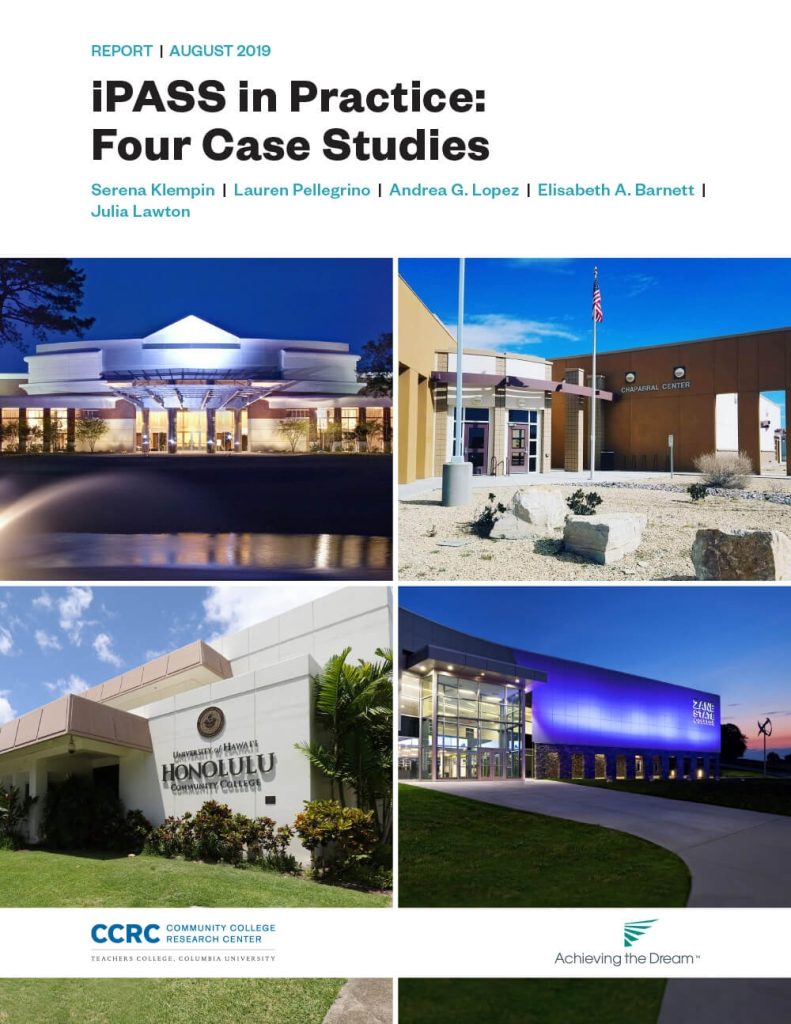
This report shares the stories of four community colleges that participated in the Integrated Planning and Advising for Student Success (iPASS) initiative, which provided support for institutions as they redesigned their advising processes and adopted and implemented new technologies.
Integrating Technology and Advising: Studying Enhancements to Colleges’ iPASS Practices
This study, conducted in partnership with MDRC, examines the effects of three institutions’ efforts to expand the use of advising technologies and to use administrative and communication strategies to increase student contact with advisors.
Scaling Success: Lessons From the ASAP Expansion at Bronx Community College
This brief examines the expansion and adaptation of the City University of New York’s Accelerated Study in Associate Programs (ASAP), using Bronx Community College as an illustrative case study.
Performance Standards in Need-Based Student Aid
This paper illustrates student responses to Satisfactory Academic Progress (SAP) requirements as well as the tradeoffs faced by a social planner weighing whether to set performance standards in the context of need-based aid.